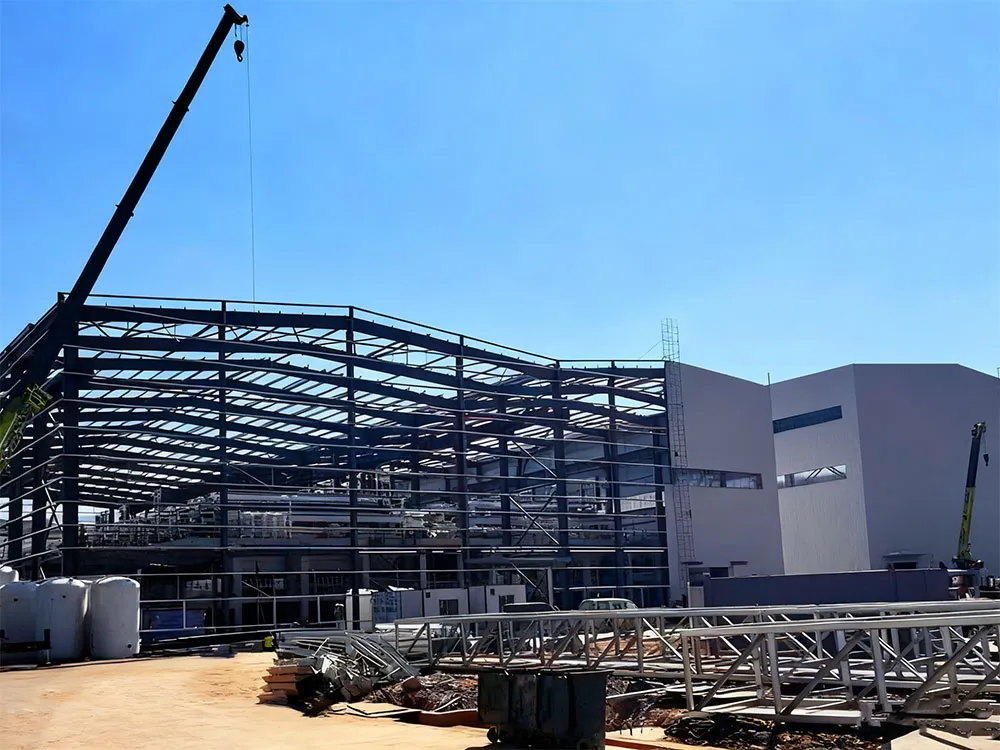
OEM steel building manufacturing is a project delivery model in which a steel building manufacturer produces a customized building package according to the buyer’s drawings, design criteria, technical specification, branding requirements or agreed engineering scope. For overseas contractors, developers, distributors and industrial project owners, OEM supply can provide more control than purchasing a generic prefabricated building package.

The key difference is that an OEM project starts with the buyer’s requirements and converts them into a controlled manufacturing package. Building dimensions, structural loads, steel grades, connection details, crane interfaces, roof and wall systems, surface treatment, documentation, packing and export delivery can all be defined around the project rather than selected from one fixed standard model.
This guide explains how OEM steel building projects move from custom design and technical review through fabrication, quality inspection, packing and export. It is intentionally different from our structural steel fabrication process guide, which focuses on shop-floor fabrication steps, and from our reliable steel structure supplier guide, which focuses on supplier selection.
01 / OEM guide
What Does OEM Steel Building Manufacturing Mean?
In steel construction, OEM does not always mean the same thing as OEM in consumer products. A steel building is an engineered project rather than a mass-produced appliance. In practice, OEM steel building manufacturing usually means that the manufacturer fabricates and prepares a building package to an agreed project-specific specification instead of supplying only its own standard building configuration.
The OEM scope can range from fabrication to fully coordinated design-and-manufacture support. Depending on the contract, the buyer may provide complete approved drawings, preliminary architectural drawings, a structural concept, equipment layouts or only a detailed project brief.
| OEM Model | Buyer Provides | Manufacturer Scope |
|---|---|---|
| Build-to-print | Approved drawings and specification | Material procurement, fabrication, inspection, coating, marking and packing |
| Design-assist OEM | Project requirements and preliminary drawings | Technical review, detailing, fabrication and export preparation |
| Custom building package | Building use, dimensions, loads and functional requirements | Agreed engineering scope, drawings, steel structure, envelope and accessories |
| Distributor or private-label supply | Market requirements, product specification and branding rules | Repeatable building packages, documentation, labels and export packing as agreed |
The contract should identify exactly who is responsible for structural calculations, local code compliance, engineer-of-record approval, shop drawings, connection design, foundations and building permits. OEM manufacturing does not remove the need for local engineering or authority approval where these are required.
02 / OEM guide
Why Buyers Use OEM Steel Building Manufacturing
Standard building packages can work well for simple projects, but many industrial and commercial buildings have requirements that cannot be handled efficiently by a fixed catalog model. OEM supply is useful when the project contains special dimensions, unusual loads, local standards, proprietary details or repeat orders that need consistent specifications.
Common reasons buyers choose OEM steel building manufacturing include:
- Custom spans, heights and bay spacing.
- Project-specific wind, snow and seismic criteria.
- Overhead cranes, mezzanines or equipment loads.
- Large doors, process openings and service penetrations.
- Specified steel grades and bolt standards.
- Custom roof and wall systems.
- Defined paint, galvanizing or corrosion-protection systems.
- Customer drawing standards and title blocks.
- Project-specific inspection and documentation requirements.
- Repeatable packages for distributors or multi-site projects.
- Export packing designed for container loading and overseas erection.
03 / OEM guide
1. Define the OEM Scope Before Engineering Starts
The first stage is to define what OEM actually includes for the project. Two suppliers may both offer “custom manufacturing” while assuming very different responsibilities.
The buyer should clarify whether the manufacturer is responsible for:
- Structural calculations.
- General arrangement drawings.
- Connection design.
- Shop drawings.
- Anchor-bolt plans.
- Roof and wall layout drawings.
- Material procurement.
- Structural steel fabrication.
- Surface treatment.
- Roof and wall materials.
- Doors, windows and accessories.
- Quality inspection and specified NDT.
- Export packing and loading.
- Erection drawings and technical support.
Items outside the OEM scope should also be listed clearly. Foundations, concrete slabs, local permits, local labor, erection cranes, electrical systems, fire systems and local professional-engineer approvals are often handled separately unless specifically included.
Our steel building design requirements guide provides a useful starting checklist for defining project inputs before engineering begins.
04 / OEM guide
2. Convert the Project Brief into Custom Design Criteria
A good OEM project begins with measurable design criteria rather than general descriptions such as “strong steel building” or “heavy-duty factory.” The manufacturer needs enough information to understand how the building will be used and what loads and interfaces must be considered.
Typical design inputs include:
- Project country, city and site location.
- Building application.
- Length, width and required clear height.
- Column spacing and required clear span.
- Roof slope and drainage concept.
- Wind design criteria.
- Snow load where applicable.
- Seismic requirements.
- Roof live loads.
- Overhead crane loads.
- Mezzanine and platform loads.
- Equipment and suspended-service loads.
- Door and equipment-opening sizes.
- Future expansion requirements.
- Required structural code and material standards.
For projects using U.S.-based structural criteria, buyers may reference the applicable edition of AISC 360 where required by the contract. The governing standard should always be identified by the project documents and destination requirements rather than assumed by the manufacturer.
Design Responsibility Must Be Written Clearly
One of the most important OEM contract points is the boundary between manufacturer engineering and local project engineering. The manufacturer may prepare structural calculations and drawings, but the destination country may still require review, stamping or approval by a locally licensed engineer.
Clarifying this responsibility before quotation prevents confusion later when drawings are submitted for permit approval or construction.
05 / OEM guide
3. Develop Shop Drawings and Manufacturing Details
Once the design basis is agreed, the project must be converted into fabrication information. This stage connects the engineering model with the actual steel members that will be cut, drilled, assembled and welded in the factory.
OEM drawing control typically covers:
- Member sizes and steel grades.
- Connection geometry.
- Base plates and anchor bolts.
- Hole patterns and bolt grades.
- Weld symbols and weld sizes.
- Stiffeners and connection plates.
- Crane brackets and runway interfaces.
- Door and equipment openings.
- Purlins, girts and bracing.
- Piece marks.
- Shipping splits.
- Coating and finish requirements.
A controlled revision system is essential. Every manufacturing release should identify the approved drawing revision. If a customer changes a door opening, crane capacity or equipment location after drawings are issued, the revision should be incorporated into the drawings before affected members are fabricated.
06 / OEM guide
4. Control Materials and Approved Substitutions
OEM manufacturing depends on specification control. The manufacturer should know exactly which grades, standards and product types are approved for the project.
The material schedule may include structural plates, hot-rolled sections, built-up welded members, cold-formed purlins, bolts, anchor bolts, welding consumables, roof sheets, wall panels, insulation and coating materials.
Buyers should define whether mill test certificates, heat-number traceability or other material documentation are required. Where traceability is part of the contract, certificates should be connected to identifiable production material rather than supplied as unrelated paperwork.
Material substitutions should follow an agreed approval process. A different steel grade, panel thickness, coating system or bolt specification should not be introduced simply because another product is easier to purchase.
07 / OEM guide
5. Fabricate the Steel to Approved OEM Drawings
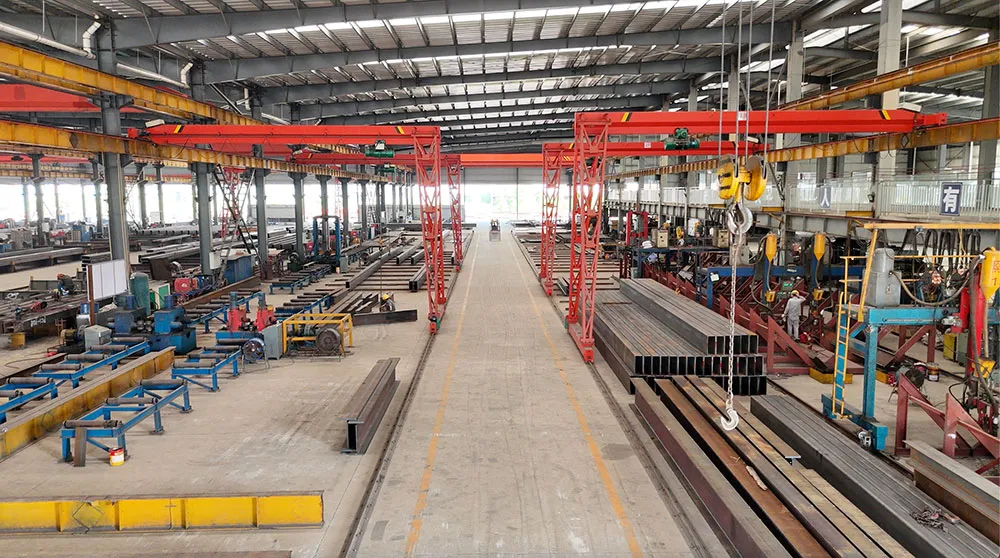
The fabrication stage turns approved design information into physical building components. Typical operations include CNC cutting, drilling, assembly, welding, straightening, grinding, blasting, painting and final marking.
This article does not repeat every shop-floor operation because they are covered in detail in our Structural Steel Fabrication Process: 10 Steps from Cutting to Coating guide.
For an OEM project, the more important management question is whether production remains connected to the approved project documents. The shop should fabricate the correct drawing revision, use approved materials, maintain required tolerances and preserve piece identification through production.
Repeat Orders Need Revision Control Too
OEM programs often involve repeat buildings or multiple phases. Repetition can improve efficiency, but it also creates a risk that an old drawing is reused after the customer has changed a connection, cladding specification or accessory.
Each order should therefore have a controlled release package that identifies the current revision, project quantity, finish and delivery destination.
08 / OEM guide
6. Apply Project-Specific Welding and Quality Control
Quality requirements should be agreed before production begins. OEM buyers should not rely only on general statements such as “strict quality control.” The inspection plan should reflect the actual project specification.
Depending on the project, inspection may include:
- Incoming material checks.
- Cutting and drilling dimensions.
- Fit-up inspection.
- Welding procedure and welder qualification review.
- Visual weld inspection.
- Specified ultrasonic, magnetic-particle or other NDT.
- Overall member dimensions.
- Hole location and connection geometry.
- Surface-preparation inspection.
- Dry-film-thickness measurement.
- Final identification and quantity checks.
Where the project specifies AWS requirements, AWS D1.1/D1.1M Structural Welding Code—Steel addresses structural-steel welding procedure qualification, welder qualification, fabrication, inspection and acceptance requirements. The applicable code and edition should be stated in the contract documents.
Our steel structure quality control guide explains material inspection, welding control, NDT, dimensional verification and manufacturing records in more detail.
09 / OEM guide
7. Customize Surface Treatment, Roof and Wall Systems
OEM steel building manufacturing can include more than the primary frame. The building envelope and corrosion-protection system can also be customized to suit climate, building use and the buyer’s specification.
Surface Treatment
The coating specification should define surface preparation, primer, intermediate coat, finish coat and required thickness where applicable. Galvanizing may be selected for suitable members when required by the project.
See our steel structure surface treatment guide for a comparison of abrasive blasting, painting and galvanizing.
Roof and Wall Systems
OEM building packages may use single-skin profiled sheets, insulated sandwich panels or project-specific cladding systems. Buyers should define panel profile, steel thickness, coating, insulation core, panel thickness, fasteners, flashings, gutters and weatherproofing details.
Our roof and wall cladding systems for steel buildings guide explains these components in greater detail.
10 / OEM guide
8. Prepare OEM Documentation and Project Identification
Documentation is especially important when a manufacturer is producing for an overseas contractor, distributor or repeat customer. The buyer may need documents to follow its own format, project numbering system or approval workflow.
Depending on contract requirements, an OEM documentation package can include:
| Document | Purpose |
|---|---|
| General arrangement drawings | Show the overall building geometry, grids and major interfaces |
| Shop drawings | Define fabrication details and member identification |
| Anchor-bolt drawings | Support foundation and base-plate coordination |
| Erection drawings | Support member identification and site assembly |
| Material certificates | Document specified materials where required |
| Welding and NDT records | Document specified welding quality controls |
| Coating records | Document surface preparation and coating checks where required |
| Packing list | Identify bundles, loose parts and shipped quantities |
| Loading records | Document container or cargo loading |
Where private-label or distributor arrangements are involved, commercial branding, packing labels and document presentation can also be agreed separately. However, engineering and compliance information should remain accurate and traceable regardless of branding.
11 / OEM guide
9. Plan Export Packing and Delivery Before Production Is Complete
Export preparation should not begin only after fabrication is finished. Member length, shipping splits, bundle sizes, container limitations and erection sequence can influence detailing decisions earlier in the project.
For overseas OEM steel building manufacturing, buyers should confirm:
- Container or break-bulk shipping strategy.
- Maximum practical member lengths.
- Piece-marking format.
- Bundle identification.
- Bolt and accessory packing.
- Protection of painted or galvanized surfaces.
- Protection of roof and wall panels.
- Container weight distribution.
- Cargo securing.
- Packing lists and loading photographs.
- Destination unloading conditions.
- Required commercial and customs documents.
The International Chamber of Commerce Incoterms® rules are commonly used to define delivery responsibilities, costs and risk allocation in international sales contracts. The purchase contract should state the selected rule, named place or port and applicable version.
Our steel building packing and shipping guide explains member marking, packing, container loading and overseas delivery in more detail.
12 / OEM guide
Standard Steel Building Supply vs OEM Steel Building Manufacturing
| Comparison | Standard Building Supply | OEM Manufacturing |
|---|---|---|
| Design basis | Manufacturer’s standard configuration | Buyer-specific criteria, drawings or agreed engineering scope |
| Dimensions | Standard or limited options | Customized to project requirements |
| Materials | Manufacturer’s normal specification | Specified grades and approved alternatives |
| Connections | Standard details | Project-specific details and interfaces |
| Inspection | Standard factory QC | Agreed inspection plan and project records |
| Documentation | Standard drawing and packing package | Buyer-specific submittals and document requirements |
| Branding | Manufacturer standard | Project or distributor presentation can be agreed |
| Export packing | General shipping preparation | Planned around project sequence, destination and contract scope |
Neither model is automatically better. A standard package may be more efficient for simple buildings, while OEM manufacturing is more suitable when the buyer needs tighter control over design, interfaces, repeatability, documentation or market-specific requirements.
13 / OEM guide
What Buyers Should Provide for an OEM Steel Building Project
The quality of the quotation depends heavily on the quality of the project information. Buyers requesting OEM steel building manufacturing should provide as much of the following as possible:
- Project location.
- Building application.
- Overall dimensions.
- Required clear span and clear height.
- Structural drawings or architectural drawings if available.
- Design loads and applicable codes.
- Crane, mezzanine and equipment loads.
- Door, window and process-opening schedule.
- Steel grades and connection requirements.
- Roof and wall specifications.
- Surface-treatment requirements.
- Inspection and documentation requirements.
- Required quantity and repeat-order forecast where applicable.
- Destination port or final delivery location.
- Required delivery schedule.
14 / OEM guide
What Affects OEM Steel Building Manufacturing Cost?
OEM pricing is influenced by more than the total steel tonnage. Buyers should expect cost to change with engineering complexity, material specification, connection design, welding volume, inspection requirements, coating system, cladding, accessories and shipping method.
Important cost drivers include:
- Building span, height and structural loads.
- Steel grade and plate thickness.
- Connection complexity.
- Crane-support and equipment loads.
- Full-penetration or high-volume welding.
- NDT requirements.
- Surface-preparation standard.
- Paint or galvanizing system.
- Insulated panel specification.
- Special accessories or openings.
- Documentation requirements.
- Small production quantities or highly varied components.
- Container utilization and freight basis.
For this reason, comparing only a price per tonne or price per square meter can be misleading. A meaningful comparison requires the same technical and commercial scope.
15 / OEM guide
OEM Steel Building Manufacturing with Bingfa Steel Structure
Bingfa Steel Structure is a China-based steel structure manufacturer supplying prefabricated steel buildings and industrial steel structures for overseas projects. Our OEM project scope can be developed around customer drawings, project specifications, building dimensions, structural requirements, quality-control needs and export delivery conditions.
Depending on the agreed contract, the workflow can include technical review, detailing, structural-steel fabrication, quality inspection, surface treatment, roof and wall systems, component marking, export packing and shipment preparation.
The most efficient way to start an OEM project is to send the available drawings or project brief together with the project location, building use, required dimensions, design standard, loads, material requirements and delivery destination.
OEM Project Data to Prepare
- Project country and city
- Building use and dimensions
- Drawings or design brief
- Structural loads and standards
- Steel and coating specification
- Roof and wall requirements
- Inspection documents required
- Order quantity
- Destination port
A clear technical package helps the manufacturer quote and produce the same OEM scope that the buyer expects.
Frequently Asked Questions
What is OEM steel building manufacturing?
OEM steel building manufacturing means producing a steel building package according to the buyer’s project-specific drawings, technical requirements, design criteria or agreed customization scope instead of supplying only a fixed standard building model.
Can an OEM manufacturer fabricate directly from my drawings?
Yes, when the drawings are suitable for fabrication and the scope is clearly defined. The manufacturer should review drawing status, dimensions, materials, connections, tolerances, welding, coating and required approvals before production. The contract should also clarify who is responsible for structural design and local approval.
Can the manufacturer also help with custom design?
Yes, depending on the agreed engineering scope. A buyer may provide project requirements or preliminary drawings and the manufacturer may assist with general arrangement, structural detailing and fabrication drawings. Local engineer-of-record or authority approval may still be required at the destination.
Can OEM steel buildings be manufactured to AISC or other international standards?
They can be manufactured to project-specified standards when the manufacturer has the required capability and the contract identifies the governing code, edition, materials, welding requirements, tolerances and inspection criteria. Destination-country approval requirements should also be confirmed.
What quality documents can be provided for an OEM project?
The required package depends on the contract. It may include approved drawings, material certificates, welding procedures and qualifications, inspection reports, specified NDT records, dimensional checks, coating records, packing lists and loading documentation.
Can OEM manufacturing include roof panels, wall panels and accessories?
Yes. The supply scope can include primary steel, secondary steel, roof and wall systems, insulation, flashings, gutters, bolts, doors, windows and other agreed accessories. Each item should be identified clearly in the quotation and specification.
Can OEM steel building packages be shipped overseas?
Yes. Structural members can be marked, bundled and prepared for international shipment. Shipping splits, container strategy, cargo protection, packing lists and destination unloading conditions should be considered before fabrication is complete.
What information should I send for an OEM quotation?
Provide project location, application, building dimensions, drawings if available, structural loads, design standard, crane or equipment requirements, roof and wall specification, coating requirements, inspection needs, quantity and delivery destination.
Need OEM steel building manufacturing for a warehouse, workshop, factory or industrial project? Contact Bingfa Steel Structure with your drawings, project location, building dimensions, technical specification and destination port. We can review the available information and discuss a project-specific manufacturing and export scope.
Phone / WhatsApp: +86 19006726230
Email: bingfasteelstructure@gmail.com