How to Choose a Reliable Steel Structure Supplier: 10 Key Factors
Choosing a reliable steel structure supplier is one of the most important procurement decisions in an overseas steel building project. A competitive quotation is useful, but price alone does not show whether the supplier can understand local design requirements, control fabrication quality, maintain material traceability, prepare accurate drawings, meet the delivery schedule, or support the project after the containers arrive.
For warehouses, workshops, factories and industrial steel structures, problems discovered after shipment can be expensive. Incorrect member dimensions, missing bolts, unclear piece marks, incomplete coating specifications or drawing discrepancies may interrupt erection thousands of kilometers from the fabrication plant.
This guide explains 10 practical factors contractors, project owners, developers and procurement teams can use when evaluating steel structure suppliers. The objective is not to find the supplier making the strongest marketing claims, but to identify a company whose engineering, manufacturing, quality control, documentation and export capabilities match the real requirements of the project.
What Makes a Reliable Steel Structure Supplier?
A reliable supplier should be able to convert project requirements into a controlled chain of engineering, procurement, fabrication, inspection, packing and technical support. This requires more than owning welding machines or offering a low price per tonne.
The supplier should understand what is included in its scope, which information still needs confirmation, what standards apply, how drawings and revisions will be controlled, how materials and welds will be inspected, and how fabricated components will be identified for overseas delivery.
| Factor | What buyers should verify | Common warning sign |
|---|---|---|
| 1. Relevant experience | Comparable building types, project sizes and export destinations | Only generic project photos with no useful technical context |
| 2. Engineering capability | Design criteria, calculations, drawings and code coordination | Quotation prepared before key load information is requested |
| 3. Drawing control | Revision process, shop drawings and erection information | Unclear drawing versions or uncontrolled changes |
| 4. Fabrication capability | Equipment, capacity, processes and realistic production schedule | Promises based only on theoretical capacity |
| 5. Material control | Specified grades, certificates and traceability | Undefined steel grade or undocumented substitutions |
| 6. Quality control | Welding procedures, inspection, NDT and records | Claims of “strict QC” without an inspection plan |
| 7. Complete specification | Coating, cladding, bolts, accessories and exclusions | Price based on vague finish and material descriptions |
| 8. Transparent quotation | Comparable scope, quantities, commercial terms and responsibilities | Large price gap with unexplained exclusions |
| 9. Export logistics | Piece marking, packing, container loading and documents | Shipping considered only after fabrication is complete |
| 10. Project support | Communication, technical response and erection documentation | No clear contact person after payment or shipment |
1. Check Relevant Project and Export Experience
The first question is not simply, “How many years have you been manufacturing steel?” A better question is whether the supplier has experience with projects that are technically similar to yours.
A supplier that mainly fabricates small agricultural sheds may not automatically have the same capability required for a heavy industrial workshop with overhead cranes, large concentrated loads, complex equipment openings or strict coating requirements.
Ask for examples that are relevant in terms of:
- Building application.
- Span and building height.
- Steel tonnage or project scale.
- Crane or equipment requirements.
- Structural complexity.
- Surface-treatment system.
- Destination market.
- Container or break-bulk shipping requirements.
- Installation conditions.
Project photographs are useful, but they should not be the only evidence. Technical drawings, fabrication photos, packing records, inspection documents or project-specific details can provide a more meaningful view of actual experience.
Similar Experience Matters More Than a Long Project List
A supplier may have hundreds of completed buildings but limited experience with the exact constraints of a particular project. Buyers should therefore evaluate the relevance of the examples rather than only the number displayed in a company presentation.
For example, compare a planned warehouse with existing steel warehouse building projects, while manufacturing facilities can be compared with the supplier’s steel workshop building capabilities.
2. Evaluate Engineering and Code Capability
A steel building supplier should request enough information to understand the structural design basis. If a quotation is finalized without knowing the project location, design loads, building dimensions and intended use, buyers should ask what assumptions have been made.
Important design inputs may include:
- Project country, city and site location.
- Building length, width and eave height.
- Column spacing and required clear span.
- Wind design requirements.
- Snow load where applicable.
- Seismic design requirements.
- Roof live loads.
- Crane loads.
- Mezzanine or platform loads.
- Equipment and suspended-service loads.
- Future expansion requirements.
- Applicable structural and building codes.
A professional supplier should also distinguish between its own engineering scope and work that requires approval from the project engineer, local engineer of record or local authority.
Do Not Accept “Designed to International Standards” Without Details
There is no single international steel-building code that automatically satisfies every country. Ask which code, edition, load criteria and material standards are being used.
For U.S.-specified structural-steel work, for example, AISC standards may form part of the project requirements. For welded structural steel where AWS requirements are specified, the AWS D1.1/D1.1M Structural Welding Code—Steel addresses welding procedure qualification, welder qualification, fabrication, inspection and acceptance.
These U.S. references should not simply be applied to a project in another country without checking the governing contract and local requirements.
3. Review Shop Drawing and Revision Control
Accurate drawings connect engineering decisions to factory production and site installation. Even a well-equipped plant can fabricate the wrong steel if an obsolete revision reaches the production line.
Before placing an order, ask how the supplier controls:
- Design drawings.
- Shop drawings.
- Connection details.
- Piece marks.
- Anchor-bolt layouts.
- Cladding drawings.
- Erection drawings.
- Customer comments.
- Requests for information.
- Approved revisions.
Important interfaces should be resolved before production. These can include column grids, door openings, crane brackets, equipment openings, roof penetrations, mezzanines, pipe supports and connection geometry.
The supplier should be able to identify which drawing revision was used to manufacture each released batch. This reduces the risk that a late design change is communicated to the office but not to the workshop.
4. Verify Real Fabrication Capability and Capacity
Factory size alone does not establish manufacturing capability. Buyers should understand whether the plant has the equipment, personnel, production controls and available capacity required for the actual project.
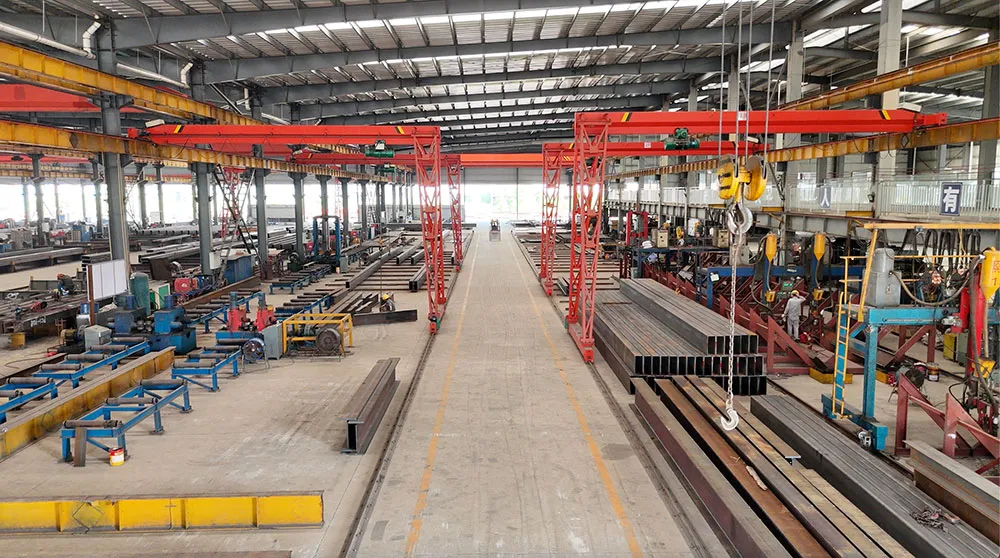
Depending on the structure, relevant equipment can include CNC cutting machines, drilling lines, H-beam assembly equipment, automated welding systems, straightening equipment, blasting machines, coating facilities and material-handling equipment.
Ask which operations are completed in-house and which are subcontracted. Subcontracting is not automatically a problem, but responsibility for procedures, inspection and traceability should remain clear.
Ask About Available Capacity, Not Only Maximum Capacity
A supplier may quote a large monthly production capacity while simultaneously fabricating other major contracts. Procurement teams should ask how their project fits into the actual production schedule.
Useful questions include:
- When can approved drawings enter production?
- How much capacity is available during the required period?
- Which operations could become bottlenecks?
- How will fabrication lots match the delivery sequence?
- How are urgent drawing revisions handled?
- Which processes depend on external subcontractors?
Our structural steel fabrication process guide explains the manufacturing sequence from engineering and cutting through welding, inspection and coating.
5. Confirm Material Specifications and Traceability
A reliable quotation identifies the steel materials included rather than describing the entire structure only as “high-strength steel.” Material grade influences structural design, welding procedures, availability and cost.
Buyers should check:
- Structural steel grades.
- Plate and section standards.
- Bolt grades and specifications.
- Welding consumables.
- Purlin and girt materials.
- Roof and wall cladding materials.
- Insulation core where applicable.
- Coating or galvanizing requirements.
- Material certificates required by the project.
Material Certificates Need a Connection to the Actual Steel
Receiving a certificate does not by itself establish traceability. Where project requirements call for traceability, the fabricator should maintain a controlled relationship between the certificates, material identification and fabricated components.
Material substitutions should also follow the agreed approval process. A supplier should not quietly replace the specified grade because another material happens to be available.
6. Examine Welding, Inspection and Quality-Control Systems
Statements such as “100% quality checked” or “strict inspection” sound reassuring, but they do not tell buyers what was inspected, how often it was checked, which standard was applied or which acceptance criteria were used.
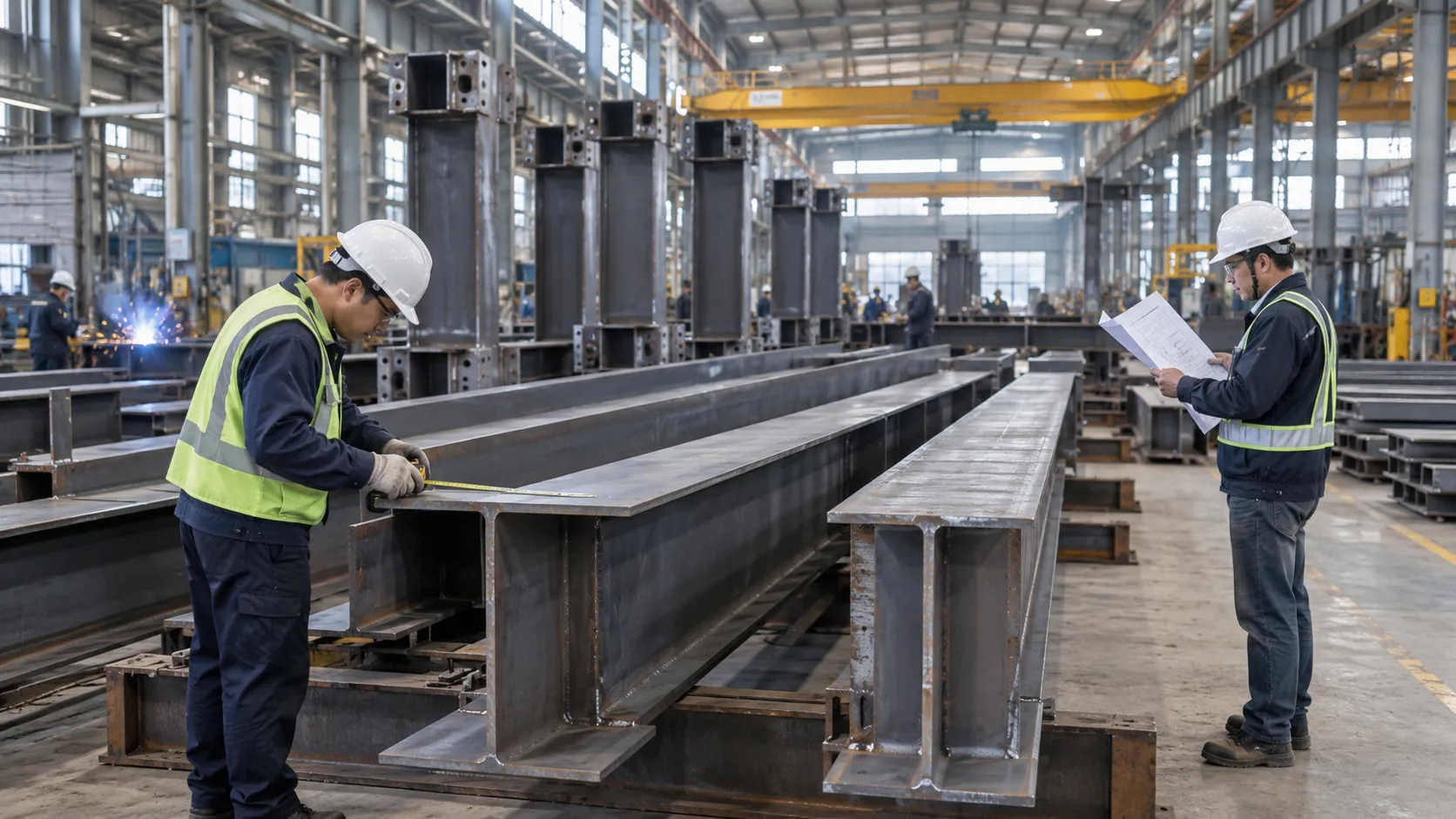
A reliable steel structure supplier should be able to explain its quality-control process in practical terms.
Depending on the project, buyers may ask about:
- Incoming material inspection.
- Material identification and traceability.
- Cutting and drilling inspection.
- Fit-up inspection.
- Welding Procedure Specifications.
- Welder qualifications.
- Visual weld inspection.
- Non-destructive testing where specified.
- Dimensional inspection.
- Surface-preparation inspection.
- Coating thickness records.
- Nonconformance control.
- Final release inspection.
Read our dedicated steel structure quality control guide for a detailed explanation of material inspection, welding controls, NDT, dimensional verification and manufacturing records.
Certifications Are Evidence, Not a Substitute for Project Review
A recognized quality-management certification can be useful evidence that a company operates a documented system, but buyers should verify the certificate scope, issuing body, facility and validity rather than relying on a logo displayed on a website.
ISO 9001 provides requirements for a quality management system. For projects that specifically require AISC-certified fabrication, buyers can use the official AISC Certified Fabricators resources to understand the applicable certification program.
Not every international steel building requires either certification. The contract and destination requirements should establish what is actually required.
7. Compare the Complete Building Specification, Not Only Steel Weight
Two suppliers can quote the same building dimensions and still offer very different scopes. One quotation may include a complete building package, while another may cover only the primary steel frame.
Before comparing price, normalize the specification.
| Item | Questions to confirm |
|---|---|
| Main frame | Columns, rafters, beams, connection plates and structural steel grades? |
| Secondary steel | Purlins, girts, eave struts, bracing, tie rods and supports? |
| Connections | High-strength bolts, ordinary bolts, washers and anchor bolts? |
| Roof and walls | Sheet profile, steel thickness, coating, insulation and panel thickness? |
| Openings | Doors, windows, louvers, ventilators and framed openings? |
| Drainage | Gutters, downpipes, flashings, ridge caps and trims? |
| Surface treatment | Preparation grade, paint system, thickness or galvanizing requirement? |
| Engineering | Calculations, shop drawings, anchor-bolt drawings and erection drawings? |
| Inspection | Standard QC, specified NDT, reports and third-party inspection? |
| Delivery | Packing, container loading, inland transport and ocean freight? |
For the building envelope, our roof and wall cladding systems guide explains how panels, purlins, girts, insulation and weatherproofing work together.
For corrosion protection, compare the complete specification rather than a paint color. Our steel structure surface treatment guide covers blasting, painting and galvanizing requirements in more detail.
8. Evaluate Quotation Transparency and Total Project Cost
The cheapest quotation is not necessarily the lowest-cost solution after engineering changes, inspection, freight, missing accessories and field modifications are included.
A professional quotation should make the scope understandable enough for an apples-to-apples comparison.
Check whether the proposal identifies:
- Building dimensions and structural system.
- Design assumptions.
- Material grades.
- Estimated or confirmed steel quantities.
- Roof and wall specifications.
- Surface treatment.
- Doors, windows and accessories.
- Drawing and engineering scope.
- Inspection and testing scope.
- Packing method.
- Freight responsibility.
- Incoterms where applicable.
- Delivery schedule.
- Payment terms.
- Quotation validity.
- Explicit exclusions.
Investigate Large Price Differences
If one quotation is substantially lower, do not assume that the supplier is simply more efficient. Identify the reason for the difference.
Potential causes can include different design loads, lighter steel grades, different plate thicknesses, fewer accessories, thinner cladding, a simpler coating system, excluded engineering, excluded testing, different freight assumptions or a different interpretation of the project scope.
9. Check Export Packing, Container Loading and Shipping Capability
For an overseas project, fabrication is only part of the supply chain. The steel must still arrive in a condition and sequence that allows the local team to identify, unload, store and erect it efficiently.
Before ordering, ask how the supplier handles:
- Piece marking.
- Bundle identification.
- Bolt and accessory packing.
- Protection of painted or galvanized surfaces.
- Protection of roof and wall panels.
- Container loading plans.
- Weight distribution.
- Cargo securing.
- Packing lists.
- Commercial and shipping documents.
- Loading photographs.
- Delivery sequencing.
A good fabrication shop can still create difficulties at site if components are poorly identified or small accessories are mixed together without a clear packing system.
Our steel building packing and shipping guide explains the process from factory marking and packing through container loading, overseas transport and project-site receiving.
10. Assess Communication, Installation Documents and After-Sales Support
Communication quality becomes more important as project complexity increases. During a steel building project, buyers may need answers concerning drawings, foundations, anchor bolts, fabrication changes, container contents, installation sequence or unexpected site conditions.
Before placing the order, establish:
- Who is the main commercial contact?
- Who handles technical questions?
- How are drawing comments recorded?
- What is the normal response process for RFIs?
- What erection drawings are provided?
- Are packing lists linked to member marks?
- Is online installation guidance available?
- What site support can be provided if specifically contracted?
- How are shortages, damage or discrepancies handled?
A supplier should also clearly distinguish structural supply from local construction responsibilities. Foundations, permits, cranes, local labor, utilities and authority approvals may remain with the buyer or local contractor unless the contract specifically states otherwise.
How to Verify a Steel Structure Supplier Before Placing an Order
Supplier selection should use several forms of evidence rather than relying on a single factory photograph, certificate or video call.
Step 1: Send the Same Project Brief to Shortlisted Suppliers
Provide consistent information about project location, building use, dimensions, loads, cladding, cranes, surface treatment and delivery requirements. This creates a more meaningful basis for comparison.
Step 2: Compare Technical Questions Before Comparing Price
Observe what each supplier asks. A company that identifies missing technical information early may provide a more dependable proposal than one that immediately offers a final price without clarifying important requirements.
Step 3: Request Relevant Project Evidence
Ask for comparable projects, factory fabrication evidence, typical shop drawings and examples of quality or packing records where appropriate.
Step 4: Verify Important Certificates
If certification is required, check the issuing organization’s official directory or verification method where available. Confirm that the certificate relates to the company, facility and scope relevant to the project.
Step 5: Conduct a Factory Audit When Project Risk Justifies It
For major contracts, buyers may conduct an in-person audit, video factory review or independent third-party audit. The review can cover production equipment, material storage, welding, inspection, coating, finished-product areas, document control and current production workload.
Step 6: Agree Inspection Requirements Before Production
Do not wait until fabrication is almost complete before asking for material certificates, welding qualifications, NDT or third-party witness points. Define the required documentation and inspection scope in the contract or approved quality plan.
Step 7: Complete a Pre-Shipment Review
Before cargo leaves the factory, confirm final quantities, inspection status, packing lists, member identification, shipping documentation and any outstanding nonconformance or repair records.
Common Red Flags When Choosing a Steel Structure Supplier
No single warning sign proves that a supplier is unsuitable, but several together justify additional verification.
- A final quotation is issued without asking for the project location or design loads.
- Steel grades and material standards are not clearly stated.
- Engineering and drawing responsibilities are vague.
- The supplier cannot explain how drawing revisions reach production.
- “Strict quality control” is claimed but no inspection process can be described.
- Required certifications cannot be independently verified.
- Project photographs do not match the claimed scope or application.
- A large price difference cannot be explained technically.
- The quotation does not identify major exclusions.
- Production time appears unrealistic for the project quantity.
- Piece marking and packing are treated as minor issues.
- The supplier cannot explain who will answer technical questions during erection.
A Simple Steel Structure Supplier Evaluation Scorecard
Procurement teams can use a weighted score rather than choosing solely on quotation value. The weighting should reflect the actual project risk.
| Evaluation area | Example weight | Evidence to review |
|---|---|---|
| Relevant project experience | 10% | Comparable completed projects and technical scope |
| Engineering capability | 15% | Design basis, code understanding and drawing quality |
| Fabrication capability | 15% | Equipment, processes, personnel and available capacity |
| Quality control | 20% | ITP, welding control, inspection and traceability records |
| Material and specification clarity | 10% | Grades, certificates, coating and cladding specification |
| Commercial proposal | 10% | Price, exclusions, payment terms and responsibilities |
| Delivery and export capability | 10% | Packing, loading, shipping documents and schedule |
| Communication and support | 10% | Technical response, erection drawings and support process |
These percentages are examples only. A heavy industrial structure with complex welding may assign more weight to engineering and quality control, while a straightforward warehouse may place greater emphasis on complete scope, schedule and logistics.
Questions to Ask Before Selecting a Supplier
Before issuing a purchase order, ask each shortlisted supplier the same core questions:
- Which similar projects have you fabricated?
- Which structural code and design criteria will be used?
- Who is responsible for structural calculations and local approval?
- How are shop drawings and revisions controlled?
- Which production processes are performed in-house?
- Which steel grades and material standards are included?
- How is material traceability maintained when required?
- Which welding procedures and qualifications apply?
- What inspection and NDT scope is included?
- Which coating or galvanizing specification is included?
- Exactly which building components are included in the quotation?
- Which items are specifically excluded?
- What is the realistic production schedule after drawing approval?
- How will steel members and accessories be marked and packed?
- Which documents will be supplied before shipment?
- What technical support is available during site erection?
Evaluating an Overseas Steel Structure Supplier
International sourcing adds additional interfaces beyond fabrication itself. The supplier and buyer may work in different languages, engineering systems, time zones and regulatory environments.
The supplier should understand that the project is ultimately governed by the destination requirements and contract documents—not simply by the manufacturer’s normal domestic practice.
Overseas buyers should therefore pay particular attention to:
- Units and drawing conventions.
- Applicable material equivalents.
- Local structural loads and codes.
- Document language.
- Third-party inspection requirements.
- Export documentation.
- Container limitations.
- Destination-port requirements.
- Installation documentation.
- Clear allocation of local engineering responsibility.
This is particularly important for industrial projects such as industrial steel structures, where equipment interfaces, platforms, pipe racks, conveyors, cranes and service loads can make coordination more complex than a standard building shell.
Choose the Supplier That Can Control the Whole Project Scope
A reliable steel structure supplier should be evaluated as part of the project delivery system, not only as a source of steel tonnage. The strongest supplier for a particular project is the one that can clearly understand the engineering requirements, control drawings and materials, fabricate to the agreed specification, document inspections, prepare cargo for international transport and respond when technical questions arise.
Price still matters, but it should be compared only after the technical and commercial scopes have been normalized. A lower initial quotation can lose its advantage quickly if important engineering, coating, testing, accessories, packing or support are excluded.
For overseas buyers, a practical selection process therefore combines technical review, factory capability, quality records, quotation transparency, logistics planning and communication performance. These 10 factors provide a stronger basis for procurement than choosing a supplier from price or marketing claims alone.
Looking for a reliable steel structure supplier for a warehouse, workshop, factory or industrial project? Contact Bingfa Steel Structure with your project location, building dimensions, application, drawings, design requirements and destination port. We can review the available information and discuss a project-specific steel structure proposal.
Frequently Asked Questions
How do I choose a reliable steel structure supplier?
Compare suppliers using relevant project experience, engineering capability, fabrication capacity, material specifications, quality-control systems, quotation scope, export experience and technical support. Verify important claims with drawings, records, factory evidence or third-party checks rather than relying only on price or marketing statements.
What should I ask a steel structure supplier before ordering?
Ask about applicable design standards, project loads, steel grades, shop drawings, welding procedures, quality inspection, coating specifications, included components, production schedule, packing, shipping documentation, erection drawings and exclusions from the quotation.
Is the cheapest steel structure supplier the best choice?
Not necessarily. Two quotations may use different design assumptions, steel quantities, materials, coatings, panels, accessories, testing requirements or delivery scopes. Compare the same technical specification before deciding which offer provides the best overall value.
Should I audit a steel structure factory before placing an order?
A factory audit can be useful for larger or higher-risk projects. Buyers may conduct an in-person visit, video audit or independent third-party inspection to review manufacturing equipment, quality procedures, material control, coating facilities, production capacity and documentation.
Which certifications should a steel structure supplier have?
The required certifications depend on the project specification and destination market. ISO 9001 may provide evidence of a quality-management system, while some projects may specifically require AISC certification, welding qualifications or other national and project-specific certifications. Verify the required scope rather than assuming one certificate applies to every project.
How can I verify steel fabrication quality before shipment?
Define inspection requirements before manufacturing begins. Depending on the project, review material certificates, welding qualifications, dimensional inspections, NDT reports, coating records, nonconformance records, final inspection results and packing documentation before release.
What should be included in a steel structure quotation?
A clear quotation should identify the structural scope, design assumptions, material grades, main and secondary steel, bolts, cladding, surface treatment, accessories, engineering, inspection, packing, freight responsibility, delivery schedule, payment terms and exclusions.
Can a steel structure supplier provide installation support overseas?
Many suppliers can provide erection drawings, component marks and online technical guidance. Site supervision or engineer support may also be available when specifically agreed. Buyers should confirm the exact installation-support scope before ordering because local labor, cranes, foundations and permits are often handled separately.