Steel Workshop Buildings for Industrial Applications
An industrial steel workshop should be planned around the work it must support—not only its overall dimensions. This guide explains common workshop applications, key design considerations, and the information needed to request a preliminary steel-frame quotation.
In this article
Industrial Applications of Steel Workshop Buildings
Steel workshop buildings are planned around the work performed inside: production, fabrication, assembly, processing, welding, maintenance or repair. The structural layout should follow the operating requirements rather than a standard warehouse template. This section outlines three common workshop applications and the planning issues that typically affect the steel structure.
Manufacturing and Assembly Workshops
Manufacturing and assembly workshops accommodate production lines, workstations, sub-assembly and final assembly. Some layouts benefit from long clear areas, but not every manufacturing process requires a fully column-free building. The need for internal columns should be assessed against production flow, equipment positions, lifting requirements and structural efficiency.
Key inputs include equipment locations, material flow, floor loading, access routes and any overhead lifting. If assembly involves large components or overhead handling, crane provision and clearance should be defined early. Coordination between the steel structure and production equipment foundations is important to avoid conflicts.
Machinery Processing and Welding Workshops
Machinery processing and welding workshops contain machine tools, welding stations and related material handling. The structural grid should be coordinated with machine foundations, service pits, ventilation or fume extraction routes, and maintenance access. Vibration-sensitive equipment may require separate assessment by the equipment supplier and structural engineer.
Welding operations may require roof or wall penetrations for exhaust systems, fresh-air supply or local extraction. If these systems are known at the design stage, the roof and wall framing can be planned to accommodate them. The final structural design should follow project-specific equipment data and applicable standards.
Equipment Maintenance and Repair Workshops
Equipment maintenance and repair workshops are arranged around service bays, lifting equipment and access for vehicles or machinery. Large door openings and high-clearance areas are often required, but dimensions should be determined by the largest equipment to be serviced and the lifting method.
The steel design should account for door opening framing, crane loads if applicable, and floor loading from equipment, jacks or support stands. Where vehicle pits or service trenches are required, their influence on the foundation and floor slab should be reviewed by the project structural engineer.
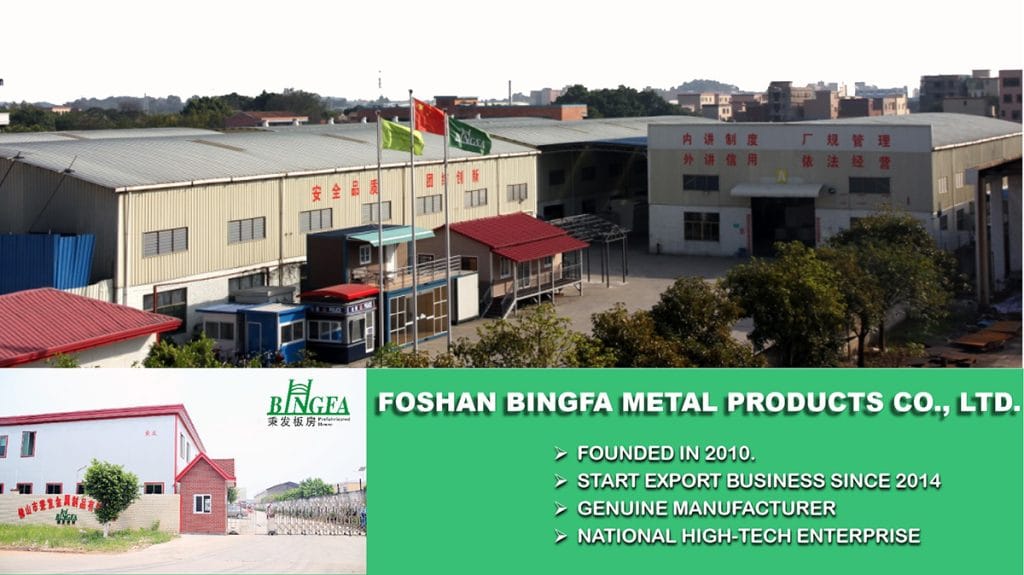
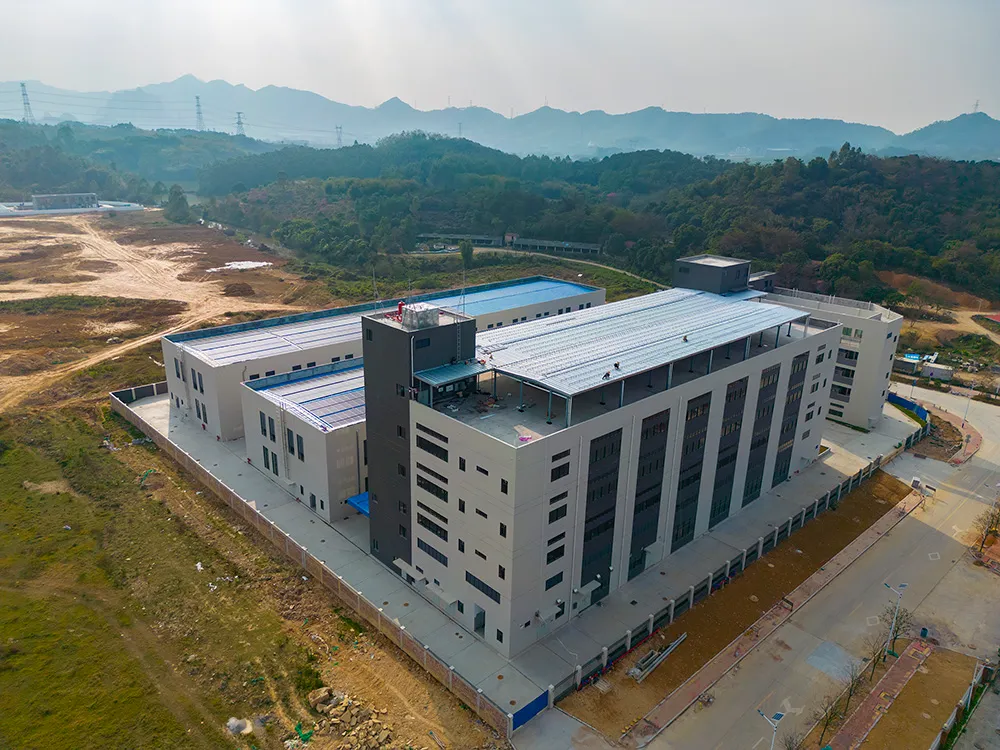
For a completed workshop project in Foshan, China (18,976.89 m²), Bingfa supplied the steel structure and provided on-site installation services. View the Foshan workshop project for more details.
Key Design Considerations for Industrial Workshops
Span and Column Layout
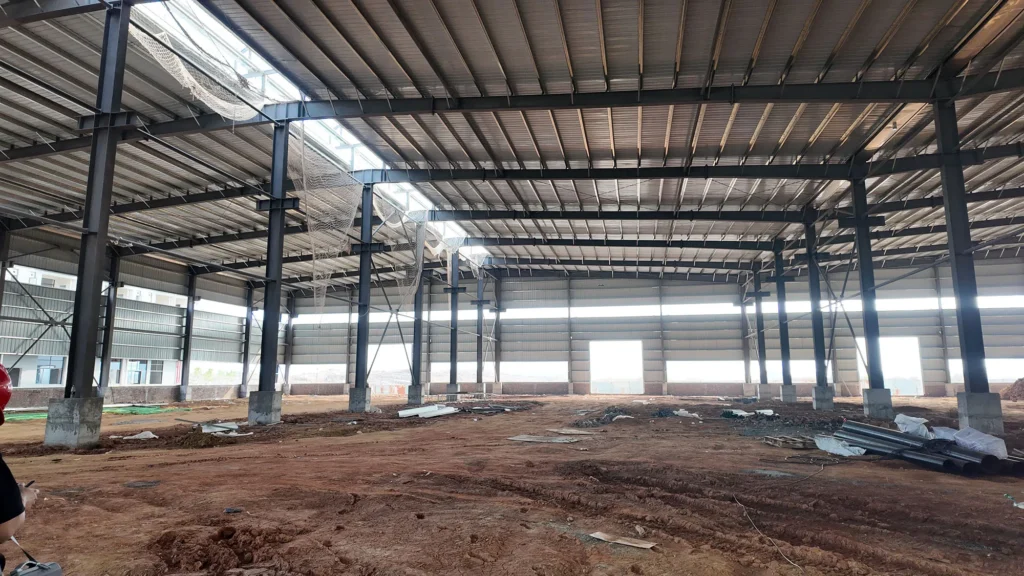
The appropriate span, column spacing and eave height depend on the project layout, equipment requirements, structural loads and applicable design standards. A clear-span solution may suit some operations, while other layouts may be more efficient with internal columns positioned outside active work zones.
Column spacing should be coordinated with equipment foundations, production flow, door openings and crane runway requirements. If a wider bay is needed locally, the structural implications should be reviewed by the designer rather than assumed as a standard solution.
Future expansion requirements should also be discussed during layout planning.
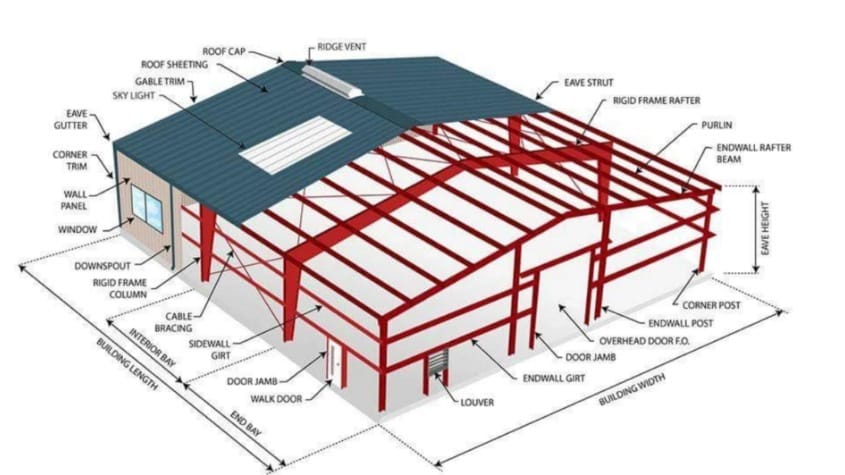
Eave Height and Equipment Clearance
Eave height is determined by the required internal clearance. For buildings with overhead cranes, the eave height must consider the required hook height, crane girder and hoist dimensions, and safety clearances specified by the crane supplier and applicable standards. For buildings without cranes, eave height is normally set by the tallest equipment, overhead services, ventilation ducts and maintenance access.
Because eave height affects the steel frame, cladding area and crane runway, it should be confirmed early in the project.
Crane and Equipment Loads
Crane design actions should be determined from the crane supplier’s data, including relevant vertical wheel loads, horizontal forces and dynamic effects, and evaluated using the applicable design code and load combinations. Rated lifting capacity alone is not sufficient to size crane runway beams, brackets or supporting columns.
Equipment loads should be provided by the equipment supplier or project engineer. Concentrated loads, dynamic loads, vibration and floor opening requirements can affect the foundation and floor slab design. The structural engineer should use project-specific data rather than generic assumptions.
Wind, Snow and Seismic Requirements
Wind, snow and seismic design requirements depend on the project location, terrain, building geometry and applicable local code. These actions influence the design of the structural frame, bracing, cladding connections and foundations. Roof drainage should also be assessed for local precipitation, roof geometry and potential snow accumulation where applicable. The project location should therefore be confirmed before structural design begins.
Roof and Wall Systems
Roof and wall systems for workshops may use insulated sandwich panels, single-skin metal sheets with insulation, or other project-specific solutions. The choice affects thermal performance, condensation control, durability, maintenance and the loads transferred to the secondary framing.
For welding, processing or other operations with heat, fumes or moisture, the cladding and ventilation strategy should be coordinated with the structural design. Final selection should be based on the project’s operating environment and specification.
Workshop Space vs. Dedicated Warehouse Space
A workshop and a dedicated warehouse are both industrial buildings, but they serve different purposes. A warehouse is typically planned around storage density, racking, loading docks and efficient goods movement. A workshop is planned around production, processing, assembly, maintenance or repair, and the equipment that supports those activities.
Some warehouse design principles may still apply, such as efficient envelope and structural framing. However, workshop requirements for equipment foundations, crane loads, ventilation, door openings and service access should be addressed separately. For storage-focused buildings, see steel warehouse buildings.
Information Needed for a Preliminary Quote
For a preliminary steel workshop quotation, the following information is normally requested first:
- Project location
- Intended use
- Approximate length
- Approximate width
- Eave height
Crane requirements, design loads, door openings, roof and wall systems, and drawings can be confirmed later when they are relevant to the enquiry. If crane capacity, hook height or equipment loads are known, they should be provided as early as possible because they can affect the structural system.
A preliminary steel structure quotation is normally based on the agreed steel structure supply scope. Cladding, transport, foundation, floor slab, MEP and site installation are not automatically included unless specifically stated. These items should be clarified separately according to the project requirements and contract scope.
Frequently Asked Questions
What information is needed for a preliminary steel workshop quotation?
The usual starting information includes the project location, intended use, approximate length, width and eave height. Crane requirements, design loads, door openings, cladding systems and drawings can be discussed when available. Providing more detail early helps the supplier identify the appropriate structural scope.
Can a steel workshop be designed without internal columns?
A clear-span design may be possible for some workshop layouts, but it is not automatically suitable for every manufacturing or processing operation. The decision depends on the required span, equipment positions, crane loads, roof loads and structural efficiency. The project structural engineer should confirm the appropriate layout.
How is eave height determined for a workshop?
Eave height is set by the required internal clearance. In buildings with overhead cranes, it must account for the required hook height, crane dimensions and safety clearances. In buildings without cranes, it is usually governed by equipment height, overhead services and ventilation. Final dimensions should be confirmed against project data and applicable standards.
What crane information is required for a steel workshop design?
The crane supplier should provide the crane type, rated capacity, span, wheel loads, hook height and other relevant data. The structural designer then combines these with the building geometry, support conditions and applicable design code. Without this information, the crane runway and supporting structure cannot be finalized.
Are foundations and floor slabs included in a steel structure quotation?
Foundation and floor slab design depend on geotechnical conditions, equipment loads and structural calculations. They may be supplied by others or included as a separate scope. A steel structure quotation should not be assumed to include civil works, floor slabs, MEP, cladding, transport or site installation unless these items are specifically stated.
How do wind, snow and seismic loads affect a steel workshop?
These loads depend on the project location and applicable local code. They can affect bracing, cladding fixings, roof drainage and foundation design. The project location and design criteria should be confirmed before the structural design is completed.
Discuss Your Steel Workshop Project
To move a workshop project forward, provide the project location, intended use and approximate dimensions first. If crane, equipment or ventilation requirements are known, include them in the initial enquiry so the structural scope can be reviewed properly. For general workshop building information, see steel workshop buildings. For broader industrial steel structure applications, see industrial steel structures.
For a preliminary steel-frame quotation, share your project location, intended use, and approximate building length, width and eave height.