Author:David Ran
Position:Senior Steel Structure Engineer at BF Steel Structure.
Introduction:With over 16 years of experience in steel structure design, fabrication, and project management, David has participated in more than 500 industrial steel building projects worldwide, including warehouses, workshops, agricultural buildings, and commercial steel structures.
Share This :
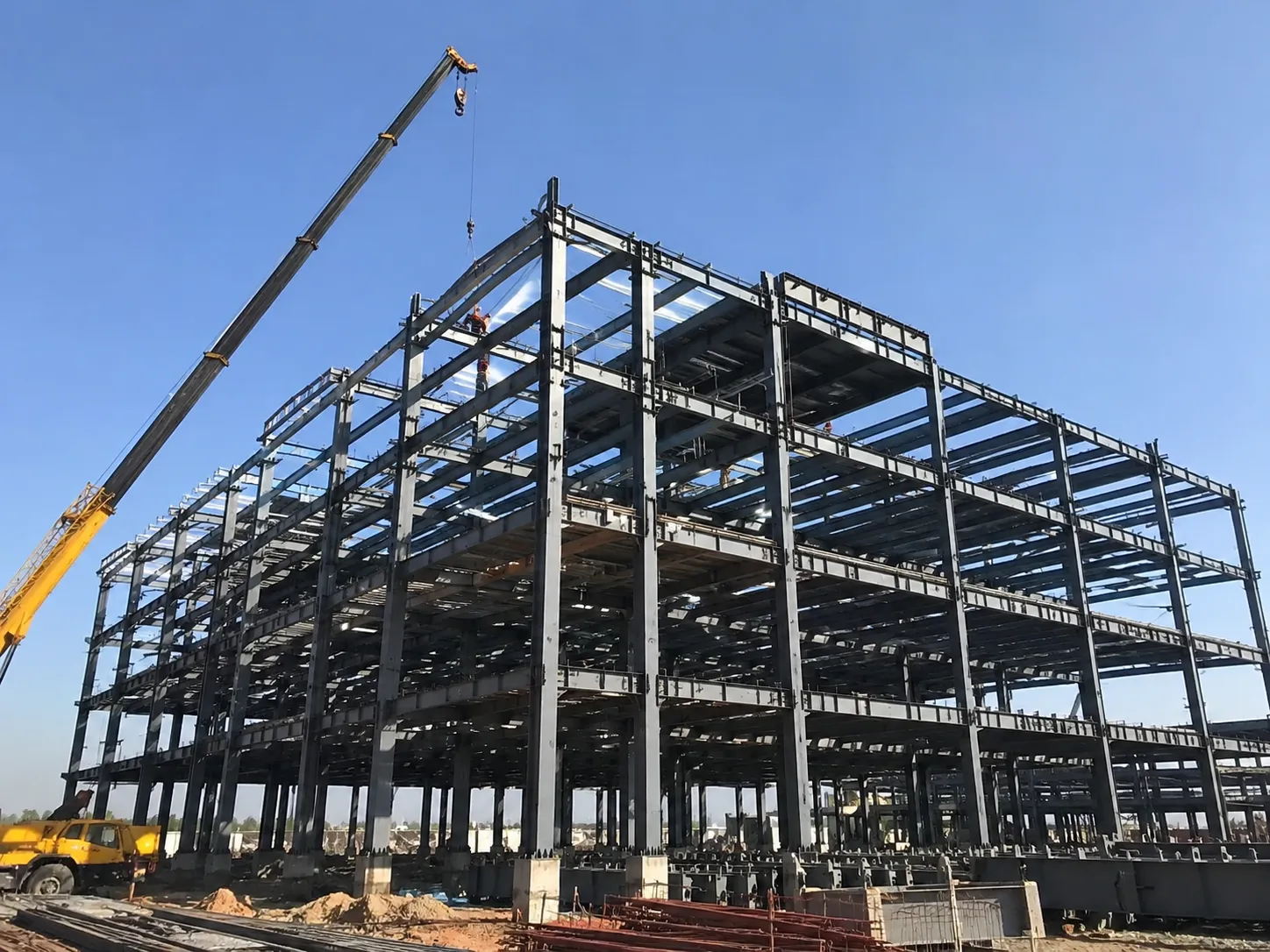
There are steel buildings all over the place, and for good reason too: they go up in some cases twice as fast, require significantly less time and money to maintain over several decades, and can handle loads that would crush most other types of building materials. Yet, not all steel buildings share the same characteristics. For instance, a steel warehouse shell and a steel 40 floor office building are both considered “steel buildings,” but they possess almost no similarities in terms of design philosophy. If you know about the different major types of steel buildings, as well as what kind of function each type is best suited for, it will be a lot easier to distinguish between a building project that will provide healthy returns for 50 years, and a building project that will become a costly liability.Clearly, the more you know about each of the different types of steel building systems, and which system is appropriate for which application, as an Architect trying to make cost estimates, or a Developer looking at numbers, or a Student learning about the different Building Systems, the information contained in this breakdown will assist you in understanding what factors are most important when it comes to using a particular type of steel building system in a certain type of building.
Fundamental Classification of Steel Construction In a broad sense, steel structures can be basically categorized as to how that load is transmitted to a foundation – from a roof and floors to a foundation. The connection of the load paths, gravity, wind, seismic, and live loads from one member to another defines all aspects of the study, and constraints of a building.
The main categories can be grouped into three families. Portal frames are made by connecting columns and beams with rigid connections, which allows them to resist vertical and lateral loads. Multi-storey rigid frames utilize a similar concept but with many stories stacked on top of each other; this often includes the addition of a bracing system. Truss and space frame structures carry loads with triangulated members, which provide optimal performance for long-span structures. Lighter gauge cold-formed steel uses thin sections that have been shaped by factories for use in construction on a smaller scale. Tension and suspension systems use cables or membranes that are kept in tension (as opposed to compression) to create their strength.
Every system has a sweet spot, which is a span, height, and loading range where one system provides better performance than another. Using the wrong system can also create buildings that deflect too much, or vibrate when people walk on them, or don’t meet code requirements for lateral drift. I’d like to add, the categorization we have created isn’t academic; it will influence all subsequent decisions.
Portal Frame Steel Structures. Portal frames would probably have the largest number of steel structures constructed from them. These structural systems consist primarily of columns and rafters connected via moment connections, thus creating a rigid portal frame, which can resist lateral forces without the need for any additional bracing walls. The shape of the portal frame is simple, fabrication of the frame is easy, and the outcome is a structure with a completely open interior space without having any internal columns taking up valuable floor space. Most portal frames reach spanning from about 15 to 60 meters, but engineered structures can go farther than that. The framing members are generally spaced apart from each other by 6 to 9 meters, and the area between them is covered in purlins and girts (which support cladding). The reason for that is the fact that they’re so repetitive and modular; if you build one frame then you’re essentially building an entire building.
Industrial and Warehouse Uses Portal Frame Construction is used by the largest and fastest growing building types and the construction type of choice for many buildings where the interior space is completely open. This is especially true in warehouses, factories, agricultural buildings, distribution and aircraft maintenance facilities because of the large open space that portal frame construction provides with no internal columns to impede the movement of material on forklifts and conveyors or the storage of materials on racks. A standard 2026 Amazon-type fulfillment centre is built from portal frame bays that are 30-40m wide with eaves at least 12m high so that there can be multiple levels of racking. These frame bays are designed for heavy manufacturing so overhead crane(s) can run along rails attached to columns. The outer walls are clad with insulation metal panels, and the outer shell can take only a few weeks to construct but not months.
Key Components of the Design And Design Efficiency. The three primary connections used in portal frames are the bases of the columns (either pinned or fixed), the eave connection (the point where the column connects with the rafter), and the apex connection (the point where the two rafters join at the ridge). One of the key features of an efficient portal frame is the use of haunches (depth of section increases gradually at the eave and apex) in the connect. The haunches bring more material to an area where high bending moments occur. Designers utilize tapered portions as well to reduce steel weight and these portions have varying depths along the length of rafter. A properly designed portal frame will make use of steel at 15-25 kg/m² of the floor area, which is highly efficient. At the end bays, wind bracing is employed along the roof plane to ensure that the entire system has three dimensional stability.
Multi-Story Rigid Frame Structures If you require a structure to be vertical, portal frames cannot be utilized. Multi-level structures made of stiff frames have steel beams/columns connected by moment-resistant joints to form the steel framework of office buildings, apartments, hospitals, and multi-use structures. The structural grid of a structure utilizing a moment connection is smaller than that of a portal frame generally between 6m to 12m due to the loads imposed by building occupants, furniture, equipment, and partition walls. Multi-floor Steel structures mostly employ Composite construction, in which Steel beams cooperate with Concrete floor slabs via Shear studs (welded to the upper surface of beam) to create one joint Construction. This Joint Construction nearly doubles the Load-Carrying ability and rigidity of beams, but adds very little weight. Low-Rise (approx. 20 Stories and below) structures usually utilize Rigid Framing, whereas greater than 20 story buildings basically will require some other type of lateral force resisting system(s)
Commercial Office and Residential Use The open-plan office is popular because steel-framed buildings permit a flexible office layout with demountable partitions, which can be reconfigured at any time by tenants. The 9 x 9 metre grid provides a high degree of flexibility for most commercial building layouts. Typically, floor-to-floor heights from about 3.6 m to 4.2 m are used, which provides sufficient space above the finished ceiling for mechanical systems such as ducts and pipes, therefore the finished ceiling is not crowded. Since the year 2020, the use of steel framing for residential construction purposes has experienced considerable growth rates, especially in mid-rise, apartment buildings with five to fifteen stories. Due to the quickness of building using steel, the associated financing expenses are less; and due to the less being lighter than reinforced concrete, there is potential for smaller foundations to be built, which is very much a saving in locations with bad soil. A steel-framed residential tower is the normal wall in cities like London and Singapore, where the length of time it will take to build the structure will directly affect the feasibility of the project.
Bracing Systems Used for Lateral Stability Wind and earthquake forces are the major threats to tall buildings. The rigid frame connections by themselves can withstand lateral loads only so far. They produce heavy and costly connections, and the columns become larger. Therefore, majority of the multi-story steel buildings have either bracing or something similar to bracing. Concentrically braced frames use diagonal steel members arranged in an X, V, or inverted-V configuration within one or more select bays. These diagonal steel members carry lateral loads (forces) in either tension or compression and thus significantly reduce the bending moments that would otherwise be imposed on the beams and columns. Eccentrically braced frames incorporate a short “link” beam between the brace and the column, which dissipates seismic energy by yielding in a controlled manner, which is very important in earthquake-prone areas. Architects continue to employ moment frames with no bracing as a way to create fully open bays, but the connections in these types of moment frames are heavier in weight and require a greater volume of steel.
Truss and Space Frame Structures A truss uses a completely unique technique for covering a distance; instead of simply bending one massive member, a truss creates multiple points of contact that all experience either tension or compression only. Therefore, when using a truss to cover a long distance (such as over several hundred feet or meters), it is very possible for most of the members in the truss structure to be quite light in weight, even though if you were covering the same distance with a solid beam, it would weigh much more than a truss system. Planar trusses are the traditional triangular frames used in bridges and similar structures (e.g., commercial roofs), and they can span from 30 to 100 meters, depending on the configuration. The three most common types of trusses include the Pratt, Warren, and Vierendeel types and each has different arrangements of members for different loads.
“Large-span roofs,” such as those used in large arenas and hangars, are fundamentally made up of planar truss elements. To construct large, open column-free areas such as arenas and exhibition centres, airports and airport terminals, as well as aircraft hangars, you need to use trusses. Many new stadiums will have a truss that measures at least 200 metres long. The depth of the truss varies between 5-10 metres, depending on the size and type of construction or design. The weight of these huge structures can be measured in thousands of tonnes, but the weight of a truss can be much lighter than a similar structure that can span this distance. The aircraft hangar is another classic use case. The opening of a hangar used for wide bodied jets would generally require an opening of approximately 80 metres in width and a height of at least 25 metres at the door opening. This is typically accomplished through the use of trusses and/or with doors that slide or fold in order to be able to access the required opening. The expansion of several major airports in 2025 in the Middle East and Southeast Asia were using steel trusses for roof systems with a width of over 120m
Geometric Strength Three-Dimensional Space frames are basically trusses but in three dimensions. Where a truss has all members in one plane with triangles formed between the various members, a space frame forms a lattice with many points or nodes where struts connect to one another. The lattice often consists of two parallel planes of struts connected by diagonal web members. Because of this, loads are distributed in several directions simultaneously, which gives the frame a tremendous amount of stiffness relative to how light it is. Space frames represent an optimal solution to large-area flooring needs that happen to be rectangular or mismatched with regard to shape (i.e., having a series of parallel trusses that would not work efficiently). Typical uses for space frames include mall atriums, convention center roofs, and canopies over transit stations. their visual effect (i.e., their appearance) is very unique and they basically have a geometric latticeway pattern of smaller tubes that appears almost decorative while performing a significant structural function.
Light Gauge Cold-Formed Steel Structures The use of hot rolled steel sections in all types of steel buildings is not always necessary. Cold-formed steel, typically manufactured by forming thin strips of steel (approximately 0.8–3.2 mm thick) into the shape of a C channel section, Z channel section, and hat section, and manufactured at room temperature, now accounts for a significant share of residential and light commercial construction. Cold-formed steel framing directly competes with timber framing in residential home construction, as well as low rise apartment construction. Cold-formed steel framing systems are lightweight enough to be carried by hand, but are also dimensionally stable (i.e., will not warp, shrink, or twist like wood), termite-proof, non-combustible, and a small team of workers can assemble a cold-formed steel framed home in less than one week. Modular construction is revolutionizing this segment of the building sector. Companies are manufacturing single-room spaces and full apartment units from cold-formed steel framing in factories, finishing them with drywall, flooring, and fixtures. Then the completed module is shipped to the site where they are basically stacked together. In the year 2026 modular steel construction will continue to become a bigger share of affordable housing in North America and Europe. Factory-produced units are held to very precise standards and as such have very little waste and allow for residents to move in quickly. After the first module is delivered, a 100-unit apartment building can be assembled in less than 12 weeks.
Specialized Systems of Tension and Suspension There are some structures where the best way for the main elements will be to see loads due to pure tension, instead of compression or bending. Cable-supported roofs, suspension bridges and tension membrane structures all belong to this group. Cables made from steel have amazing strength-to-weight ratio which is almost five times higher than that of the structural steel section hence making possible use of tension systems for carrying long span loads over a distance with large amounts of architectural aesthetics. Tensile membrane structures are constructed by using a relatively thin covered material (such as a fabric or ETFE film) that is stretched over a cable/mast structure of steel. These structures provide a lightweight covering for things such as stadiums, amphitheatres, sports facilities and transport terminals. The domes at the Eden Project and the Munich Olympic Stadium roof are two well known examples of tensile membrane structures. The use of steel cable is also used as the supporting structure of a cable net facade of modern skyscrapers. Cable net facades are similar to a traditional curtain wall, but they use thin steel cables to support the glass panels instead of traditional aluminum mullions. When combined with the right design, engineering and wind analysis, these types of projects demonstrate the limits of what can be done with steel.
Selecting the Appropriate Steel Structure There are several questions that must be asked when designing a structural system. The first question is to determine the span of the structure. The number of floors must be identified. The loads that must be carried laterally will be governed by wind and seismic codes. The cost of construction, and the speed of construction will also have an effect on the choice of the structural system. Single-story buildings (less than 60 meters in span) are generally most cost-effective and simple to construct using portal frames. Buildings up to 15 stories tall can typically be built using either braced or moment-resisting (rigid) frames. For spans over 60 meters, however, you’ll probably be looking at trusses or space frames.
If you’re building a home or a light commercial business that is four stories or less, it’s worth giving cold-formed steel a look, especially if you plan to build using modular methods of construction.
Local Supply Chain. A.optimally.designed structure, is not necessarily.the most.efficient when.The.structural.fabricators.and.installers.will have.to.come.from.out.of.The.Area.Local.fabricators.undressers.can.build.a.less.efficient.structure.Faster and.roster will build than out.area fabricators and.instollos. The “Best” steel.Structure.is.The.one.The.meets.Your.Damam, Height, Load. Cost and construction schedule. It is not the one looks best on the.drawings. Bring engineer Evolving two. or. more.Structural.design.Option.Early on.And.use.Mathematics.in.deciding on.what.Selection.to.use.