Meta good description: Confusion between steel structure vs concrete building. This is a direct comparison of the two types regarding cost, construction time, durability sustainability and other aspects which will assist you in making a selection.
Keywords: Which is Better Steel or Concrete Building, Steel Structure vs. Concrete Building, Construction of Steel vs. Concrete Buildings
When you begin construction of your next building project, one of the primary debates that many developers, contractors, and building owners are faced with is:. Steel building or concrete building? Both steel and concrete have benefits plus drawbacks, so the selection depends on your needs, your budget, your time frame, and the conditions in your area. This guide provides a comparison between steel structures and concrete buildings with a side-by-side examination along 8 critical dimensions so you can determine which type of building is the best fit for your project.
1. Construction time: steel structures have much shorter construction times than other types of construction
Construction time is directly related to the cost of your project and return on investment, construction time is one of the greatest advantages steel structures provide.
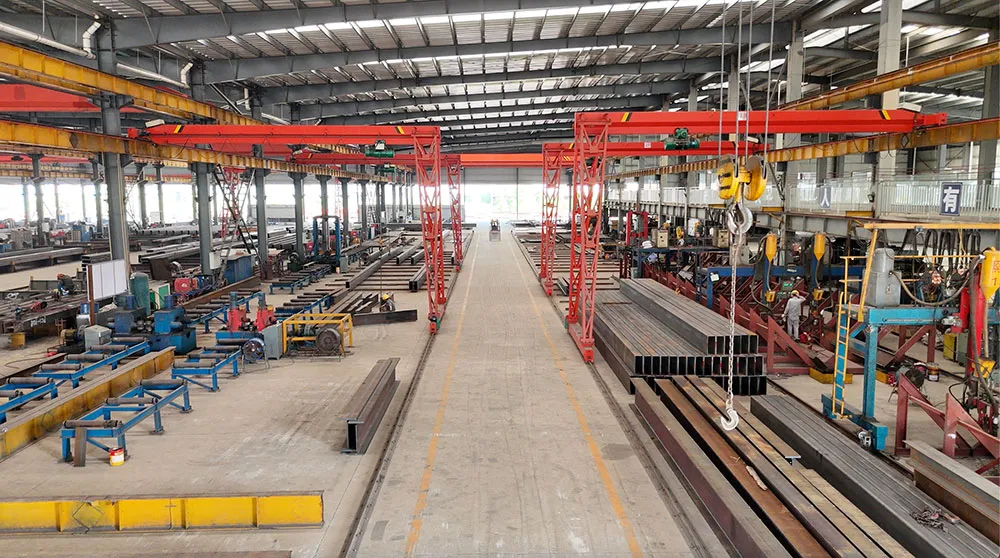
Steel Structure – As described above, prefabricated steel structures can be manufactured offsite (in a factory) while the foundation and site are being prepared. A typical 2000 Sq. M steel structure can be completely erected onsite in 2–3 weeks with a total design-to-construction completion time of 2–3 months.
Concrete building:
Building concrete structures are built in an order of events: One must complete the foundation before constructing the building itself, and one must construct the building before binding steel bars, pouring concrete, and curing. and the structural completion. After that, the curing process alone will take about 28 days for the concrete. Typically, for a 2000 square metre (approximate 22000 square feet) structure using concrete, it would take about six months to one year for the construction to be finished provided that the construction schedule is well-planned.
Winner: Steel structure. Steel structures can be finished in half to a third of the time needed for concrete structures so you can use the new building much sooner.
2. Overall Ownership Expense: Steel Structure is less expensive than others.
The main thing that we can consider is ‘money’. Therefore, when comparing the two types of buildings, you need to examine both the upfront, initial costs and the overall total cost of ownership over time.
Upfront Construction Cost
Steel structure: The upfront material cost of steel is slightly higher than concrete, but this is offset by lower foundation, labour and time costs. For most standard projects, the upfront cost of a steel building is 10-20% lower than a concrete building of the same size.
Concrete Building. Lower material costs but higher labor, formwork, foundation and construction duration. The costs of concrete construction will be much greater for a building with large spans or complicated designs.
Long-Term Total Cost of Ownership. Steel Structure. The life of service is above 50 years. It has little maintenance, excellent energy efficiency and considerable residual value. The long term TCO will be twenty to thirty percent lesser than the concrete buildings in their complete life cycles.
Concrete structures are susceptible to breakdowns including cracks, water leaks, and exposure to the elements over time. As a result, they typically need continued repairs and maintenance. They also have poor thermal performance and are therefore more expensive for heating and cooling over time. At the end of the life of the building, it has virtually no value as a recyclable material and can therefore be very expensive to demolish.
The winning building material in relation to this comparison is steel structure as it has a lower initial investment cost in constructing virtually all types of projects and will provide significant savings on the total cost of ownership over the lifetime of the structure.
Steel outperforms concrete in extreme conditions.
Steel and concrete can both be designed to meet or exceed the requirements for Structural Safety, but each will perform very differently under extreme conditions.
3.Seismically, steel has the ability to deform (ductility) and can absorb a lot of energy during an earthquake before it fail, whereas concrete is considered to be a brittle material with very little ability to absorb energy during an earthquake and therefore can crack or completely fail during a major seismic event. Steel structures have become the structure of choice for earthquake zones worldwide.
Wind Resistance: Both materials can withstand high winds. However, because steel is strong yet light and flexible, it is even better than concrete at handling extreme wind loads (e.g., typhoons along coastlines).
Corrosion/Weather Resistance: Hot dip galvanising combined with appropriate anti corrosive coatings means that modern steel structure will remain corrosion/rust-free for more than thirty years. Concrete, on the other hand, carbonates and water enters it over time leading to the steel rebar to rust, which ultimately results in the degradation of the structure.
Fire Resistance: While concrete possess inherent fire-resistant properties, steel requires application of professional fire retardant coatings to achieve similar fire safety standards. With proper application of fire retardant coatings, steel structures can be made to comply worldwide fire safety standards.
Steel is the clear winner for special application (i.e., high wind, earthquake). Tie for general application.
4. Design Flexibility and Space Utilization: Steel Has The Distinct Advantage
When you are looking for structures that provide large spans with open, flexible interior spaces, steel structure is the choice!
Steel Structures: Steel provides high strength while being lightweight; therefore, you can design large spans (greater than 100 metres) without using columns to support the interior. This feature makes steel structures ideal for industrial work-shops, ware-houses, sports arenas and airplane hangars, where you require to have as much clear-space available within that interior as possible. Steel structures also provide future flexibility for alteration or expansion (modification), extending, or adding mezzanines in the future without compromising the overall structure.
Concrete Buildings: Due to limited spans, they require numerous internal load-bearing walls and columns, which reduce usable space and restrict design possibilities within the structure. further, the difficulty, and cost it takes to alter or add on to a concrete structure proves to be very burdensome.
AWinner: Steel structure. Unmatched design flexibility and higher space utilization.
5. Sustainability & Environmental Impact: Steel Structure is More Eco-Friendly
By the year 2026, the worldwide construction industry will have become more focused on sustainable building designs and construction than ever before, and this represents yet another major benefit of the use of steel structures.
Recyclability – Steel can be recycled in its entirety without any loss of usefulness or strength at the end of the life of any steel building. Over 90% of all structural steel currently used in construction worldwide is manufactured using recycled products/steel. Concrete, on the other hand, cannot be recycled and is the largest source of construction waste generated during the demolition of buildings because most of the debris is sent to landfills.
On the waste front: Factory made steel components lead to less than 3% of the overall amount of materials wasted during the construction process. When traditional concrete construction occurs, an average of approximately 15-20% of the material is wasted, along with a significant amount of waste produced by form work.
According to the carbon footprint, the life cycle of steel structures in the carbon footprint is 30 to 40% less than that of concrete structures. The manufacture of cement is responsible for approximately 8% of the world’s carbon dioxide (CO2) emissions and is one of the largest contributors to climate change.
Green Building Compatibility: Steel structures allow for easy integration with solar panels and green roofs and high performance insulation and other green building technologies. This combines to make it easier to achieve certifications such as LEED®, BREEAM or one of the many other global green building certifications.
Steel structure is the winner. Steel structure is more environmentally friendly and sustainable than concrete.
6. Foundation Requirements: Steel Structure are Less Expensive to Build Than Concrete
Building weight directly effects the foundation design and cost. This is an often overlooked advantage of steel structures.
Steel Structure:
Compared to that of a concrete building of the same size,
The weight of steel structure building is approximately 30-50% lighter than concrete structure building. This will reduce the total load (weight) on the foundation; therefore, you do not require a deep and intricate foundation even on sites with weak soils. The cost for steel structures is 30 to 40% less than that of a concrete structure.
A concrete structure weighs a lot and therefore requires a foundation that is very deep and reinforced to carry the weight of the structure. This increases the cost of the foundation, the time it takes to build, and the likelihood that poor soils will negatively affect the foundation.
The Steel structure wins here. It needs less money to be put into its foundation and therefore provides a HUGE savings to the overall cost of the structure.
7. Site & Weather Adaptability: Steel Structure is More Flexible
Conditions at the site of construction, and the weather local to that site, can have significant effects on your construction project, and steel structures provide greater flexibility.
Steel structure – most of the production is at the steel fabrication plant and there is very little construction to perform at the actual construction site. The installation of the structure is not affected by the weather conditions i.e. rain, low temperatures, etc. that would prevent the construction of a concrete structure. Steel structures are particularly advantageous in remote locations because the components will arrive completely prefabricated and ready to be put together.
For concrete structures, most of the work takes place on the construction site, and therefore, building with concrete is extremely weather-dependent. You can’t pour or cure concrete during rain or very high or low temperatures, and these two weather conditions may cause prolonged delays in construction. Placing concrete on a remote project takes too many resources to complete the project and a large number of on-site workers.
Steel Structure – Win Again! Steel structures have far better site and weather adaptability than
concrete structures.
Maintenance; steel structure provides the least maintenance.
The cost of maintaining your facility over time represents a significant share of your total facility costs; again, steel structures provide a distinct advantage in terms of long-term maintenance.
Steel structures not only require minimal maintenance due to the new anti-corrosion and fire retardant coatings applied today, but also only need to be inspected once in about every five to ten (5-10) years; if needed, the paint coating can be touched up. Steel structures do not have the potential for cracking, water leaking, or structural degradation that are experienced with concrete structures.
Inspections and repairs should be done on concrete buildings frequently to correct cracks, water leaks, and the spalling of concrete. The steel bars in the interior are susceptible to rusting due to the infiltration of water which will result in the need for extensive structural repairs at a significant cost.
The victorious steel structure has very low maintenance costs in the long term compared to the concrete structure.
Conclusion: Which One Do You Pick?
Thus, in 2026, prefabricated steel buildings will be the most preferred option on commercial, industrial, and agricultural projects after considering their performance against all eight aspects. They deliver faster erection, lower overall cost, greater lifespan, unlimited options in design, and exceptional sustainability.
A structure made of concrete might still be better for small and simple construction projects with very low construction labor costs or projects that must be built using concrete according to the local building codes. However, steel buildings will perform better at a lower cost and, as a result, provide a greater return on investment for the majority of global building projects.
If you would like to find out more about which method of construction would work best for your particular building project, or if you would like to receive a free custom design and price quote from us, please contact our expert staff. We are happy to assist you.