Share This :
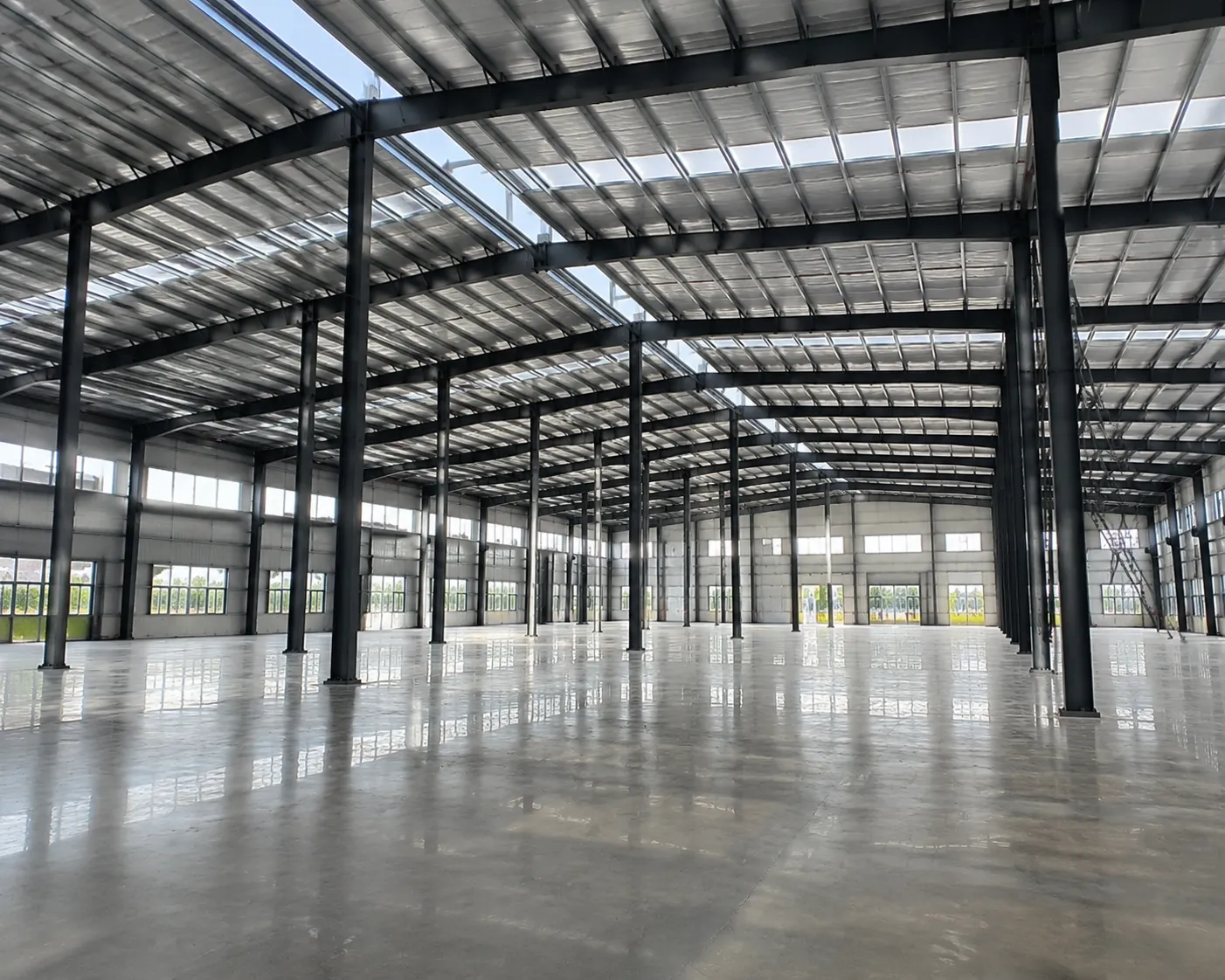
Every building you use, every bridge you travel over, and every stadium you watch an event in, tells a story of forces working together to support materials. Steel is the structural material of choice by structural engineers because of the many ways it provides both strength and flexibility. For over 100 years, steel has been the material of choice for structural engineers due to its excellent combination of strength and flexibility (relative to concrete and wood). Understanding how steel is used in constructing buildings will help you understand why engineers use steel for everything ranging from small office structures up to bridges that cross an entire city. There is no special “engineering” science behind the design of all of these types of structures; it is simply practical physics that almost anyone can understand and will change your view of the built environment you encounter every day. No matter if you are studying for your academic degree or thinking about designing tall buildings or just wondering how tall buildings stay up in a wind blowing at 150 kph – the ideas outlined here will help provide you with a strong base. This document illustrates these concepts: Materials and how they react, the path of forces through the building structure, the structural frames and links between the material and modes of failure. Understanding this information should help you figure out how steel structures are supported and why.
Essential Material Attributes of Structural Steel
Steel can be defined as a substance that is strong, but it has unique characteristics that will determine which of several different steels will be used in a specific application. Engineers choose steel on the basis of its unique physical and functional properties.
Yield Strength, and Tensile Capacity. Yield strength is the maximum stress that steel can endure without permanently deforming. Common structural grades like ASTM A992 (widely used in W shapes in 2026) have a yield strength of approximately 345 MPa. Tensile capacity, maximum stress material can hold without breaking is greater than this value, and is approximately 450 MPa for the same grade of steel. The difference in yield and ultimate tensile strength is significant. It provides the engineer with a safety factor. The yield could be reached by the beam at a certain load; however, the beam will not fail until the load is much higher. The design codes require a minimum level of safety margin between the normal service loads and the yield level of structures, and use safety factors ranging from 1.5 to 2.0, based on the load type/combination.
Ductility and Elastic Deformation We define Ductility as a property that distinguishes steel from brittle materials as cast iron or unreinforced concrete. Steel, once it reaches its yield point, does not break but instead deforms plastically which allows it to absorb” energy as it deforms. Areas susceptible to earthquakes need this characteristic, since construction in these environments needs to withstand a lot of bending before failure would occur. Elastic deformation occurs in steel at and up to the yield point. When you apply a load to steel, the steel will stretch or compress a small amount and then when you remove the load the steel goes back to the original shape and size. So elastic deformation of steel is very much like a rubber band. The area that structures are typically designed to undergo during their daily use is referred to as the elastic range. The modulus of elasticity of structural steels is approximately 200 GPa and, since this value is very similar among the various grades of structural steels, it is usually considered to be virtually constant by engineers.
Load Distribution and Stress Paths. The purpose of any structure is to distribute or transfer loads safely to the ground from the location where they are applied. Understanding the method in which forces travel through a steel frame is important to structural engineering.
These types of structural members are called compression members and tension members. The individual components of a steel structure can be subjected to compressive or tensile forces (i.e. they are compressed or pulled apart). There may be different areas along the length of an individual member that are subjected to both compressive and tensile forces at the same time. The most common load-bearing element in a steel structure is a column, which bears the weight of the load carried above it and transfers that weight vertically to the ground. Bracing systems and the bottom chords of trusses are examples of tension (or tensile) members because they bear the force produced by the tension applied to them. Tension members are easy to design, as steel is good at resisting being pulled or strained. Compression members are more difficult to design. If a slender column is loaded in compression, it can easily buckle or bend horizontally before the steel is fully loaded, indicating that the shape of the column is just as important as the strength of the steel.
Bending moments and shear forces There is a beam that has two simultaneous load types which are bending and shear load. In the case of a floor beam with a point load applied at midway between the two supports, the upper flange of the beam is being compressed, while the lower flange of the beam is being stretched (in tension). This creates an internal couple which we refer to as a bending moment. Shear forces act vertically through the beam’s web, resisting the tendency of one section to slide past another. The approach Engineers take when sizing Beams is to verify that the Web has sufficient capacity to support Shear loads after they have completed their calculations to determine the appropriate size of the Beam (i.e., “Bending Capacity”). Shear will only dominate the design of a Beam if it is very Short and Carries a Lot of Load, or if there are Large Openings through the Web.
Structural Systems and Framing Configurations The selection of the structural framing system affects the way a steel structure will withstand gravity loads, i.e. the weight of itself, occupants, furniture, etc., as well as lateral forces like wind and earthquakes. The cost, stiffness, and architectural freedom of each system are all related through trade-offs.
Moment-Resisting Frames Moment frames use rigid beam-to-column connections to resist lateral forces by transferring the bending moments by rigid beam-to-column connections. In a rectangular portal frame, when wind pressure is applied to one side of the frame, rigid joints prevent the structure from deflecting like a parallelogram. Instead, both beams and columns flex to absorb and dissipate lateral force through their stiffness. The benefit of this system is that it offers an architecturally free design because there are no diagonals in the floor plan which block out any part of an open space. The disadvantage to this system is the cost of construction. The Moment connections require a lot more welding than other types of frames require and much larger members. Theía frames areí moreí flexibel than braces will sway more in wind loads, so they tall buildings can have occupant comfort issues. Braced frames are made up of diagonals that form a triplicate shape. Since a triangle is naturally rigid, they have ability to resist lateral forces that may lead to tilting. When you place a diagonal brace from one end of a rectangle to the other end it converts the rectangle from a soft shape to a hard one (triangle etc) and thus becomes one of the most effective ways of fighting with lateral forces. The most widely used bracing types are X-braces, V-braces (chevrons), and the single diagonal type. The distribution of the loads applied to them will be different for each of these bracing types. Concentrically braced frames are cost-saving, yet they may affect the positioning of doors and windows. Eccentrically braced frames use a limited link segment which bends during an earthquake to offer flexibility at the same time as keeping the normal rigidity.
Truss Systems & Long – Span Engineering Trusses take what would be one huge, heavy beam, and they split the load into several smaller parts, each carrying only the force of the beam pushing or pulling them. This provides a very efficient way to create a long span of space. Trusses are commonly used to create long spans (40–100 meters) in structures such as airport terminals, exhibition halls, and bridges without having any supports between the two ends of the span. Truss geometry determines which truss members carry tension or compression loads. For example, in a simple Pratt Truss under typical gravity loads, all of the vertical members are in compression and all of the diagonals are in tension. The diagonals on a Warren Truss alternate between the direction of diagonal and tension/compression based on the location of the applied load.
Steel Connection Engineering The connections of a structure can be considered the most important factor when determining if a structure will ultimately succeed or fail. The strength and capacity of the individual beams and columns are of little significance if a connection does not allow for the transfer of forces between the members.
Bolted vs. welded connections. Basically, bolts are used to connect steel members and steel plates together with each other with high strength bolts, often Grade 8.8 or Grade 10.9. Bolting is fast, easy to inspect, and almost always produces a safe connection in any kind of weather. Most bolts are used as field connections on steel members and steel plates being constructed during the year 2026 since this type of connection allows for quick construction without the requirement of having certified welders perform any of the work onsite. Welded Connections meld steel components together, forming a joint that enables the transfer of forces through the entire cross section of the connected members. Shop welds, produced in a controlled factory environment, generate consistently good welds. On the other hand field welds can be quite variable and often cost more than shop welds although they are required for some types of connections, like a full moment connection if that is within a seismic area. The majority of Modern Connections utilize a hybrid method of having shop welded components, connected with bolts in the field.
Rigid versus simple connection A moment connection (also called a rigid connection) transfers the three different types of forces that act on a beam, these being bending moment, shear and axial. Moment connections are usually very heavy and expensive, but they are required in moment resisting frames. The typical connection will include full penetration groove welds at the flanges of the beam, along with a bolted shear tab at the web of the beam. Simple (or Pinned) Connections basically carries the axial and shear force, allowing free rotation of the end of the beam. The typical shear tab connection or clip angle connection is the best example of the same. The most common connections used between beams and columns which support gravity loads only (i.e., not lateral loads) in a standard office type building are simple type connections, lowering the cost of fabrication as well as the time required to install the same.
Factors of Stability and Failure Understanding the ways through which a steel structure can fail is very important as the way to stand. An Engineer will Design on the basis of specific failure modes rather than just designing for general “strength”.
Buckling and Slenderness Ratios are explained below For compressive members, buckling is the main way the member can fail, and it is more a geometical issue than a strength issue. For example, a long slender column could buckle laterally under a load much lower than what the steel could theoretically support in axial compression. Slenderness (L/K) is a measure of the column’s length relative to its width. Euler’s buckling formula, which was formulated during the eighteenth century, continues to provide the theoretical underpinning of column design. It is still used in modern design codes such as AISC 360, which modify the formula with empirical curves that take into consideration the imperfections that exist in reality (i.e., initial crookedness, residual stresses due to manufacturing and eccentrically applied loads). Therefore, the slenderness ratios of columns and braces is one of the first concerns in their design. Fatigue failure arises through repeated loading cycles which result in the development of cracks at stress concentration points which subsequently grow until failure occurs despite the fact that the stress levels are less than the yield stress. Bridges are particularly susceptible to fatigued failures because the traffic loads subject the structure to cyclical loads (i.e., millions of cycles during the life of the structure). Welded joints that perform well under static loading will often develop cracks after experiencing approximately two million stress cycles at half of what would be considered to be static load capacity for the same welded joint. Corrosion is still the most environmentally damaging thing that can happen to steel. Over the course of many years, steel that has not been protected in a humid or salt-rich environment can become much thinner than when it was originally installed and lose much of its ability to carry load. There are many advanced methods now being used to protect steel including hot-dip galvanizing, epoxy coatings, and the use of weathering steel (such as Corten), which develops a solid layer of rust on its surface that keeps moisture and air out of the steel below. Inspections are conducted on a regular basis to identify any damage to the steel before it becomes unsafe.
Advances in the Modern Design, and the Use of Sustainable Steel. The steel engineering industry in 2026 will be unlike the industry was ten years ago. Building Information Modeling, or BIM, as it’s often called, has now fully developed and allows all structural engineers to work with fabricators and erectors from one single, coordinated three-dimensional model to detect any potential clashing issues and optimize connections, prior to ever cutting any steel. Additionally, with Building Information Modeling being so mature, many engineers are now using parametric design tools; this will allow engineers to test out hundreds of different types of framing configurations within a matter of hours to find framing options that use 10-15% less material, compared to traditional engineering designs. Sustainability changes the narrative of steel. Structural steel, one of the most recycled materials in the world, is created using almost 100 percent scrap in electric arc furnaces. Material selection is influenced by life-cycle assessments, and mills using renewable energy have reduced the amount of carbon embodied in steel structures. High strength steel (over 550 MPa) reduces both the size and weight of steel members used in engineering, which lowers material usage and the amount of load carried by foundations. The basic engineering principles that are used to design steel structures have not changed over time. The three main design principles are equilibrium, compatibility, and material behavior. However, the tools used to apply these basic design principles continue to evolve and improve. If you are currently learning about structural engineering or if you just want an appreciation of how the buildings/bridges around us were built, understanding the basic engineering principles will provide a permanent “lens” through which to view all of the constructed structures. The next time that you are walking through a parking garage or passing under an expressway, take a few minutes to look up to see how the various connections have been made. You will see how all of the engineering principles detailed in this article have been used to construct those connections from steel and bolts and welds.