Galvanized Steel Structures: Hot-Dip Galvanizing and Corrosion Protection
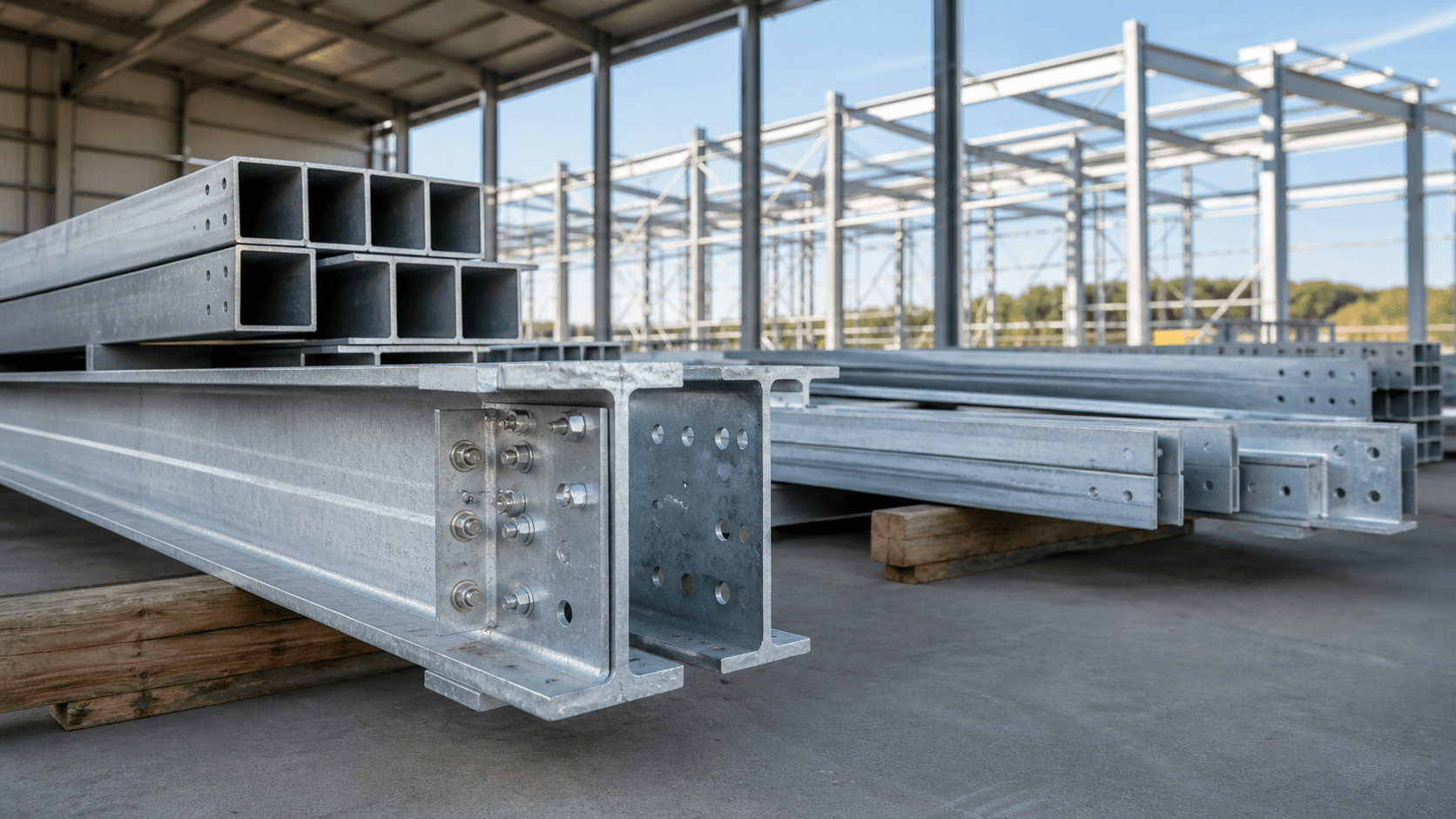
Galvanized steel structures can reduce corrosion-related maintenance, but their performance depends on more than a silver finish. Coating specifications, fabrication details, exposure conditions, and handling all affect how well the steel remains protected. A lower initial quotation can become expensive when inaccessible surfaces corrode or coating repairs interrupt operations.
For contractors, owners, architects, and procurement teams, the practical question is whether the proposed protection system matches the project. This guide explains after-fabrication hot-dip galvanizing, the differences between zinc and paint systems, and the inspection evidence buyers should request before accepting a shipment.
When comparing galvanized steel structures, evaluate the complete package: engineering, fabrication, galvanizing, connections, delivery, and maintenance planning. The coating is one part of a coordinated structural specification, not a substitute for correct design or workmanship.
What Are Galvanized Steel Structures?
In this guide, galvanizing means immersing fabricated steel members in molten zinc after cutting, drilling, and welding. Suitable members include beams, columns, brackets, platforms, and hollow sections designed for safe immersion. The process coats accessible internal and external surfaces, provided the assembly allows cleaning solutions and zinc to circulate and drain.
This is different from making a component from continuously galvanized sheet, or applying zinc-rich paint to bare steel. Those products have their own applications and specifications. Buyers should not accept the word “galvanized” as a complete description of the coating process or its acceptance requirements.
For many U.S. structural products, ASTM A123/A123M is the relevant after-fabrication hot-dip coating specification. Hardware and other product forms may fall under different standards. List the applicable specification for each component rather than applying one requirement indiscriminately.
How Zinc Protects Galvanized Steel Structures
Zinc separates steel from the environment and can provide sacrificial protection to nearby exposed steel at small coating discontinuities. As the coating weathers, a protective zinc patina develops under suitable atmospheric conditions. These mechanisms explain why hot-dip galvanizing is more than a decorative surface treatment. The American Galvanizers Association describes this combination of barrier, cathodic, and patina protection.
Sacrificial protection does not mean unlimited tolerance for damage. Large bare areas, aggressive chemicals, persistent moisture, and unsuitable detailing still require attention. Galvanizing also does not increase a member’s specified load capacity or replace a required fire-resistance system. Structural, corrosion, and fire-protection requirements must be coordinated separately.
The Hot-Dip Galvanizing Process
Surface Preparation
Degreasing removes oil and other organic contamination. Pickling removes mill scale and rust, followed by fluxing to prepare the surface for the zinc reaction. Paint, weld slag, and certain fabrication residues may require mechanical removal. Incomplete cleaning can leave uncoated areas, so the fabricator and galvanizer should agree on incoming steel condition.
Immersion and Withdrawal
The prepared steel enters a molten zinc bath, typically around 815–850°F. Zinc reacts with iron to form bonded alloy layers. Controlled lifting and drainage help manage coating buildup and surface finish; assemblies must be compatible with the kettle and handling arrangement.
Cooling and Inspection
After withdrawal, the members cool and undergo visual and thickness checks. Post-treatment choices must be coordinated when painting is planned. The AGA’s galvanizing process overview explains these stages. For galvanized steel structures, request records connected to the actual supplied members, not only a generic process brochure.
Design Details That Must Be Resolved Before Fabrication
Good corrosion protection starts in the drawings. Closed hollow sections and enclosed pockets need correctly located vent and drain openings. Trapped liquids can create serious hazards during immersion, while trapped air can prevent complete coating. Opening sizes and positions should be reviewed by the engineer and galvanizer for the actual assembly; they are not field improvisations. See the AGA’s venting and drainage guidance.
Large assemblies may need transport splices, different lifting points, or changes to fit the available kettle. Thin and thick components connected in one assembly can respond differently to heating. Discuss distortion risk, welding sequence, material selection, and dimensional tolerances before production. ASTM A385 provides relevant design practices; the AGA’s design considerations summarize the issues.
For galvanized steel structures with exposed architectural surfaces, agree on appearance expectations early. Uniform color and exceptionally smooth surfaces require more coordination than ordinary industrial acceptance. Our guide to steel structure drawings explains why connection and fabrication details should be resolved before cutting begins.
7 Smart Acceptance Checks for Galvanized Steel Structures
A useful inspection plan connects the purchase order to measurable acceptance criteria. Before release, confirm these seven items with the fabricator and galvanizer:
- Governing specification: Identify the coating standard, edition, component scope, and any additional project requirements.
- Thickness criteria: Match the required minimum average coating thickness to the applicable material category and steel thickness. Do not assume one universal 85-micron requirement.
- Measurement evidence: Request instrument checks, sampling details, results, and identification of the inspected lot or members.
- Coverage and finish: Evaluate bare areas, drainage spikes, inclusions, and other conditions against the specification and intended use.
- Assembly fit: Confirm holes, threads, mating surfaces, and connection tolerances remain suitable for erection.
- Repair disposition: Record the location, extent, acceptance basis, and method for any repaired coating.
- Traceable release documents: Match member marks, packing lists, inspection records, and conformity statements to the shipment.
The AGA’s explanation of the 2024 A123 revision highlights measured steel thickness and purchaser-specified appearance requirements. A bright coating is not automatically better than a dull one. Conversely, an attractive finish is not proof that galvanized steel structures meet their required coating thickness or coverage.
At a Glance: Galvanizing, Paint, and Duplex Protection
| Buying factor | Hot-dip galvanizing | Paint system on steel | Duplex system |
|---|---|---|---|
| Protection approach | Zinc barrier and sacrificial action | Specified primer and finish system | Paint or powder coating over galvanizing |
| Design constraint | Immersion, venting, drainage, kettle access | Access for preparation and application | Both galvanizing and topcoat requirements |
| Appearance | Silver or gray; natural variation | Broad color and finish choices | Color finish over zinc protection |
| Acceptance evidence | Coverage, thickness, finish, repair records | Preparation, film thickness, cure records | Galvanizing plus topcoat inspection |
| Maintenance planning | Exposure and zinc consumption matter | System selection and recoating access matter | Topcoat maintenance and zinc condition matter |
| Typical decision driver | Durable protection with limited maintenance access | Application flexibility and specified finish | Added protection or architectural color |
These are system-level comparisons, not universal cost or lifespan rankings. Specify each option for the same exposure and intended service conditions.
How Long Can Galvanized Steel Structures Last?
There is no single defensible lifespan for every project. Coating thickness, airborne salts, pollution, moisture exposure, drainage, and local microclimates influence zinc consumption. A sheltered member that collects contaminants may behave differently from another member on the same structure. Buried steel and immersed steel require separate environmental assessment.
The AGA’s time-to-first-maintenance guidance uses an endpoint of approximately 5% rusting of the base steel. This is a planning milestone, not the structural service life or a warranty. Its atmospheric estimates should not be transferred directly to soil or water exposure, as explained in the AGA’s coating-life assessment guidance.
For galvanized steel structures, ask suppliers to state the assumed environment, coating basis, inspection intervals, and maintenance trigger. A documented assessment is more useful than an unsupported claim that every galvanized building will last a fixed number of decades.
When Does a Duplex Coating Make Sense?
A duplex system combines galvanizing with paint or powder coating. It may be worth evaluating where the project needs a specified color, more protection, or a coordinated maintenance strategy. The two layers perform different roles; the topcoat should be selected for adhesion to zinc and for the actual exposure.
Simply painting over freshly galvanized steel without an agreed preparation procedure can cause adhesion problems. ASTM D6386 addresses preparation of hot-dip galvanized surfaces for painting. Coordinate cleaning, surface profiling, post-treatments, primer compatibility, and application timing with the coating supplier. The AGA’s surface preparation guidance discusses relevant practices.
When purchasing galvanized steel structures with a duplex finish, place responsibility for the complete coating system in the contract. Separate suppliers should not leave a gap between galvanizing acceptance and topcoat acceptance.
What Affects Cost and Delivery?
Steel weight alone is an incomplete pricing basis. Assembly size, surface area, difficult handling, venting changes, masking requirements, finishing expectations, inspection scope, and transport between facilities can affect the quotation. A low galvanizing rate may exclude work that another supplier has already included.
Schedule the process around approved drawings, fabrication release, galvanizer capacity, inspection, and shipping. Duplex work adds preparation, application, and curing activities. Request a milestone schedule with clear responsibilities instead of relying on a generic lead-time promise. Our structural steel fabrication process guide explains the upstream quality checks.
Compare galvanized steel structures on a consistent supply basis: members, fasteners, repairs, inspection documents, packaging, freight, and field touch-up. Confirm who pays for rejected work and how coating damage discovered at delivery will be documented and resolved.
Protecting the Coating After Delivery
Newly galvanized members should be stored with drainage and airflow. Moisture trapped between tightly nested surfaces can cause white or gray wet storage stain. Separate members, keep them off wet ground, and avoid packaging that traps condensation. Light staining and heavy buildup require different evaluations; follow the AGA’s storage and handling guidance before treating affected material.
Field cutting, drilling, or welding can damage zinc protection and may also affect structural details. Obtain engineering approval where required and specify coating restoration. ASTM A780 recognizes defined repair methods, including zinc-rich paint, zinc-based solder, and metallizing. A generic aerosol spray is not automatically compliant. The AGA explains repairing damaged galvanized coatings.
Specify the Complete Protection System
Reliable galvanized steel structures begin with compatible detailing and finish with documented inspection, careful handling, and realistic maintenance planning. Specify the exposure, applicable standards, acceptance criteria, and responsibilities before comparing prices. These details help buyers distinguish a complete corrosion-protection proposal from a coating allowance with important exclusions.
Planning a warehouse, workshop, platform, or industrial frame? Contact Bingfa Steel Structure with your drawings, project location, exposure conditions, and finish requirements to discuss a project-specific fabrication proposal and quotation.
Frequently Asked Questions
How long do galvanized steel structures last?
Longevity depends on coating thickness and exposure. Request an environment-specific estimate and maintenance plan. Time to first maintenance is not the same as total structural service life, and atmospheric estimates do not automatically apply underground or underwater.
What coating thickness should I specify?
Use the governing standard’s requirements for the relevant product category and steel thickness, plus any justified project requirements. Avoid choosing a single thickness for every component without checking the specification and discussing feasibility with the galvanizer.
Can hot-dip galvanized steel be painted?
Yes. A compatible paint system over prepared galvanizing creates a duplex system. Specify the preparation procedure, compatible products, environmental limits, and inspection requirements before work begins; ordinary paint applied without preparation may not adhere reliably.
Can galvanized members be drilled or welded on site?
Only under approved structural and coating-repair procedures where applicable. Welding needs appropriate fume controls and qualified personnel. Plan connections before galvanizing whenever practical to reduce field modification and restoration work.
Are galvanized steel structures suitable for coastal projects?
They can be considered, but salt exposure, wetting, shelter, drainage, and maintenance access must be evaluated. Severe exposure may justify duplex protection or another specified system. A coastal location alone is not enough information to promise a particular lifespan.