Steel Building Packing and Shipping: From Factory to Overseas Project Site
Steel Building Logistics / Packing and shipping guide
Steel building packing and shipping is the link between factory fabrication and successful erection at an overseas project site. A steel building can leave the fabrication line with accurate dimensions and an approved coating system, yet poor marking, careless loading, missing accessories, inadequate cargo securing, or an unclear packing list can still create expensive problems thousands of kilometers away.
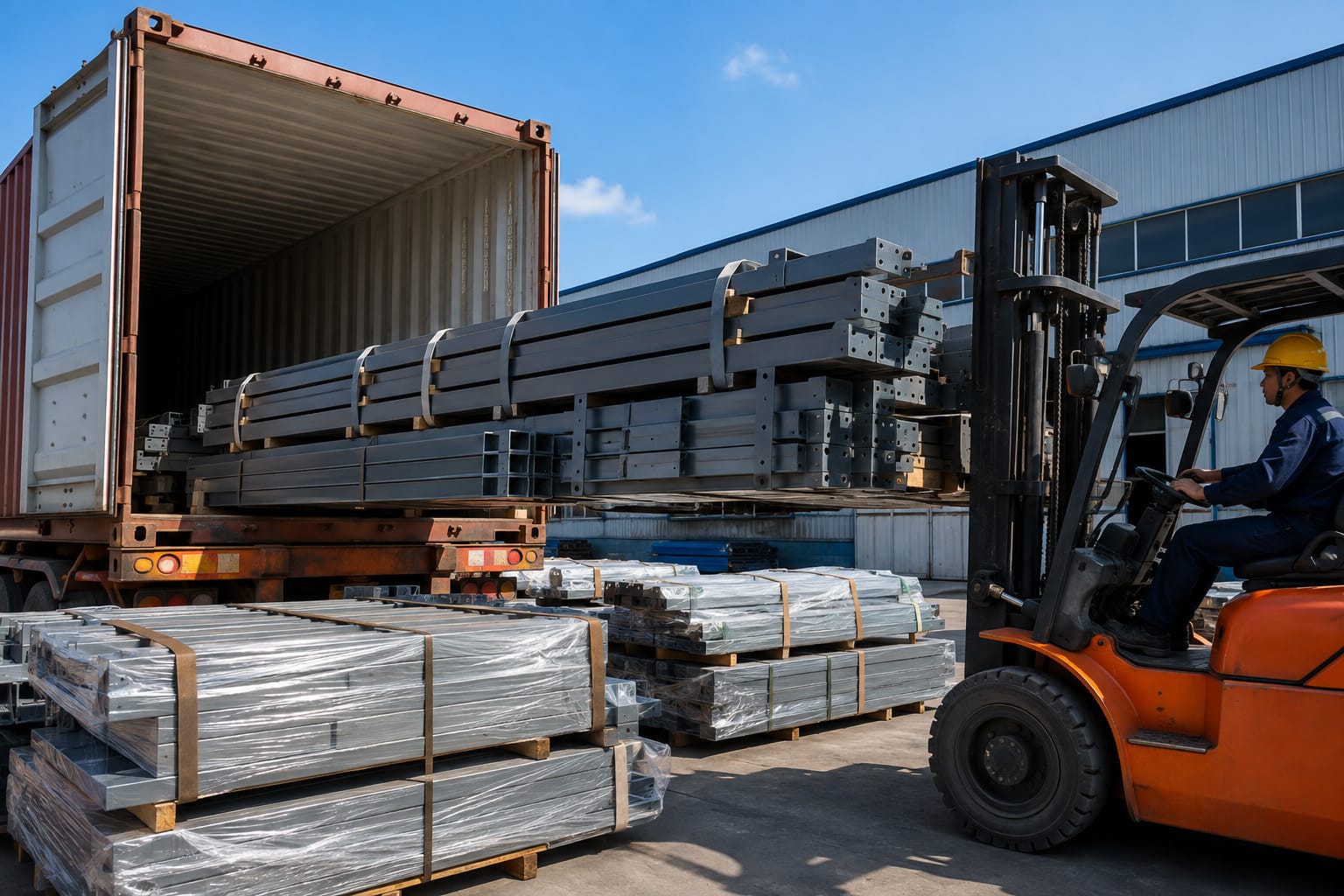
For prefabricated steel warehouses, workshops, factories, and industrial structures, international delivery involves much more than placing steel members inside a shipping container. Primary frames, purlins, wall girts, bracing, bolts, roof panels, wall panels, trims, gutters, doors, and other accessories have different shapes, weights, handling requirements, and installation sequences.
This guide explains the steel building packing and shipping process in nine practical stages, starting after fabrication release and continuing through marking, packing, container loading, export documentation, ocean transportation, unloading, and storage at the overseas project site.
Before the Container Leaves
- Approved packing list
- Readable piece marks
- Protected steel and panels
- Controlled bolts and accessories
- Loading and securing records
- Destination unloading plan
Good shipping starts with information the site team can actually use.
Where Does Packing and Shipping Begin?
Packing should begin only after the relevant components have passed the required fabrication and coating inspections and are released for shipment. At this stage, the project changes from a manufacturing problem into a logistics and site-installation problem.
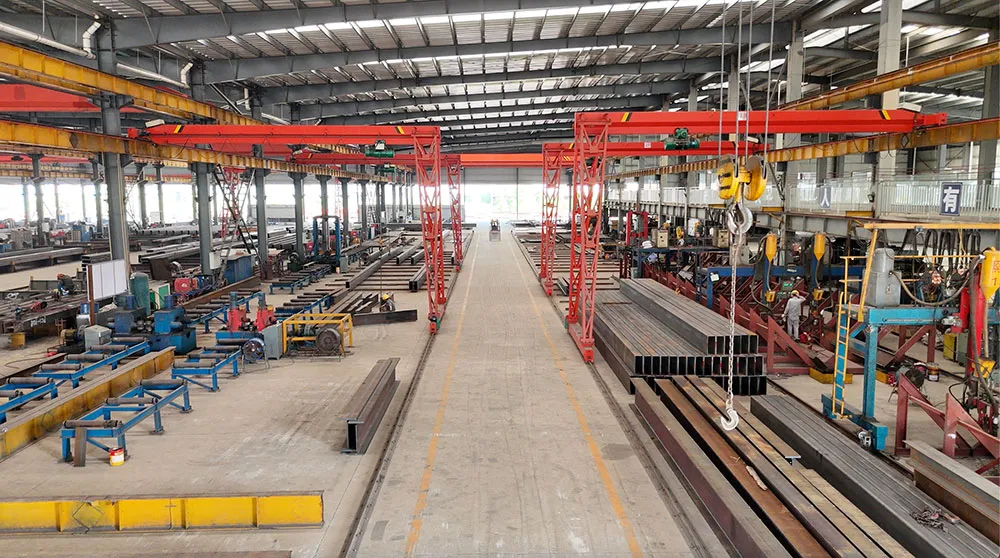
The handover should connect approved drawings, piece marks, quantities, coating status, shipping lots, packing lists, and delivery sequence. Our structural steel fabrication process guide explains the factory stages that take place before final release for packing.
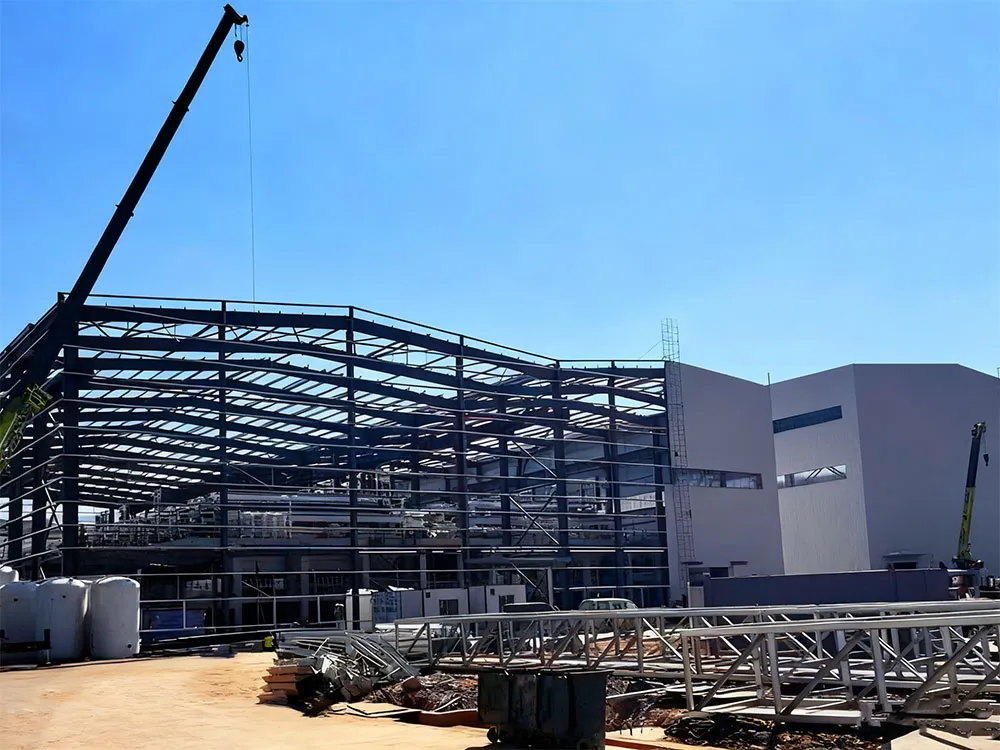
A good shipping plan works backward from the project site. The team should know which members will be needed first during erection, how containers will be unloaded, whether forklifts or cranes are available, how much temporary storage exists, and whether the site has restrictions on truck or container access.
Step 1: Create the Shipping and Packing Plan
The first step in steel building packing and shipping is to divide the project into controlled shipment lots. One large building may require several containers or multiple delivery batches, so the contents should not be allocated randomly.
The packing plan should consider:
- Approved erection and fabrication drawings.
- Piece marks and member quantities.
- Member length, width, height, and individual weight.
- Container or transport-unit limitations.
- Coating and cladding protection requirements.
- Erection sequence at the project site.
- Container unloading method.
- Small-parts and accessory control.
- Destination port and inland transport conditions.
- Any phased project-delivery requirements.
For example, putting components needed during the first days of erection behind material that will not be used until the cladding stage can create unnecessary handling at the site. Packing efficiency therefore should not be measured only by how much material fits into one container.
Step 2: Mark Every Steel Member Clearly
Piece marking is one of the simplest ways to reduce confusion during overseas installation. Each main steel member should carry an identification that corresponds with the approved drawings and packing documentation.
A useful system may identify columns, rafters, beams, bracing, purlins, girts, connection members, and other project-specific parts. The exact marking method depends on the project, but it should remain readable after handling and transportation.
Why Piece Marks Matter at the Project Site
When a container is opened overseas, the site team may be receiving hundreds or thousands of individual components. If the markings on the steel cannot be connected to the erection drawings, installation becomes much slower.
Piece marks can help the site team:
- Check delivered quantities against shipping lists.
- Separate members by building grid or erection zone.
- Identify the correct column or roof beam.
- Locate missing or damaged components more quickly.
- Reduce repeated measuring and trial assembly.
Marking should also be coordinated with drawings. Our steel structure drawings guide explains how drawings communicate component location and assembly information before construction.
Step 3: Protect Steel, Coatings, and Cladding Before Loading
Different parts of a steel building need different protection. Heavy structural members can tolerate handling conditions that would quickly damage thin roof sheets, sandwich panels, trims, doors, or finished surfaces.
Structural Steel Members
Columns and rafters should be supported and separated where necessary to reduce direct rubbing, unstable stacking, and coating damage. Contact points, sharp edges, lifting methods, and the location of smaller components should be considered before the bundle is prepared.
If painted or galvanized surfaces are damaged during loading, ocean transport, or unloading, the project may require approved repair before erection. Our steel structure surface treatment guide explains coating, galvanizing, inspection, and repair considerations in more detail.
Roof and Wall Panels
Roof sheets, wall sheets, and sandwich panels require particular care because bending, edge damage, scratching, or water exposure can affect both appearance and installation.
Panel bundles should remain stable during handling, and the packing method should suit the panel profile, length, finish, and transport route. Related panel options and building-envelope requirements are explained in our roof and wall cladding systems guide.
Wood Packaging and Dunnage
When raw-wood pallets, crates, blocking, or dunnage are used for international shipments, applicable phytosanitary requirements should be checked for the destination. The International Plant Protection Convention provides guidance on ISPM 15 and wood packaging material used in international trade.
Step 4: Control Bolts, Fasteners, and Small Accessories
A missing main frame is easy to notice. A missing bag of bolts, flashing screws, washers, or connection accessories may not be discovered until erection reaches the relevant location.
Small components should therefore be packed by type, size, assembly, or installation zone and identified against the packing list. Packaging should be durable enough to remain intact during forklift handling, container movement, ocean transportation, unloading, and temporary site storage.
Typical small components may include:
- High-strength structural bolts.
- Ordinary bolts, nuts, and washers.
- Anchor-bolt accessories.
- Bracing connection hardware.
- Roof and wall fasteners.
- Panel screws and sealing accessories.
- Flashings and trims.
- Gutter and downpipe accessories.
- Door and window hardware.
- Touch-up coating materials when included.
Anchor-bolt packages deserve particular attention because the foundation stage may take place before the main frame arrives. See our anchor bolts and base plates guide for the relationship between these components and steel-frame installation.
Step 5: Select the Transport Unit and Loading Arrangement
Not every steel-building component fits the same transportation method. Standard containers may suit many prefabricated members and accessories, while unusually long, wide, tall, or heavy components may require a different transport solution.
The shipment planner should confirm actual cargo dimensions and weights before booking transportation. Decisions should consider both international transportation and the practical route from the destination port to the construction site.
| Shipping consideration | Why it matters |
|---|---|
| Member length | Determines whether components fit the selected transport unit and can be unloaded safely. |
| Member weight | Affects container payload, lifting equipment, load distribution, and inland transport. |
| Bundle dimensions | Influence container utilization and the ability to remove the cargo at destination. |
| Loading sequence | Should support safe packing as well as practical unloading and erection. |
| Fragile materials | Panels, trims, doors, and accessories may need separation from heavy steel members. |
| Site access | Container trucks or heavy trailers may not be able to enter every construction site. |
| Unloading equipment | The container arrangement should reflect the cranes, forklifts, or other equipment available on site. |
Container and transport selection should be based on the actual carrier limits, project cargo dimensions, legal road-transport requirements, and destination conditions rather than on a standard building assumption.
Step 6: Load and Secure the Cargo Correctly
Container loading must control both space and movement. Steel members should not be placed in a transport unit only because they physically fit. Cargo needs to remain stable through road movement, terminal handling, vessel motion, and final inland transport.
The IMO/ILO/UNECE Code of Practice for Packing of Cargo Transport Units provides international guidance on packing and securing cargo in containers and other cargo transport units.
Weight Distribution
Heavy members should be positioned with consideration for load distribution and the structural limits of the selected transport unit. Concentrating too much weight in one area can create handling and safety problems even when the total cargo mass is within an overall limit.
Blocking, Bracing, and Securing
Cargo should be restrained against movement using appropriate packing and securing methods for the specific load. The securing system must consider the member shape, weight, friction, potential movement, and available securing points.
Protect Container Doors and Unloading Space
The final members loaded should not create an unsafe condition when the container doors are opened. The receiver also needs enough practical access to attach lifting equipment or begin unloading without first moving unstable cargo.
Loading photographs are useful records. Images taken during loading can show bundle positions, package markings, container numbers, seal status, and the general condition of the shipment before departure.
Step 7: Prepare Shipping Documents and Verified Gross Mass
Physical packing and documentation should match. A project team should be able to connect the contents of each container or shipment lot with the corresponding packing list and project drawings.
Depending on the sales terms, destination, and logistics arrangement, typical shipment documentation may include:
- Commercial invoice.
- Packing list.
- Bill of lading or transport document.
- Container and seal information.
- Quantity and weight information.
- Certificates or inspection records required by the contract.
- Country-specific customs documents where applicable.
- Other documents required by the buyer, carrier, bank, or authorities.
Verified Gross Mass for Packed Containers
For containers subject to the applicable SOLAS requirements, the verified gross mass must be obtained and communicated before vessel loading. The International Maritime Organization explains the shipper’s responsibilities and permitted verification methods in its official Verified Gross Mass guidance.
The commercial and logistics teams should therefore coordinate the actual packed cargo, container tare mass, weighing method, shipping documents, and carrier cut-off times instead of treating container weight as an estimate made only during quotation.
Step 8: Track the Shipment From Factory to Destination Port
After the container leaves the factory, responsibility shifts through several stages of the logistics chain. The exact route depends on the agreed Incoterm, booking arrangement, port, carrier, customs process, and inland transport plan.
A typical international project may involve:
- Factory-to-port trucking.
- Export customs procedures.
- Origin terminal handling.
- Ocean freight.
- Possible transshipment.
- Destination-port handling.
- Import customs clearance.
- Inland transportation to the project site.
Buyers should confirm who is responsible for freight booking, customs documents, insurance, destination charges, port storage, container detention, inland delivery, and unloading. These responsibilities should follow the commercial agreement rather than being assumed from the phrase “shipping included.”
Plan for Schedule Variability
Ocean transportation is not the same as factory production. Port congestion, customs inspections, vessel schedule changes, transshipment, weather, and inland trucking conditions can affect arrival dates.
For projects with a strict erection sequence, the logistics plan should allow enough time between expected delivery and scheduled construction activities. It is also useful to identify which components are critical if different shipping lots arrive on different dates.
Step 9: Unload, Check, and Store Materials at the Project Site
The steel building packing and shipping process is not complete when the vessel reaches the destination port. Damage and material confusion can still occur during inland transportation, container opening, unloading, and site storage.
Prepare the Site Before the Container Arrives
The receiver should confirm truck access, unloading space, lifting equipment, crane or forklift capacity, temporary storage areas, and personnel before delivery. A container waiting on site because no suitable unloading equipment is available can create delays and additional logistics costs.
Check the Shipment During Receiving
The site team should compare received material against the packing list and note obvious package or component damage. Container number, seal information, photographs, shortages, and visible damage should be recorded promptly according to the project and insurance procedures.
Store Components for the Erection Sequence
Material should be placed on stable supports and separated from standing water, soil, and activities that could damage coatings or panels. Small parts should remain identified and protected. Roof and wall panels should be stored according to the panel supplier’s requirements and protected against conditions that could cause deformation, trapped moisture, or finish damage.
Ideally, storage zones should follow the construction sequence so the erection team does not repeatedly move the same materials before installation.
Good Packing vs. Poor Packing for Overseas Steel Buildings
| Control point | Well-planned shipment | Poorly planned shipment |
|---|---|---|
| Piece marking | Marks correspond with drawings and packing lists | Unclear, missing, or inconsistent identification |
| Small parts | Grouped, labeled, counted, and protected | Mixed together or difficult to trace |
| Loading sequence | Considers weight, safety, unloading, and erection | Focused only on filling container space |
| Coating protection | Contact and handling points are considered | Steel surfaces rub or become damaged unnecessarily |
| Panels and trims | Separated and supported for their material type | Loaded beside heavy steel without suitable protection |
| Documentation | Container contents match shipment records | Site team cannot easily verify quantities |
| Site receiving | Unloading equipment and storage zones are prepared | Containers arrive before the site is ready |
Steel Building Shipping Checklist for Buyers
Before an overseas steel-building shipment leaves the factory, buyers and suppliers should confirm the following items according to the project scope:
- Final shipping-release status is confirmed.
- Every shipment lot has an approved packing list.
- Main structural members have readable piece marks.
- Loose components and fasteners are grouped and identified.
- Roof and wall panels have suitable transport protection.
- Coating condition has been checked before loading.
- Container or transport-unit suitability has been verified.
- Cargo weight and distribution have been reviewed.
- Blocking, bracing, and securing arrangements are appropriate.
- Loading photographs and container numbers are recorded.
- Required export and transport documents are prepared.
- Verified Gross Mass is handled where applicable.
- Destination unloading equipment is confirmed.
- Site storage areas are prepared.
- Erection drawings and packing information are available to the receiving team.
What Affects Steel Building Shipping Cost?
There is no single shipping price per square meter of steel building. Freight depends on how the fabricated components convert into actual transport volume, weight, container quantity, route, and handling requirements.
Important cost factors include:
- Total cargo weight and volume.
- Maximum member dimensions.
- Number and type of transport units required.
- Origin and destination ports.
- Ocean freight rates at the time of booking.
- Inland trucking distance.
- Special handling for oversized components.
- Customs and destination charges according to the agreed commercial terms.
- Storage, demurrage, or detention caused by delays.
- Unloading and lifting requirements at the site.
For this reason, transportation should be reviewed before finalizing the building design where possible. A structural solution that is efficient in the factory may not be efficient for overseas transport if member dimensions create unnecessary special-shipping requirements.
Why Packing Quality Matters to Installation
Good packing does not improve the structural capacity of a steel building, but it protects the work already completed during engineering and fabrication. The goal is to deliver identifiable, undamaged components to the site in a sequence that supports practical erection.
For overseas projects, this is particularly important because a replacement component cannot always be delivered from the factory within a few days. Missing bolts, damaged panels, unreadable piece marks, or incorrectly grouped components can interrupt installation even when the main structural steel is technically correct.
The most useful packing system therefore connects four things:
- Drawings — where each component belongs.
- Piece marks — how the component is identified.
- Packing lists — where the component was shipped.
- Erection sequence — when the component is needed on site.
From Factory Release to an Erection-Ready Overseas Delivery
A reliable steel building packing and shipping process begins long before the container doors are closed. The project team needs to coordinate member identification, packing protection, container planning, cargo securing, documentation, freight responsibilities, unloading, and site storage as one continuous delivery process.
For international steel warehouses, workshops, factory buildings, and industrial structures, organized packing can reduce material confusion and help the local installation team move more efficiently from container unloading to steel-frame erection.
Frequently Asked Questions
How are prefabricated steel buildings packed for overseas shipping?
Primary structural members are normally identified and arranged according to the project packing plan, while bolts, fasteners, trims, and other small components are grouped separately. Roof and wall panels require protection suited to their profile and finish. The exact packing method depends on component dimensions, weight, coating, destination, and transportation method.
What is the best container for shipping a steel building?
There is no single container type that is best for every steel building. The correct transport unit depends on the actual length, width, height, weight, and handling requirements of the fabricated components. Standard containerized transport may suit many projects, while oversized members can require alternative transport arrangements.
Why are piece marks important for steel building shipping?
Piece marks connect individual components to drawings and packing lists. They help the receiving and erection teams identify columns, beams, bracing, and other parts without relying only on physical measurements or trial assembly.
What documents are normally used for steel building shipping?
Documents can include the commercial invoice, packing list, bill of lading or other transport document, container and seal information, weight information, and project-specific certificates or customs documents. The exact documentation depends on the sales terms, destination, contract, carrier, and local regulations.
What is VGM for a shipping container?
VGM means Verified Gross Mass. For containers subject to applicable SOLAS requirements, the packed container’s verified gross mass must be provided in time for vessel stowage planning before loading. The responsible parties should follow the current carrier, terminal, and regulatory procedures.
How can steel-building components be protected during ocean transportation?
Protection begins with suitable bundling, supports, separation, blocking, bracing, cargo securing, and appropriate packaging for different component types. Painted or galvanized steel, cladding panels, trims, fasteners, doors, and accessories may require different protection methods.
What should be checked when the steel building arrives at the project site?
Check container and seal information where applicable, compare received materials with packing lists, record visible damage or shortages, verify piece marks, and move materials to prepared storage areas. Keep small components protected and store panels and coated steel according to the applicable handling requirements.
Plan Your Overseas Steel Building Delivery
Planning an overseas prefabricated steel building project? Contact Bingfa Steel Structure with your project location, building drawings, destination port, required delivery schedule, and installation conditions to discuss fabrication, export packing, container loading, and project delivery requirements.
Send Your Project Brief