Industrial Steel Conveyor Support Structure for Material Handling Systems
An industrial steel conveyor support structure provides the stable elevated framework required for belt conveyors, roller conveyors, transfer stations, and automated material handling lines. It is used where factories, ports, mines, warehouses, processing plants, and distribution facilities need to move bulk materials or packaged products safely while keeping valuable floor space clear for operations below.
Unlike a simple equipment stand, a conveyor support system is a purpose-designed steel structure that must work with the conveyor layout, equipment loads, maintenance requirements, and site conditions. Bingfa Steel customizes each steel conveyor support structure around conveyor width, support elevation, line length, transfer points, access routes, wind and seismic requirements, corrosion environment, and future expansion plans. The result is a practical industrial steel framework that supports reliable material flow and efficient on-site installation.
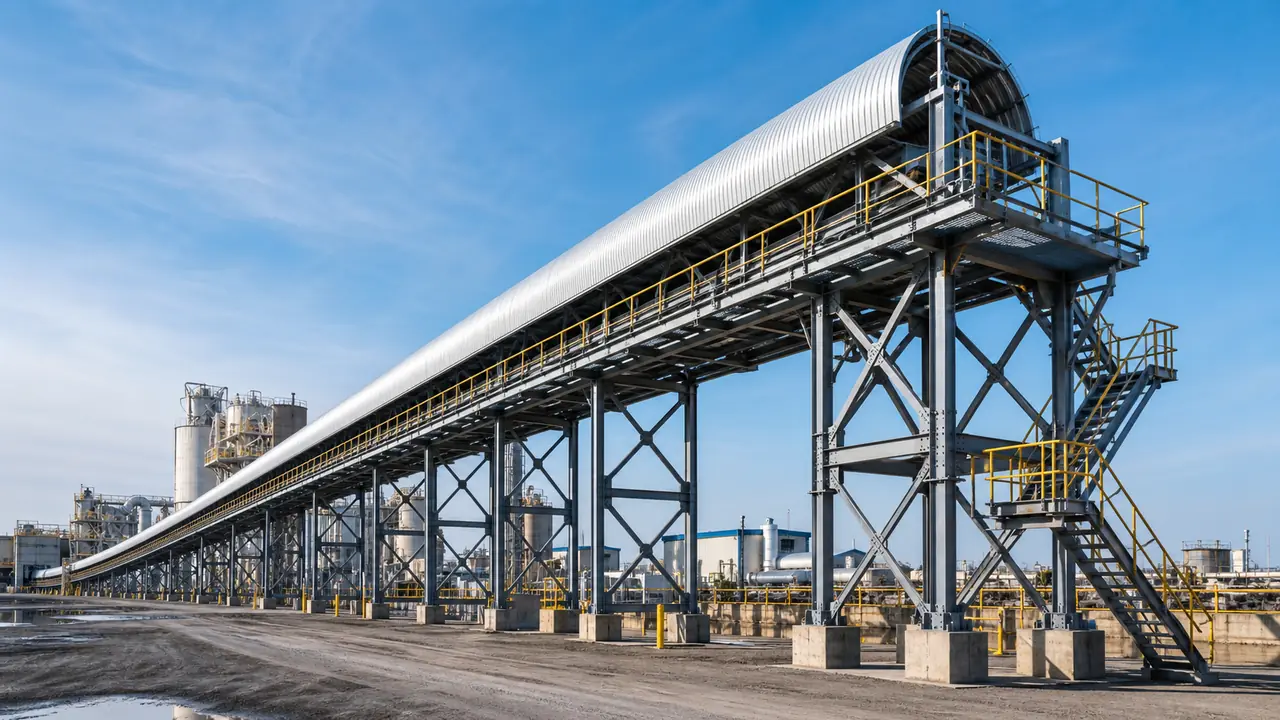
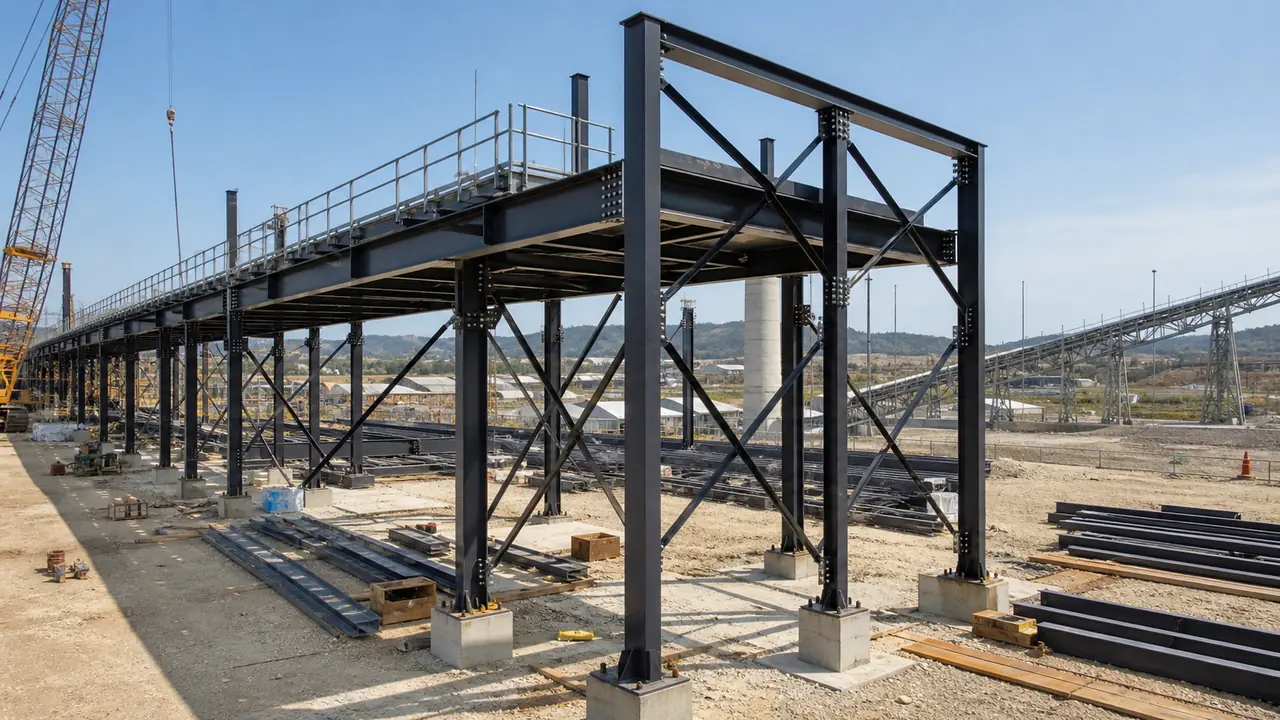
What Is an Industrial Steel Conveyor Support Structure?
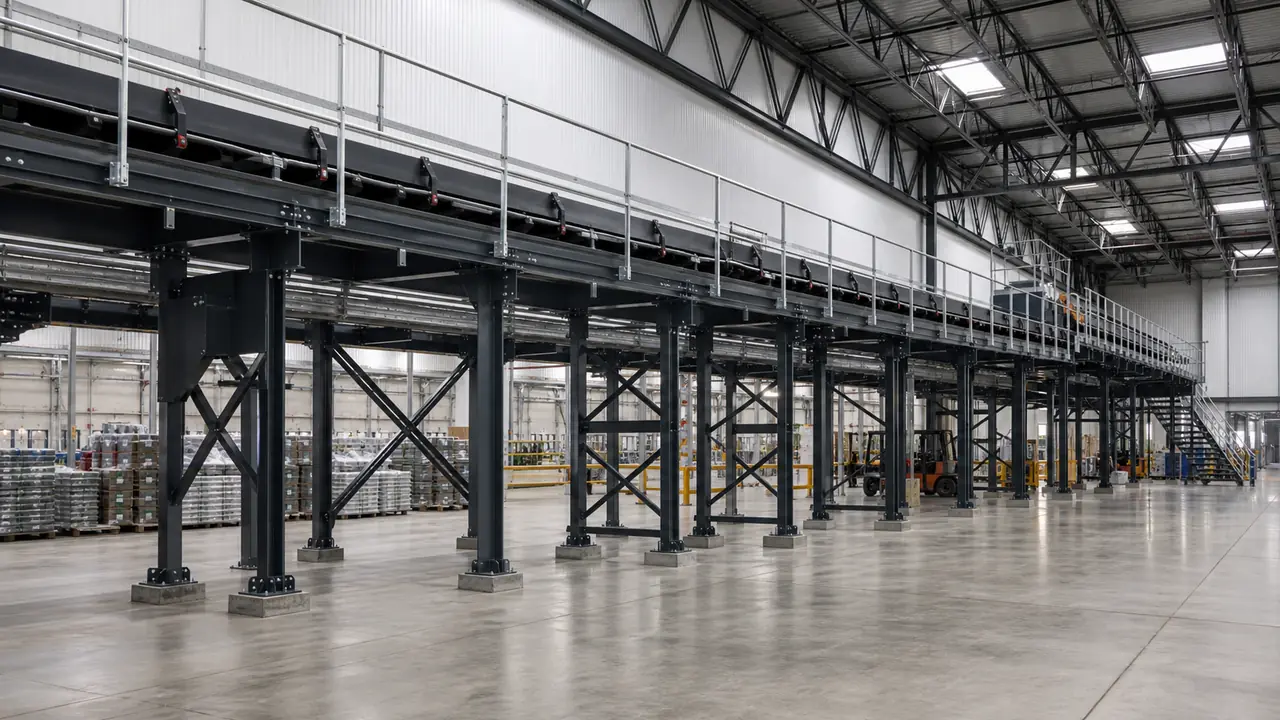
An industrial steel conveyor support structure is a structural steel frame that carries conveyor galleries, belts, idlers, drive stations, chutes, and transfer equipment above ground level. Depending on the project, it may be an indoor support frame, an outdoor conveyor corridor, a raised trestle, a transfer tower, or a series of portal frames connected along a production line.
The system normally includes steel columns, main beams, conveyor stringer supports, cross members, vertical and horizontal bracing, connection plates, base plates, and anchor-bolt connections. Where operating access is required, the structure can also include catwalks, stairs, handrails, maintenance platforms, safety cages, and equipment support brackets.
Every structure is designed around the conveyor equipment rather than treated as a generic building frame. The steelwork must allow for belt width, support spacing, dynamic loads, material impact at transfer points, drive-unit loads, maintenance clearances, and any interface with existing buildings or machinery. This integrated approach helps deliver a stable support system that is straightforward to fabricate, ship, and assemble.
Applications of Steel Conveyor Support Structures
Steel conveyor support systems are suitable for a wide range of industrial material handling projects. Their modular construction makes them effective for both new installations and extensions to existing plants.
- Manufacturing lines moving components, cartons, pallets, or finished products
- Warehouse and distribution centers with elevated sorting or transfer conveyors
- Mining, quarry, cement, and aggregate facilities handling bulk materials
- Ports, terminals, and logistics yards with continuous loading systems
- Food, grain, feed, and agricultural processing plants
- Power plants, recycling centers, and waste-handling facilities
- Automotive, machinery, and assembly plants requiring overhead material flow
- Overseas industrial projects requiring prefabricated, container-ready steel packages
For an indoor system, the support structure can be coordinated with building columns, working zones, and production equipment. For outdoor conveyor corridors, galvanized or painted steel frames can carry the line across roads, stockyards, slopes, or process areas while keeping the required clearance below. In either case, the structural scheme is developed to make maintenance access and future changes easier to manage.
Advantages of an Industrial Steel Conveyor Support Structure
Elevating a conveyor on a dedicated steel support system helps free up floor area for storage, traffic lanes, production equipment, and personnel movement. It also keeps the material route organized, particularly where a line must cross between buildings, pass above loading zones, or travel through a busy plant layout.
Steel provides high strength with relatively low structural weight, so the support frame can span practical bay distances while maintaining a clear and open working area beneath the conveyor. Column spacing, frame height, and bracing arrangement can be adjusted to suit process flow, forklift routes, vehicle clearance, and the physical limits of the site.
Factory-fabricated components improve dimensional control before they arrive on site. Main steel members can be shop-welded, drilled, marked, and checked against drawings, then connected with high-strength bolts during erection. This reduces field welding, shortens installation time, and supports projects where site access, weather, or shutdown windows are limited.
A custom steel conveyor support structure is also expansion-friendly. Extra bays, connection plates, spare platform locations, or reserved support capacity can be planned for future conveyor extensions, additional transfer equipment, cable trays, and process upgrades. Protective paint systems or hot-dip galvanizing can be selected for indoor, humid, coastal, dusty, or corrosive operating environments.
Custom Conveyor Support Structure Design Options
No two material handling layouts are exactly alike. Bingfa Steel can customize an industrial steel conveyor support structure from equipment drawings, conveyor supplier information, plant layouts, foundation drawings, or a basic description of the intended application.
- Indoor steel support frames or outdoor elevated conveyor galleries
- Conveyor support elevations, bay spacing, widths, and clear spans
- Support frames for belt conveyors, roller conveyors, chutes, and transfer stations
- Single-level, multi-level, straight, curved, or inclined conveyor routes
- Maintenance platforms, access stairs, handrails, and safety cages
- Drive-station supports, take-up frames, and equipment foundation interfaces
- Shop-welded assemblies with bolted field connections
- Painted, galvanized, or other corrosion-protection systems
- Design for wind, snow, seismic, operating, and maintenance loads
- Export packing, part marking, and installation-drawing support
During design, our team considers equipment manufacturer requirements, belt or roller centerline, idler spacing, transfer-point reactions, vibration, walkway live loads, and the clearance needed for inspections and replacement of components. Good coordination at this stage helps prevent conflicts between the conveyor, the structural frame, electrical routes, and civil foundations later in the project.
Main Components of an Industrial Steel Conveyor Support Structure
Main Steel Frame
Steel columns and primary beams form the principal load-bearing system. Their section sizes and connection details are selected according to conveyor loads, support height, bay span, access requirements, and applicable site conditions.
Conveyor Support Beams and Gallery Members
Longitudinal members, cross beams, stringer supports, and gallery frames hold the conveyor equipment at the required elevation. They are arranged to match the conveyor supplier’s support points, belt route, and maintenance clearance requirements.
Bracing and Connection System
Vertical bracing, horizontal bracing, knee braces, connection plates, and high-strength bolts help control lateral movement and transfer wind, seismic, and operational forces through the steel frame. A well-coordinated bracing system keeps the structure stable without obstructing equipment access.
Transfer and Equipment Support Frames
Transfer chutes, drives, take-up units, rollers, and other conveyor equipment can create concentrated loads. Dedicated support beams, equipment platforms, and reinforced frame zones can be included where needed to carry these reactions safely.
Access Platforms and Safety Features
Maintenance walkways, stairs, handrails, toe boards, guardrails, and protective cages provide secure routes for inspection, adjustment, and servicing. Platform width, handrail layout, and access locations are planned around operational needs and local safety requirements.
Foundation Connection
Base plates, anchor bolts, leveling details, and foundation interfaces connect the steel support system to the civil works. We can coordinate the column reactions and anchor-bolt layout with the foundation design so the site team receives clear erection information.
Industrial Steel Conveyor Support Structure Design Requirements
Reliable design begins with accurate equipment and site information. The structural calculation must consider the self-weight of the conveyor equipment and steelwork, the weight of transported material, maintenance live loads, impact at transfer points, and the forces created by starting, stopping, or reversing the conveyor. Outdoor projects may also require wind, snow, rain, temperature, and seismic design checks.
Deflection and vibration control are important because excessive movement can affect belt tracking, roller alignment, equipment performance, and the comfort of personnel using access platforms. The support frame is therefore coordinated with the conveyor supplier’s technical data and with the proposed operating duty of the line.
Clearances are equally important. The design should provide enough space beneath and around the conveyor for vehicles, workers, maintenance equipment, emergency access, cable trays, and future expansion. At transfer points, the frame must allow room for chutes, dust-control equipment, inspection doors, and replacement of wear components.
Protective Coating and Access Options
The surface-treatment system is selected according to the environment and expected service life. Painted steelwork is commonly used for indoor, dry, or controlled environments. Hot-dip galvanized steel can be a practical option for outdoor, humid, coastal, or wash-down conditions. For more demanding industrial environments, the coating specification can be coordinated with the project requirements.
Where a conveyor is exposed to weather or dust, the system can include covered galleries, roof sheets, side cladding, splash guards, enclosed transfer zones, and drainage details. For long elevated routes, rest platforms, stairs, emergency access points, and cable-tray supports can be incorporated into the overall steel package.
Information Needed for a Quotation
To prepare an accurate quotation for a steel conveyor support structure, please share the conveyor layout or a simple sketch, route length, belt or conveyor width, required support elevations, equipment weights, transfer-point locations, site conditions, and preferred corrosion protection. Existing building drawings, foundation details, and loading information are also helpful when the new structure must connect to a live facility.
If the final drawings are not yet available, our team can still review the application and recommend a practical structural concept. We can provide a complete supply scope that includes main steel frames, support beams, bracing, bolts, base plates, platforms, stairs, handrails, cladding options, packing, and installation drawings.
Why Choose Bingfa Steel for Conveyor Support Projects?
Bingfa Steel combines practical steel fabrication experience with the flexibility needed for custom industrial projects. We focus on clear structural layouts, reliable member fabrication, accurate part marking, and bolted connection details that support efficient installation on site. Our team can work from conveyor data, process layouts, or project drawings to coordinate a steel package that fits the material handling system.
For overseas projects, steel members and accessories can be fabricated, inspected, labeled according to drawings, protected for transport, and packed for container loading. With a custom industrial steel conveyor support structure, you receive a durable steel framework designed to keep material handling equipment supported, accessible, and ready for long-term operation.
FAQ
What is a steel maintenance workshop building used for?
A steel maintenance workshop building is mainly used for maintenance workshops, industrial equipment maintenance facilities, material storage, equipment repair and servicing, assembly lines, equipment handling, and industrial processing projects.
Can the maintenance workshop building support an overhead crane?
Yes. The maintenance workshop building can be designed with crane beams and suitable steel columns according to crane capacity, crane span, lifting height, and working frequency.
Can the workshop size and layout be customized?
Yes. The building length, width, height, column spacing, span, door size, production layout, roof panel, wall panel, insulation, and ventilation system can be customized according to project requirements.
Is this type of maintenance workshop building suitable for overseas projects?
Yes. Prefabricated steel maintenance workshop buildings are suitable for overseas projects because the steel components can be manufactured in the factory, packed into containers, and installed on site according to drawings.
What information should I provide for a quotation?
Please provide the building size, project location, building use, wind load, snow load, crane requirement if needed, roof and wall panel type, door size, and drawings if available.
Efficient Industrial Steel Pipe Rack Construction
- Factory-Fabricated Steel Members: Main columns, longitudinal beams, cross beams, bracing members, and connection plates are fabricated to support accurate dimensions and efficient field assembly.
- Bolted Site Assembly: High-strength bolted connections reduce field welding and support faster installation for industrial utility support projects.
- Suitable for Process Plant Utilities: The pipe rack system can support pipelines, cable trays, valves, utility lines, and equipment connections across industrial facilities.
- Organized Utility Support System: An industrial steel pipe rack structure creates elevated routing space for utilities while keeping ground-level areas clear for operations, vehicles, and equipment.
Flexible Industrial Steel Pipe Rack Design
- Custom Rack Layout: Overall length, rack width, support elevations, bay spacing, and utility routing can be customized according to process plant requirements.
- Multi-Level Support Space: Single-tier, two-tier, and multi-level layouts can organize process pipes, cable trays, utility services, and future expansion routes.
- Access and Maintenance Features: Catwalks, stairs, handrails, valve platforms, and guardrails can be added for inspection and daily operation.
- Surface Protection Options: Painted or hot-dip galvanized steel members can be selected according to climate, corrosion exposure, and project requirements.
- Export-Ready Pipe Rack Package: Steel frames, beams, bracing, bolts, platforms, handrails, and support accessories can be marked and packed for overseas delivery.
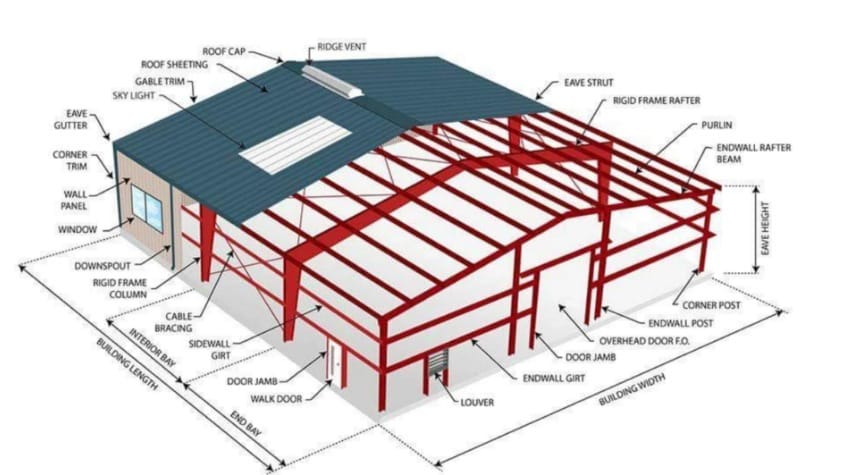
| Category | Specification |
| Structure Type | Portal Frame Steel Structure |
| Material Grade | Q235 / Q355 High Strength Steel |
| Application | Factory / Workshop / Production Plant |
| Span Range | Customizable According to Factory Layout |
| Height Range | Customizable Eave Height |
| Roof System | Steel Sheet / Insulated Sandwich Panel |
| Wall System | Steel Sheet / Insulated Panel |
| Design Life | 25–50 Years |
| Wind Resistance | Up to 0.75 kN/m² |
| Earthquake Resistance | Up to Grade 8 |
| Surface Treatment | Hot-dip Galvanized / Painted |
| Certification | ISO, CE |
What Is Included in an Industrial Steel Conveyor Support Structure?
- Main Steel Support Frame: Steel columns, main beams, cross beams, and bracing members form the primary load-bearing framework for the conveyor line.
- Conveyor Gallery Members: Longitudinal beams, stringer supports, and equipment brackets hold the conveyor at the required elevation and alignment.
- Transfer and Equipment Supports: Reinforced beams and local frames can carry transfer chutes, drive units, take-up systems, rollers, and other concentrated equipment loads.
- Bracing and Stability System: Vertical bracing, horizontal bracing, connection plates, and high-strength bolts help maintain structural stability under operating and environmental loads.
- Access and Maintenance System: Catwalks, stairs, handrails, guardrails, and service platforms can be included for safe inspection and maintenance access.
- Foundation Connections and Accessories: Base plates, anchor bolts, connection bolts, cable-tray supports, and access components can be supplied as part of the complete package.
Custom Steel Conveyor Support Structure Solutions for Global Projects
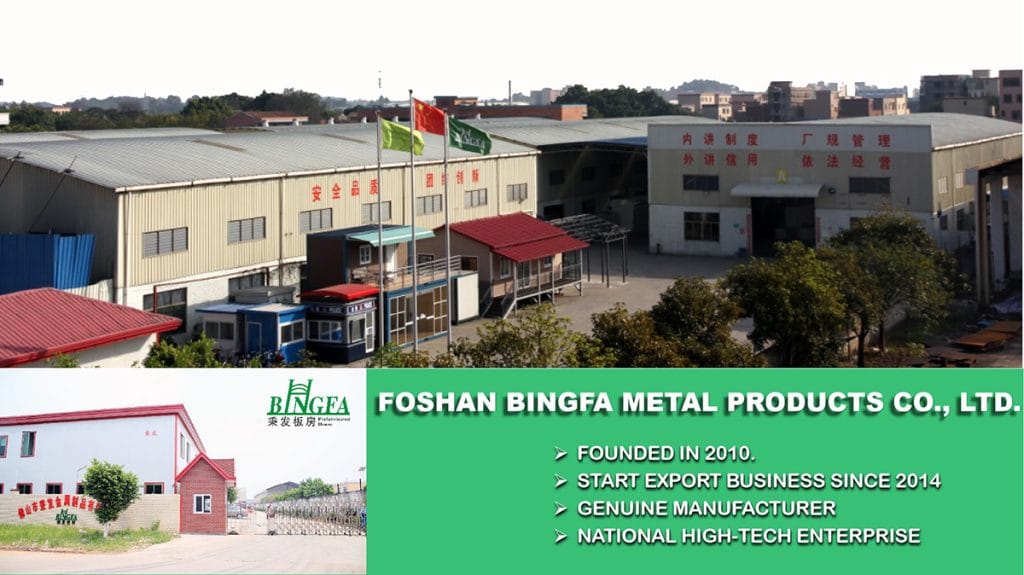
- 1. Custom Conveyor Support Structure Solutions
Specialized in steel conveyor support structure solutions for manufacturing lines, logistics facilities, bulk material handling systems, and industrial expansion projects. - 2. Factory Fabrication & Complete Supply
Providing main steel frames, gallery support beams, bracing systems, platforms, stairs, handrails, bolts, base plates, support brackets, and related accessories. - 3. Engineering Support for Material Handling Projects
Industrial steel conveyor support structures can be designed according to conveyor routing, support elevations, bay spacing, equipment loads, maintenance access, wind loads, snow loads, and seismic requirements. - 4. Export Packing & Project Delivery Support
Steel components and accessories can be marked, packed, and loaded according to project drawings to support overseas transportation and efficient on-site assembly. - 5. Quality Control & Installation Guidance
Supported by engineers, production specialists and quality control staff to help ensure accurate fabrication, practical design and reliable project delivery.
Industrial steel conveyor support structures use structural steel as the main support system because it provides reliable strength, flexible layout options, efficient factory fabrication, and durable performance for material handling projects. For additional technical reference about structural steel design and steel construction resources, you can also refer to the American Institute of Steel Construction.