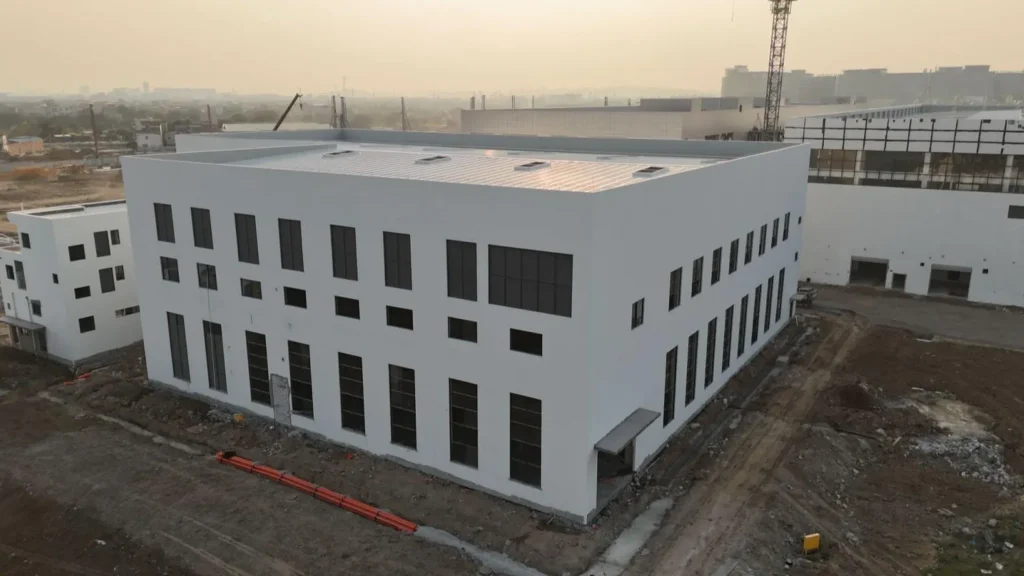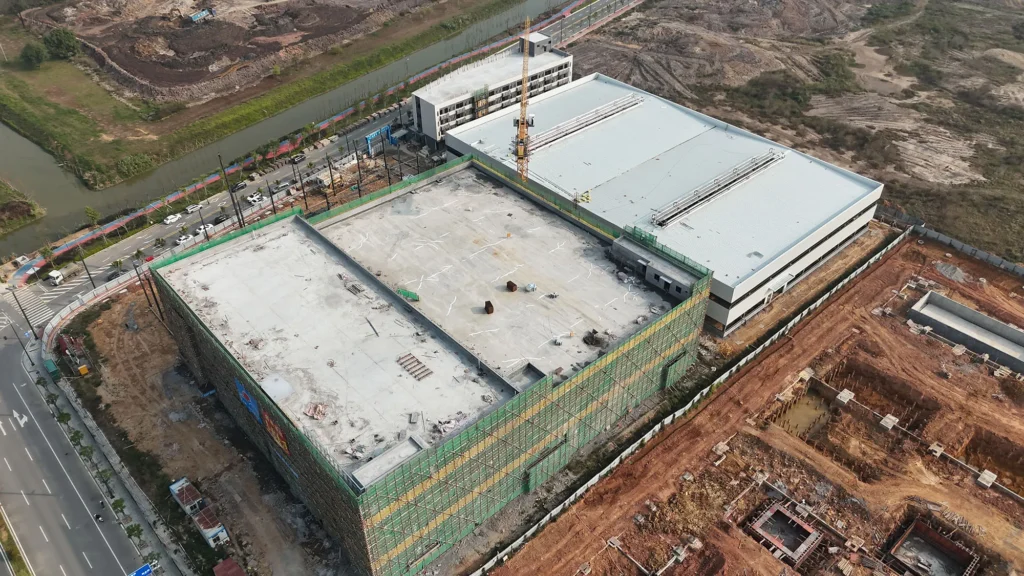
Industrial Steel Conveyor Support Structure for Material Handling
Industrial steel conveyor support structure solutions provide reliable elevated support for belt conveyors, roller conveyors, transfer points, and material-handling routes. Designed around equipment loads, conveyor alignment, maintenance access, and site conditions, the steel framework helps keep industrial conveying operations organized, stable, and efficient.
Our industrial steel conveyor support structure designs support factories, processing plants, logistics facilities, and bulk-material handling projects that need dependable structural support for conveying systems.
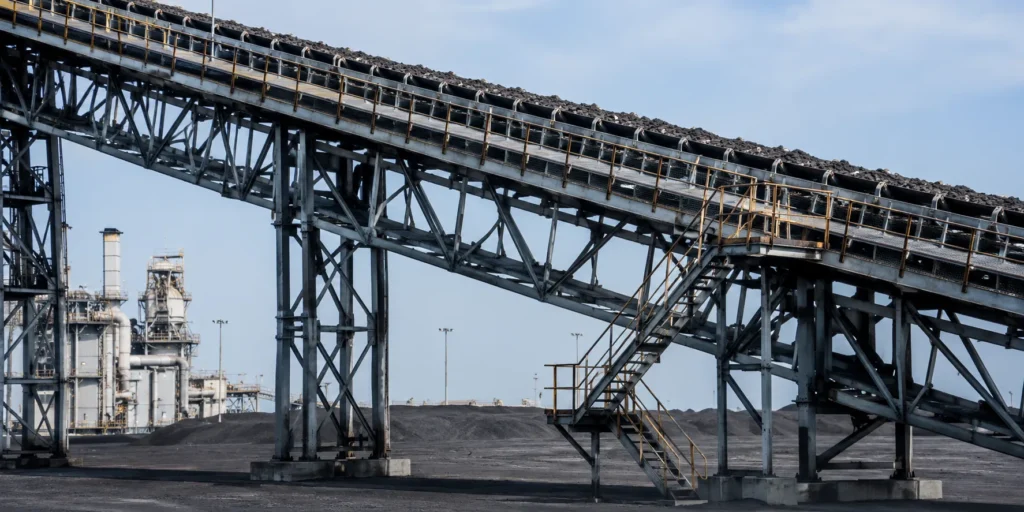
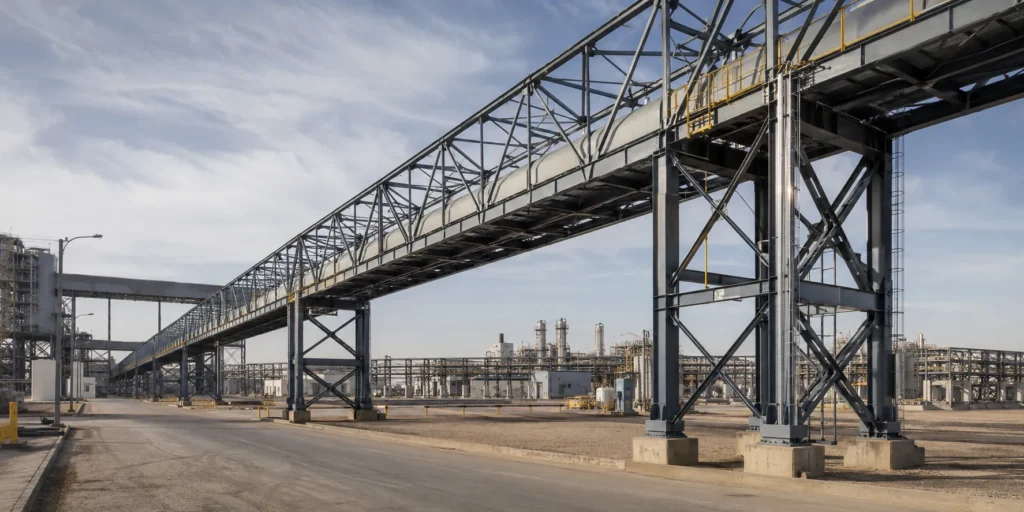
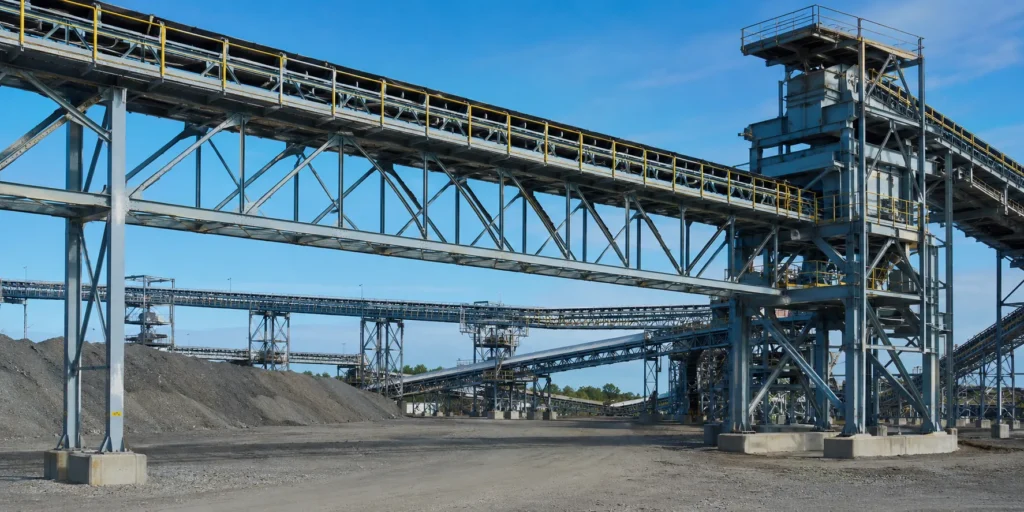
What Is an Industrial Steel Conveyor Support Structure?
An industrial steel conveyor support structure is a purpose-designed steel framework that carries and stabilizes conveyor equipment above ground level or across production areas. It can support conveyor galleries, transfer stations, drive-unit platforms, maintenance walkways, and related equipment interfaces.
Unlike a standard steel building, the structure is planned around the conveyor route, support elevations, load points, access requirements, and connections with surrounding machinery or process systems.
Applications of Industrial Steel Conveyor Support Structures
An industrial steel conveyor support structure can serve many material-handling environments, including:
- Bulk-material handling for mining, quarry, cement, and aggregate projects.
- Production-line conveying systems in factories and processing plants.
- Warehouse, logistics, and distribution-center conveyor routes.
- Port, terminal, and loading-yard material transfer systems.
- Recycling, waste-handling, grain, and agricultural processing facilities.
- Elevated conveyor crossings between industrial buildings or work zones.
Key Advantages of Industrial Steel Conveyor Support Structures
Steel fabrication provides a practical balance of strength, layout flexibility, and installation efficiency for conveyor infrastructure.
- Creates stable support for conveyor equipment, material loads, and transfer locations.
- Can be designed for straight runs, inclined conveyors, curved routes, and elevated crossings.
- Allows maintenance platforms, walkways, handrails, ladders, and safety access to be integrated.
- Factory-fabricated steel members help improve dimensional accuracy and installation efficiency.
- Modular framing supports practical extensions when conveying capacity or route length increases.
Custom Conveyor Support Structure Design
Every industrial steel conveyor support structure can be engineered according to conveyor width, belt speed, loading conditions, support spacing, elevation changes, drive-unit locations, and maintenance requirements. The framework can incorporate portal frames, trusses, support towers, braced columns, transfer platforms, and gallery sections as required.
Design details can also consider wind load, snow load, seismic requirements, corrosion protection, site access, and connections to equipment supplied by the conveyor-system contractor.
Main Components of an Industrial Steel Conveyor Support Structure
Main Steel Frame
Steel columns, beams, trusses, and bracing members form the primary load-bearing system for the conveyor route.
Conveyor Gallery Support
Elevated gallery frames provide continuous support for conveyors that travel between processing areas, buildings, storage zones, or transfer points.
Support Towers and Transfer Platforms
Steel support towers and platforms can be designed for elevated changes in direction, conveyor drives, transfer chutes, and equipment interfaces.
Maintenance Walkways and Safety Access
Walkways, handrails, ladders, cages, and service platforms can be included to support inspection, cleaning, and maintenance work.
Connection and Foundation Details
Anchor bolts, base plates, connection plates, and bracing systems are designed to match structural loads and site foundation requirements.
Industrial Steel Conveyor Support Structure Design Options
A clear-span steel support frame may be suitable for conveyor crossings above vehicle lanes or work areas. Truss galleries can be used where longer spans or reduced intermediate supports are required. Multi-level structures are practical for transfer stations, sorting systems, and complex material-handling routes.
Surface treatment can be selected according to the operating environment, including painted steel systems, galvanized components, or corrosion-resistant coatings for humid, outdoor, coastal, or industrial conditions.
Information Needed for a Quotation
Please provide the conveyor layout, route length, belt width, support elevations, equipment loads, transfer-point locations, maintenance-access requirements, project location, and any drawings available. Our team can then recommend a suitable industrial steel conveyor support structure solution.
Why Choose Bingfa Steel?
Bingfa Steel provides industrial steel conveyor support structure solutions with practical engineering support, factory fabrication, complete steel components, export packing, and installation guidance. We coordinate the steel framework around conveyor-system requirements to support reliable project delivery.
FAQ
What is a steel maintenance workshop building used for?
A steel maintenance workshop building is mainly used for maintenance workshops, industrial equipment maintenance facilities, material storage, equipment repair and servicing, assembly lines, equipment handling, and industrial processing projects.
Can the maintenance workshop building support an overhead crane?
Yes. The maintenance workshop building can be designed with crane beams and suitable steel columns according to crane capacity, crane span, lifting height, and working frequency.
Can the workshop size and layout be customized?
Yes. The building length, width, height, column spacing, span, door size, production layout, roof panel, wall panel, insulation, and ventilation system can be customized according to project requirements.
Is this type of maintenance workshop building suitable for overseas projects?
Yes. Prefabricated steel maintenance workshop buildings are suitable for overseas projects because the steel components can be manufactured in the factory, packed into containers, and installed on site according to drawings.
What information should I provide for a quotation?
Please provide the building size, project location, building use, wind load, snow load, crane requirement if needed, roof and wall panel type, door size, and drawings if available.
Efficient Industrial Steel Conveyor Support Construction
- Factory-Fabricated Steel Frame System: Columns, beams, trusses, bracing members, and connection plates are fabricated to project drawings for accurate installation.
- Bolted On-Site Assembly: High-strength bolted connections reduce on-site welding work and support an efficient construction schedule.
- Conveyor-Route Coordination: Support spacing, elevations, transfer locations, and equipment interfaces are planned around the material-handling process.
- Reliable Maintenance Access: Walkways, platforms, handrails, and ladders can be integrated for safer inspection and service work.
Flexible Conveyor Support Structure Design
- Custom Route Layout: Structure length, support spacing, elevation, truss depth, and connection details can match the conveyor-system layout.
- Straight, Inclined, or Elevated Runs: The steel structure can support horizontal conveyors, inclined conveyors, elevated galleries, and building-to-building crossings.
- Support Tower Options: Towers and platforms can be designed for drives, transfer points, chutes, sorting equipment, and changes in conveyor direction.
- Protective Coating Options: Painted, galvanized, and corrosion-resistant surface treatments can be selected for site conditions.
- Future Expansion Ready: Additional gallery sections and support frames can be planned for future conveying capacity or route extensions.
| Category | Specification |
| Structure Type | Portal Frame Steel Structure |
| Material Grade | Q235 / Q355 High Strength Steel |
| Application | Factory / Workshop / Production Plant |
| Span Range | Customizable According to Factory Layout |
| Height Range | Customizable Eave Height |
| Roof System | Steel Sheet / Insulated Sandwich Panel |
| Wall System | Steel Sheet / Insulated Panel |
| Design Life | 25–50 Years |
| Wind Resistance | Up to 0.75 kN/m² |
| Earthquake Resistance | Up to Grade 8 |
| Surface Treatment | Hot-dip Galvanized / Painted |
| Certification | ISO, CE |
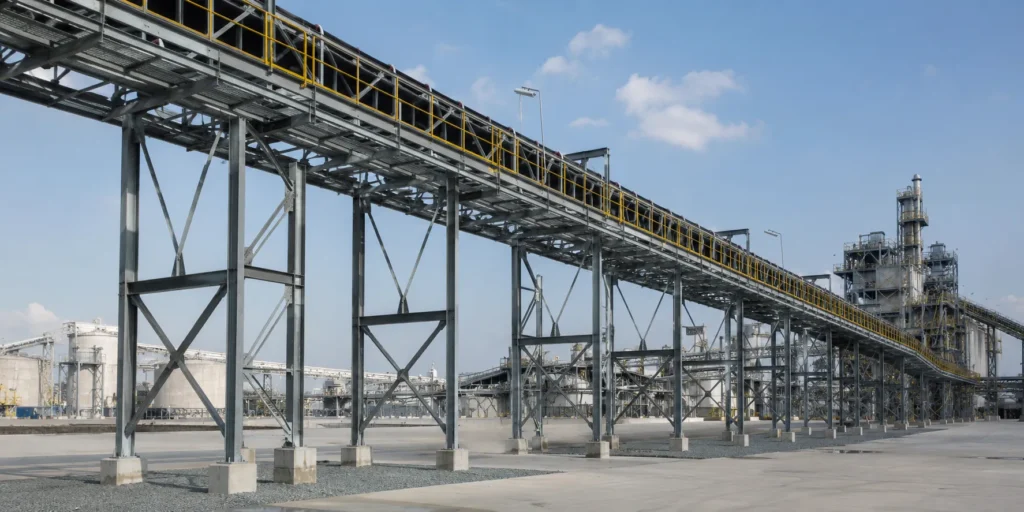
What Is Included in an Industrial Steel Conveyor Support Structure?
- Main Steel Frame System: Steel columns, beams, trusses, and bracing systems create the main load-bearing structure.
- Gallery and Support Components: Cross beams, support towers, connection plates, and secondary members stabilize conveyor routes and transfer areas.
- Maintenance Access System: Walkways, handrails, ladders, safety cages, and service platforms can be included as required.
- Equipment Interface Details: Steel supports can be coordinated for conveyor drives, transfer chutes, idler frames, and related material-handling equipment.
- Anchor Bolts and Connections: Base plates, anchor bolts, high-strength bolts, and connection accessories complete the structural package.
- Surface Treatment and Accessories: Paint systems, galvanized components, trims, drainage details, and protective accessories can be supplied according to project needs.
Custom Industrial Steel Conveyor Support Structure Solutions for Global Projects
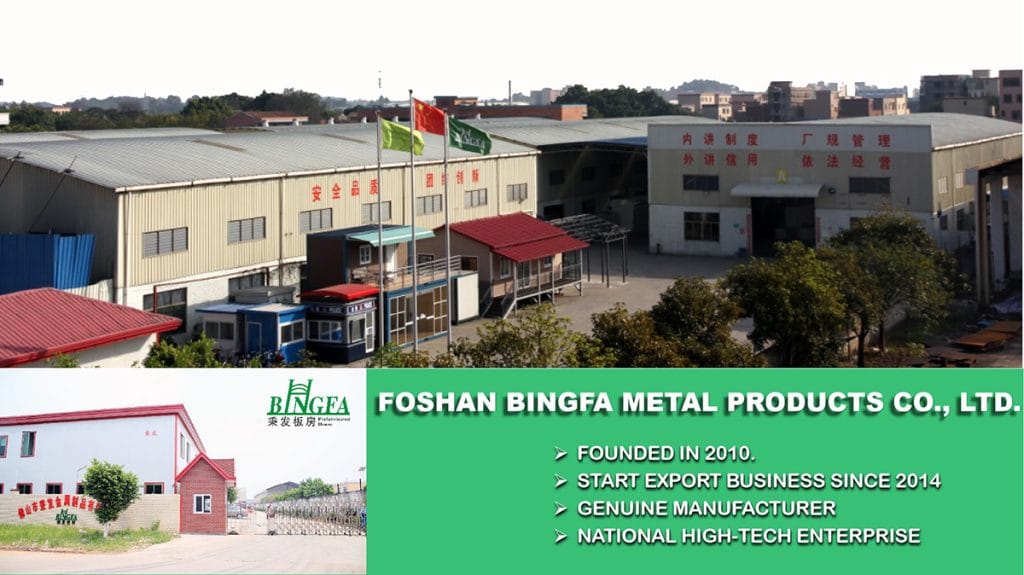
- 1. Material-Handling Structure Planning
We develop steel conveyor support solutions around conveyor routes, elevations, loads, transfer points, maintenance access, and site conditions. - 2. Complete Steel Structure Supply
Providing main frames, trusses, support towers, walkways, handrails, ladders, bolts, connection plates, and related accessories. - 3. Engineering Support for Conveyor Projects
Designs can consider conveyor loads, support spacing, equipment interfaces, wind loads, snow loads, seismic requirements, and local project conditions. - 4. Export Packing & Project Delivery Support
Steel components and accessories can be marked, packed, and loaded according to project drawings to support overseas transportation and efficient on-site installation. - 5. Quality Control & Installation Guidance
Supported by engineers, production specialists, and quality-control staff to help ensure accurate fabrication, practical design, and reliable project delivery.
Industrial steel conveyor support structures use structural steel as the main load-bearing system because it offers reliable strength, flexible design, efficient fabrication, and long-term durability for material-handling projects. For additional technical reference about structural steel design and construction resources, you can also refer to the American Institute of Steel Construction.
FAQ
① What is a steel maintenance workshop building?
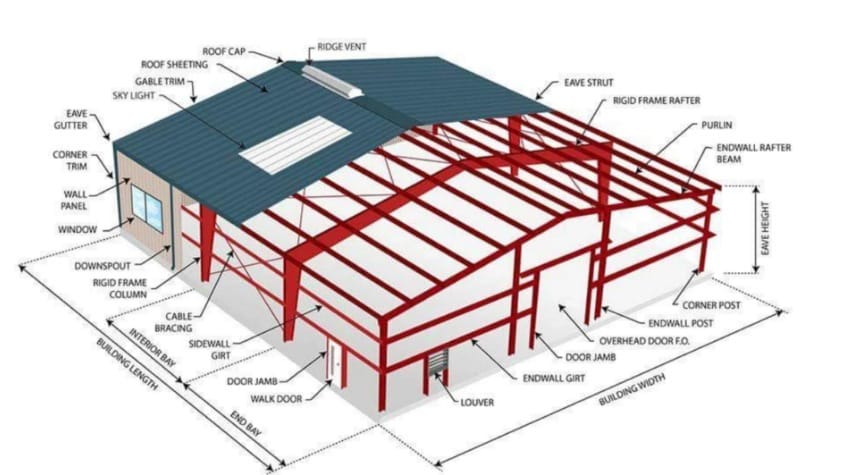
A steel maintenance workshop building is an industrial building made with steel columns, steel beams, purlins, bracing systems, and roof and wall panels. It is widely used for maintenance, inspection, equipment repair and servicing, and equipment handling.
② How much does a steel maintenance workshop building cost?
The cost depends on building size, span, height, steel material, roof and wall panel type, doors, insulation, local load requirements, and project location. Please send your building dimensions and requirements for a customized quotation.
③ How long does it take to build a steel maintenance workshop building?
Production time usually depends on project size and steel quantity. After fabrication is completed, the prefabricated steel components can be assembled on site according to installation drawings, which helps shorten the construction period.
④ Can the maintenance workshop building be customized?
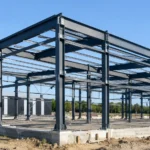
Yes. The building length, width, height, column spacing, span, roof and wall materials, door openings, ventilation, skylight, crane beam, and future expansion plan can be customized according to maintenance workshop use.
⑤ Do you provide installation support?
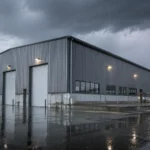
Yes. BINGFA Steel Structure can provide detailed installation drawings and online guidance. Engineers can also be arranged for site support if required by the project.