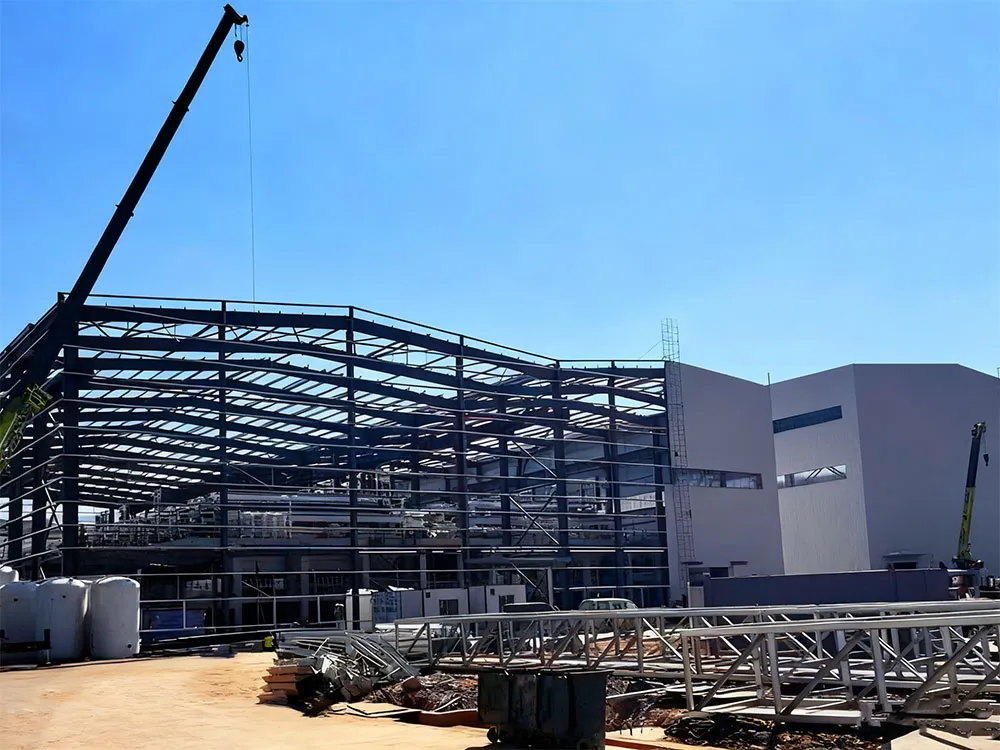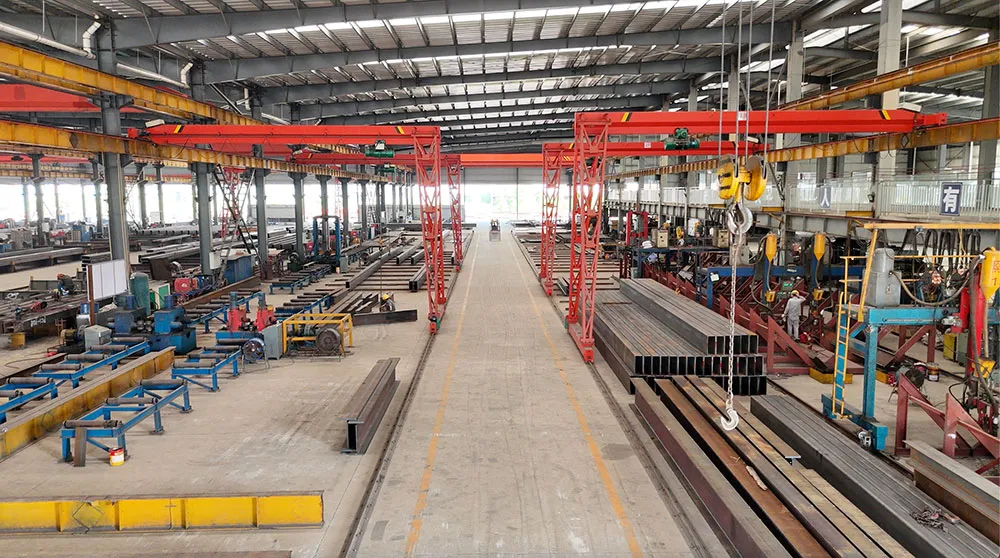
Proceso de fabricación de acero estructural: 10 Pasos del corte al recubrimiento
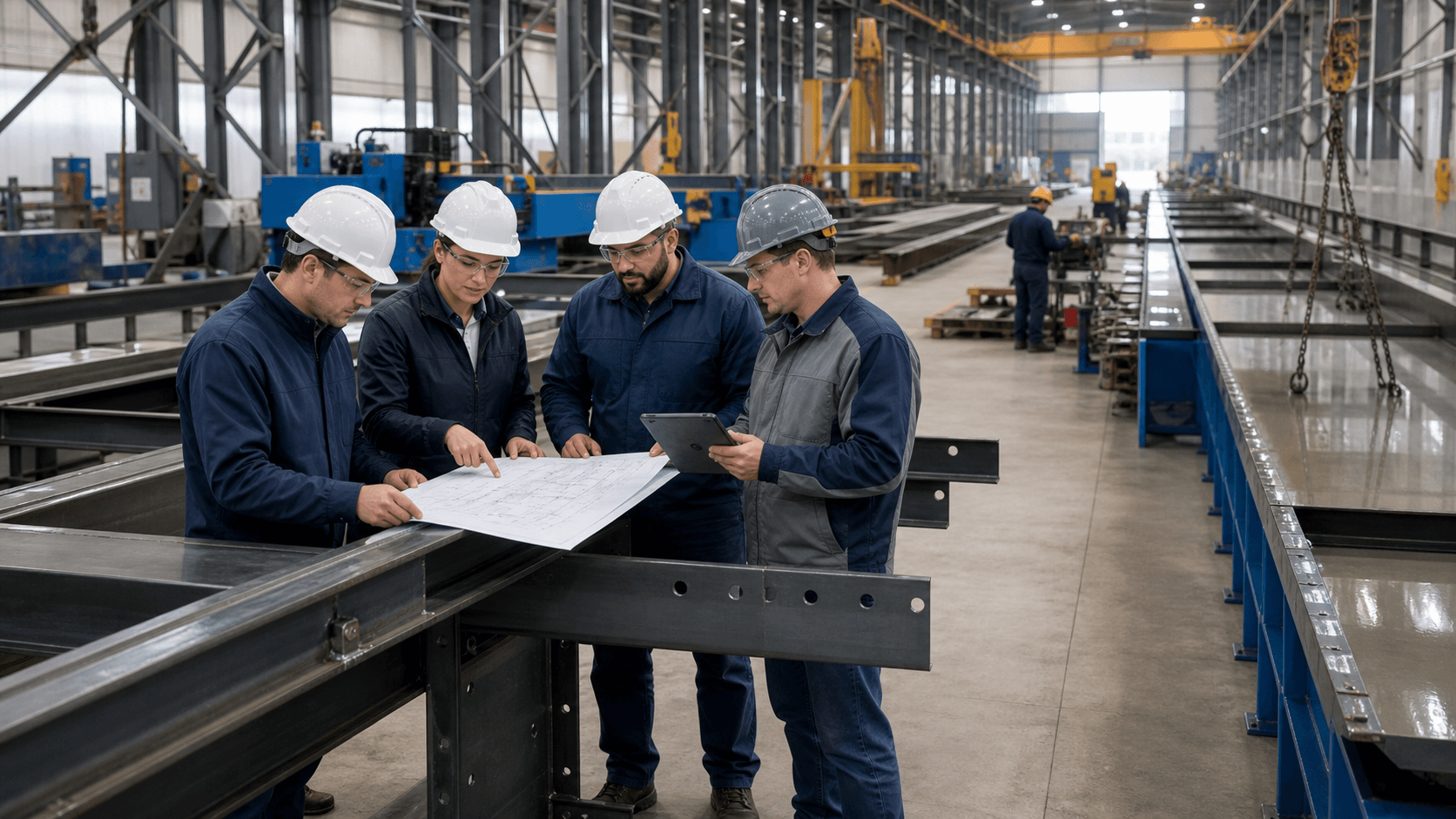
Structural steel fabrication quality directly affects a building’s service life, code compliance, erection efficiency, and total cost of ownership. A low bid may look attractive at procurement, yet missing inspection points, weak traceability, poor fit-up, or inadequate coating preparation can create expensive field rework and schedule delays. For contractors, propietarios, purchasing teams, y diseñadores, the real question is not simply who can supply steel, but who can control the complete proceso de fabricación de acero estructural.
Esta guía explica la structural steel manufacturing process in ten fabrication steps from engineering detailing through final coating and release. It also identifies the standards, records, and quality checks buyers should request when evaluating a fabricator.
Paso 1: Engineering Detailing and Shop Drawings
The steel fabrication steps begin before steel enters the shop. Detailers convert the engineer of record’s design drawings into coordinated dibujos de tienda and digital models that define member sizes, connection geometry, símbolos de soldadura, bolt holes, comba, marcas de piezas, and coating requirements. Common practice follows the contract documents, applicable building code, el current AISC standards, including AISC 303 requirements, and project-specific detailing conventions.
A disciplined review checks dimensions, grid references, connection loads, tolerancias, access for welding, erection sequence, and interference with mechanical or architectural systems. Requests for information should be closed before release to production. Approved revisions must be traceable so the shop floor does not fabricate from an obsolete drawing. Accurate detailing reduces downstream cutting errors, fit-up problems, and costly field modifications.
Paso 2: Material Procurement and Incoming Inspection
The second stage of the structural steel fabrication process is purchasing the specified plate, shapes, hollow sections, pernos, and welding consumables. Buyers should expect material to match the required ASTM grade, such as ASTM A36, A572, or A992, rather than an undocumented equivalent. Mill test reports should link heat numbers to chemical and mechanical properties.
Receiving inspectors verify grade, dimensiones, quantity, surface condition, rectitud, and identification against purchase orders and drawings. Material with excessive corrosion, lamination, deformación, or missing traceability is quarantined. Controlled storage separates grades and protects welding consumables from moisture. This step prevents incorrect or damaged material from becoming embedded in finished assemblies, where replacement is far more expensive.
Paso 3: CNC Cutting and Section Processing
Approved production data is transferred to CNC saws, plasma tables, oxy-fuel cutters, lasers, drills, punches, or coping lines. The method depends on thickness, material type, edge quality, tolerance, and production volume. Nesting software can improve plate utilization without changing the specified grain direction or part orientation.
Quality control includes first-piece verification, routine dimensional checks, hole diameter and location checks, cut-edge inspection, and equipment calibration. Heat-affected edges must be evaluated where contract documents require machining or grinding. In the structural steel fabrication process, accurate cutting establishes the geometry for every later fit-up, soldar, and bolted connection in the steel cutting and coating process.
Paso 4: Forming and Bending
In the structural steel fabrication process, plates and sections are formed by press brake, roll, cold bending, or controlled heat-assisted methods when permitted. Typical work includes bent plates, base-plate features, refuerzos, curved members, and custom transitions. Fabricators must respect minimum bend radii, rolling direction, material ductility, and any restrictions in the project specification.
Operators verify bend angle, radius, sweep, twist, and final dimensions using calibrated tools or templates. Cracking, pandeo local, gouging, or uncontrolled heating can reduce performance and should trigger rejection or an approved repair procedure. Proper forming preserves material properties while producing components that can be assembled without forcing them into position.
Paso 5: Fit-Up and Assembly
During fit-up, the structural steel fabrication process aligns cut and formed parts in jigs or on assembly beds before permanent welding. Marcas de pieza, orientation, hole patterns, root openings, bevel angles, and connection dimensions are checked against approved shop drawings. Temporary tack welds and strongbacks must hold alignment without introducing unacceptable restraint or distortion.
Fit-up inspection is a critical hold point. Inspectors confirm squareness, member length, flange and web alignment, connection eccentricity, and applicable AISC tolerance requirements. Gaps outside the qualified welding procedure cannot simply be filled with extra weld metal. Careful assembly keeps loads traveling through the intended connection geometry and reduces erection problems at the jobsite.
Paso 6: Welding and Permanent Connections
Welding is a decisive stage in the structural steel fabrication process, converting the fitted components into structural assemblies. An AISC standard steel fabrication program commonly uses AWS D1.1 for structural steel welding, qualified welding procedure specifications, approved filler metals, and welders qualified for the processes and positions they perform. Preheat, interpass temperature, electrode storage, travel speed, and heat input must be controlled.
Steel weld quality control starts with visual inspection and may include magnetic particle, ultrasonic, or other nondestructive testing according to the contract. Inspectors review weld size, longitud, contour, undercut, porosity, cracks, arc strikes, and access-hole details. Repair welding should follow an approved method and be reinspected. Consistent welding control protects connection strength, fatigue performance, dimensional stability, and code compliance.
Paso 7: Grinding, Refinamiento, and Deburring
Después de soldar, the structural steel fabrication process moves to grinding, refinamiento, and deburring. Sharp edges, cutting slag, spatter, burrs, and temporary attachments are removed. Grinding may also blend approved weld repairs or prepare areas that must meet architectural appearance requirements. The goal is not to make every structural weld flush; unnecessary grinding can reduce weld size or damage the base metal.
Inspectors check that edges are safe to handle, holes are clear, weld profiles remain compliant, and surface defects are not concealed. Areas around clips, refuerzos, and tight corners deserve attention because retained slag or spatter can interfere with coating. Good finishing improves handling, fit, visual quality, and the continuity of the protective system.
Paso 8: Surface Preparation and Abrasive Blasting
Coating performance depends heavily on what happens before paint is applied. Oil, grease, salts, mill scale, rust, weld residue, and dust must be removed to the specified cleanliness. Requirements may reference AMPP/SSPC standards such as SSPC-SP 6/NACE No. 3 for commercial blast cleaning or SSPC-SP 10/NACE No. 2 for near-white blast cleaning. ISO 8501 grades may also be specified.
Effective surface preparation for steel coating is a critical step in the structural steel fabrication process. It includes checks for ambient temperature, steel temperature, relative humidity, dew point, surface profile, and soluble contaminants where required. Compressed air and abrasive media must be clean. Prepared steel should be coated within the permitted window before flash rusting occurs. Inadequate blasting is a frequent cause of early peeling, underfilm corrosion, and reduced coating life.
Paso 9: Protective Coating Application
In the structural steel fabrication process, the coating system is selected for the exposure environment, service life, color, fire-protection interface, and maintenance strategy. Options include shop primers, imprimaciones ricas en zinc, epoxy intermediate coats, polyurethane finishes, galvanizado, or specified multi-coat systems. Product data sheets define mixing, thinning, induction time, application method, recoat window, and curing conditions.
Coating inspectors record batch numbers, ambient conditions, wet-film thickness, espesor de película seca, coverage at edges and welds, and visible defects such as runs, pinholes, overspray, or missed areas. Stripe coating may be required on corners, pernos, and welds. Correct film build and curing are essential; extra paint cannot compensate for poor preparation, and excessive thickness can also cause cracking or solvent entrapment.
Paso 10: Final Inspection, Documentación, and Shipping Marks
Before release, the final stage of the structural steel fabrication process is a dimensional and visual inspection. The team verifies member length, hole patterns, comba, orientation, weld acceptance, condición del recubrimiento, marcas de piezas, quantity, and packaging. Nonconformances must be resolved through documented repair, engineering disposition, or replacement.
Each item should carry a durable mark linked to drawings and shipping lists. Pernos, loose parts, and touch-up materials need clear packaging. The final dossier may include approved shop drawings, material test reports, welder qualifications, procedimientos de soldadura, informes de inspección, NDT records, coating reports, calibration records, and certificates of conformity. Accurate marking and records make receiving, erección, and future traceability more efficient.
High-Quality Structural Steel Fabricator vs. Typical Fabricator
| Comparison Factor | High-Quality Fabricator | Typical Fabricator |
|---|---|---|
| Engineering standards | Project-specific detailing tied to applicable AISC, AWS, ASTM, and contract requirements | Basic drawings with limited documented coordination |
| Number of quality checkpoints | Defined hold points from receiving through final release | Primarily end-of-line visual checks |
| Surface preparation | Specified cleanliness, profile, environmental readings, y registros | General cleaning with limited measurements |
| Welding certification | Qualified procedures, certified welders, traceable consumables, and required NDT | Welder experience relied upon with incomplete qualification records |
| Closeout documents | Organized material, soldadura, inspección, revestimiento, and shipping dossier | Basic packing list and limited certificates |
| Quality assurance system | Written procedures, calibration, nonconformance control, and corrective action | Informal checks dependent on individual operators |
| Best-fit projects | comerciales, industrial, infrastructure, and complex custom structures | Low-complexity work with limited documentation requirements |
In a structural steel fabrication process, capabilities vary by facility and project scope. Buyers should confirm the exact code edition, plan de inspección, certifications, exclusions, and documentation package in writing before award.
What Separates a High-Quality Structural Steel Fabrication Process?
Most fabrication shops can cut and weld steel. The meaningful difference is whether the structural steel fabrication process is controlled as one traceable production system. Strong fabricators connect approved drawings, material heat numbers, qualified procedures, inspection results, registros de recubrimiento, and piece marks. They also identify problems early, when corrections are still practical.
Quality does not mean inspecting everything only at the end. It means placing checks where a defect could become hidden or expensive: before cutting, before welding, before blasting, before coating, and before shipment. Buyers should ask to review a sample inspection and test plan, a typical turnover package, and recent records for comparable work.
Key Factors to Compare When Selecting a Steel Fabricator
Start with technical fit. Confirm the shop’s experience with similar member sizes, welding processes, tolerancias, revestimientos, and production volumes. Ask whether detailing is performed in-house, how revisions are controlled, and which work is subcontracted. Review capacity realistically, including equipment limits, shift patterns, current backlog, and the ability to sequence deliveries around erection.
Then compare quality infrastructure. Relevant AISC certification, AWS-qualified personnel, independent inspection capability, calibrated equipment, and documented nonconformance procedures can reduce project risk. Commercial comparisons should normalize scope: grado de acero, connection material, pruebas, sistema de recubrimiento, transporte, documentación, taxes, and field services may not be included equally in every quotation.
Which Details Affect Fabrication Cost and Project Schedule?
Weight is only one cost driver in a structural steel fabrication process. Complex connections, heavy weld volumes, tight tolerances, curved members, full-penetration welds, extensive NDT, small production lots, and architectural finishes increase labor and inspection time. Coating cost changes with blast standard, surface area, stripe-coat requirements, number of coats, cure windows, and environmental controls.
Schedule is influenced by drawing approval, disponibilidad de materiales, revision timing, shop capacity, inspection access, y secuencia de entrega. Late design changes can disrupt nesting and require rework even when the total steel tonnage does not change. Buyers can improve predictability by issuing complete design criteria, identifying hold points early, approving submittals promptly, and aligning fabrication lots with the erector’s plan. The lowest unit price is not necessarily the lowest installed cost.
A Controlled Structural Steel Fabrication Process Supports Safer Structures
A reliable structural steel fabrication process is the foundation for structural safety, durable corrosion protection, accurate erection, and dependable project records. Every stage matters. Correct welding cannot rescue inaccurate detailing, and premium coating cannot compensate for contaminated steel. The best procurement decision therefore evaluates the complete workflow, not a single machine, certificate, or headline price.
If you are comparing options for a structural steel fabrication process on a commercial or industrial project, Bingfa Steel Structure can review your drawings, specifications, requisitos de inspección, sistema de recubrimiento, y secuencia de entrega. Contact our team for a project-specific fabrication plan and quotation based on your project scope.
Preguntas frecuentes
How long does the structural steel fabrication process typically take?
A typical schedule may range from four to twelve weeks after approved-for-fabrication drawings and material availability, but complex or high-tonnage projects can require longer. Detailing, aprobaciones, obtención, pruebas, coating cure time, and phased delivery all affect the duration. Request a milestone schedule instead of one general lead-time number.
Can the structural steel fabrication process be performed to AISC standards?
Sí. A fabricator can execute work to applicable AISC requirements when they are identified in the contract documents. Buyers should specify the governing code editions, AWS D1.1 welding requirements, tolerancias, inspection responsibilities, and any required AISC certification. “AISC compliant” should be supported by procedures and records, not used only as a sales phrase.
How long does a standard anticorrosion coating last?
There is no universal service-life figure. A conventional shop-applied system may require maintenance in roughly 5 a 15 años, while properly designed multi-coat or galvanized systems may last longer. Exposure category, preparación de la superficie, film thickness, detallando, UV, quimicos, abrasion, and maintenance determine actual life. Use a coating specification matched to the environment.
Can a fabricator produce custom-shaped structural steel components?
Sí. Many shops can produce tapered, curved, folded, built-up, or irregular components using CNC cutting, laminación, press-brake forming, and specialized fixtures. Feasibility depends on material grade, espesor, bend radius, equipment capacity, límites de transporte, tolerancias, and engineering approval. Early model exchange and constructability review reduce risk.
What technical documents should be provided at shipment?
The required package should be defined before purchase. It commonly includes approved shop drawings, material test reports, certificates of conformity, welding procedures and welder qualifications, inspection and NDT reports, registros de recubrimiento, disposiciones de no conformidad, listas de embalaje, and traceable piece marks. Critical projects may also require calibration records, inspection release notes, and a formal manufacturing data book.