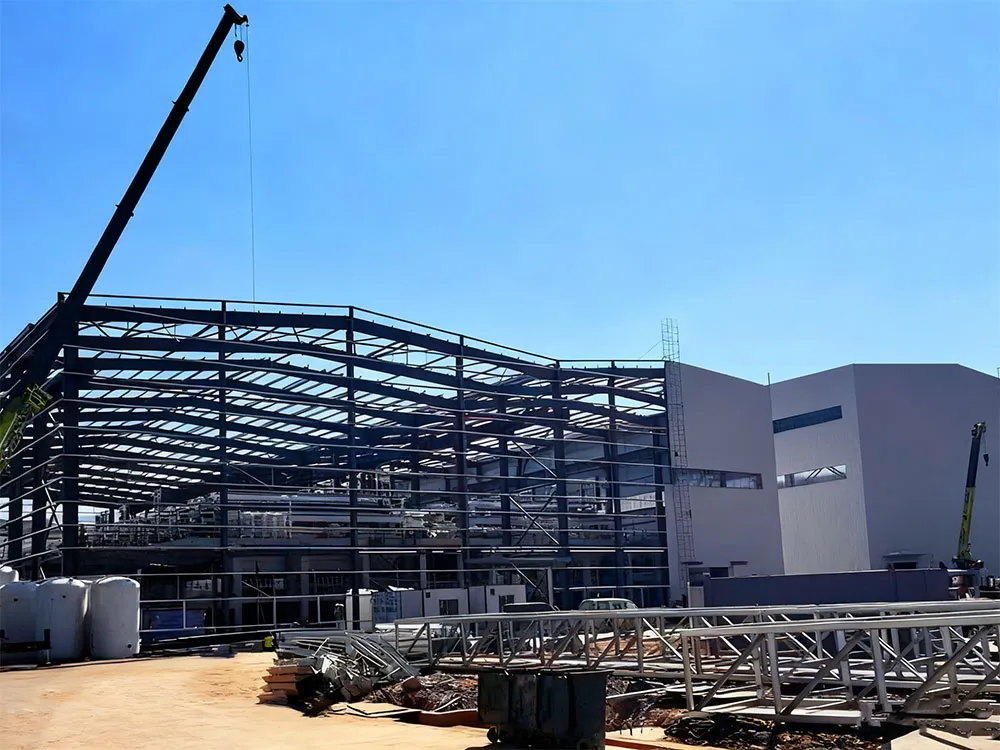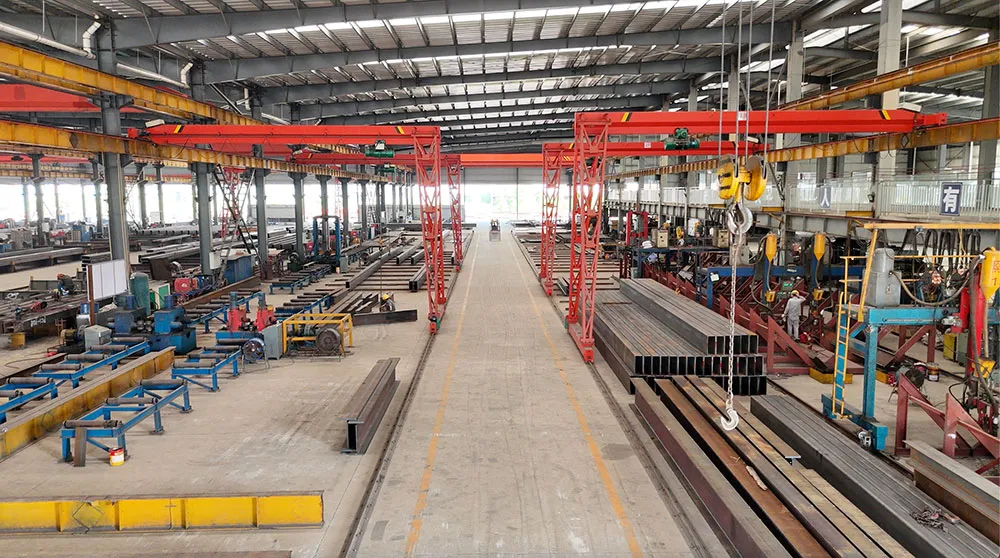
Steel buildings in extreme weather can remain safe and structurally stable when they are properly engineered for local wind loads, snow loads, rainfall, temperature changes, and other environmental conditions. Their actual performance depends on structural design, material quality, connections, foundations, protective coatings, and regular maintenance.
Author:David Ran
This article discusses steel building components, fabrication, and project planning. Project-specific technical requirements should be confirmed during engineering review.
Share This :
When a major storm rolls through an area, people ask how weatherproof steel buildings are. That’s a valid question too. As climate change has made the weather get more extreme nearly every year, both owners and developers of buildings are now interested in knowing what holds their building up from the forces of hurricanes, blizzards, earthquakes and wildfires. The answer is comforting – data from decades of engineering and real world results show that steel framed buildings are some of the toughest and longest-lasting types of structures made.
How Do Steel Buildings in Extreme Weather Remain Safe?
However, there’s nothing magical about their toughness; it comes from material characteristics, smart engineering, and good construction. Not all steel buildings are equal and the details will make a big impact. For example, a well-engineered warehouse made out of steel that is being built in an area prone to tornadoes will perform very differently than a metal shed that has been thrown together hastily without much engineering.
When you know what makes steel structures so resilient and what the limitations of these limits are, you will have all the information you require to make your next building/structure decision. The following are the actual engineering principles that determine how well steel buildings can perform under stress.
Engineering of the steel structures for resilience
Steel’s reputation as a premier structural material didn’t happen by accident. It earned that status through consistent performance under conditions that destroy wood, masonry, and even concrete. The core reasons trace back to two fundamental material properties that engineers rely on every day.
The inherent ratio of strength to weight.
Steel has the highest strength-to-weight ratio of any common construction material. A steel I-beam weighing a fraction of an equivalent concrete member can carry the same or greater loads. This matters enormously during extreme weather events because lighter structures generate less inertial force during earthquakes and require less foundation mass to stay anchored during high winds.
For industrial applications, this ratio translates directly to wider clear spans and taller wall heights without sacrificing safety margins. A 200-foot clear-span steel warehouse can be engineered to handle the same snow and wind loads as a heavily reinforced concrete building at a fraction of the material weight. That efficiency isn’t just cost-effective: it’s a safety feature.
Ductility and Elasticity Under Stress
Stress is important for understanding how ductile something is or how much it can stretch or deform without breaking apart. A thing that separates steel from many of its competitors is its ductility. Think about a sudden wind gust hitting a building made of steel; the steel members bend a little and absorb some of the energy of the wind; when the wind gust ends, the steel members go back into their original shape. Now imagine the wind gust hits a concrete building or a masonry building; the concrete and masonry will crack and crumble from the force of the wind.
Thus, the flexible behavior of the steel provides a critical advance warning time for those inside. When subjected to high forces, steel structures will exhibit visible deformation until they ultimately fail. Conversely, brittle materials are prone to collapse almost instantaneously when stressed until their breaking point. As such, metallic connections are designed in a way to maximize that property by combining steels so the connections will yield before they fracture.
Performance During High-Wind Events and Hurricanes
Winds cause more damage to buildings than any other extreme weather threat in all locations around the globe. When it comes to steel building wind resistance, there are three main factors: the frame design, the cladding system and the foundation.
Aerodynamic Design and Wind Load Distribution
A building that is designed aerodynamically allows for maximum distribution
of wind loads across its surface.
Today, steel building designs are created through the use of CFD (computational fluid dynamics) models to simulate how the wind will flow around a building. Wind loads for steel-framed industrial buildings are usually between 90 mph and 170 mph, depending on where the building is and what it will be used for. Wind Ratings are calculated in accordance with the ASCE 7-22 Standards, which encompasses wind speed, exposure, building height, and terrain, just to name a few.
The form that the structure assumes affects its function as well. Structures that are low and wide with roofs that slope gently will generally shed wind more efficiently than tall structures with flat walls. A building with a frame that is tapered as well as a curved roof will experience about 20-30% less amount of pressure from wind compared to buildings that have gable roofs. Normally, the steel structures that are designed to withstand the hurricane winds are constructed using the principles of aerodynamics from the beginning, before the structure is built, rather than using only weight for additional support.
Secure Anchoring Systems for Uplift Prevention
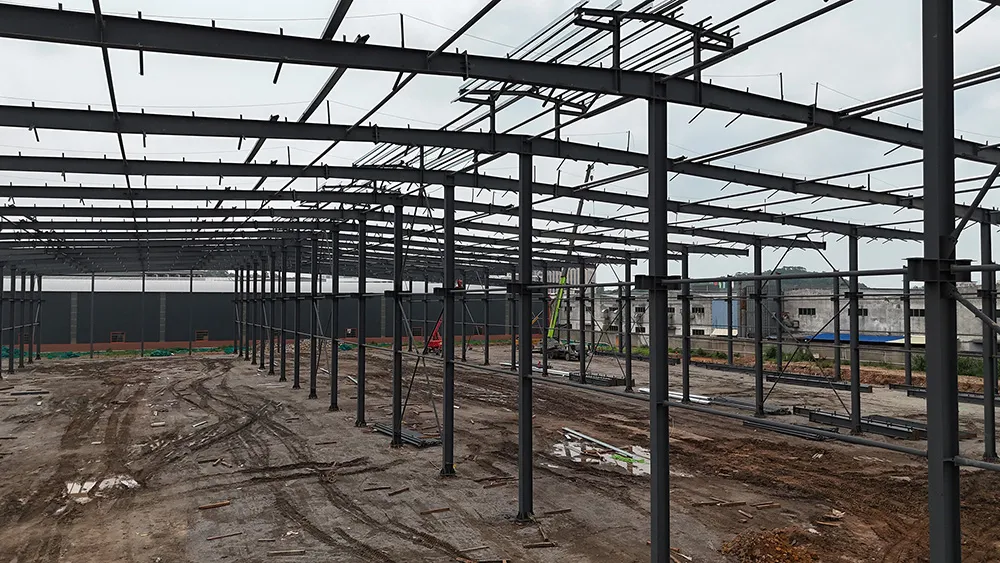
The main risk in a hurricane is the roof being lifted off your home by the wind and not the walls caving in on you. There are many cases where a 3 category hurricane will create more than 50 pounds of uplift pressure per square foot of roof surface. Because steel buildings are typically attached directly to reinforced concrete foundations through anchor bolts, this is one method that steel buildings use to resist uplift.
Centre bolt designs used for buildings within high wind zones typically use 1 inch diameter or larger anchor bolts that are set into the foundation to a depth of at least 12 inches. In conjunction with moment-resistant base plates, these bolts form a continuous load path that extends from the roof to the ground through the respective columns. The properly engineered solution is building can remain intact even if other buildings have failed.
Seismic Safety and Earthquake Resistance
Steel-framed buildings have an outstanding track record in earthquake zones. After the 2011 Tohoku earthquake in Japan (magnitude 9.1), steel buildings in the affected area showed significantly less structural damage than their concrete counterparts. The reason ties directly back to ductility.
Energy Dissipation through Flexible Joints
Earthquake forces are fundamentally different from wind forces. Instead of steady pressure, seismic events deliver rapid, oscillating ground motion that sends energy surging through a structure. Steel frames absorb this energy through specially designed moment connections and braced frames that flex with the movement rather than resisting it rigidly.
Modern seismic design uses special moment-resisting frames (SMRFs) with pre-qualified connections tested to withstand multiple cycles of intense loading. These joints are designed to form “plastic hinges” at predetermined locations, dissipating energy in a controlled manner. The result is a building that sways during an earthquake but remains structurally sound. Buildings in California, Japan, and Chile routinely use these systems, and post-earthquake inspections consistently show minimal structural damage in properly designed steel frames.
Managing Heavy Snow Loads and Ice Accumulation
Snow might seem less dramatic than hurricanes or earthquakes, but it’s actually one of the most dangerous weather threats to buildings. The structural integrity of metal warehouses during heavy snowfall depends on design choices made long before the first flake falls.
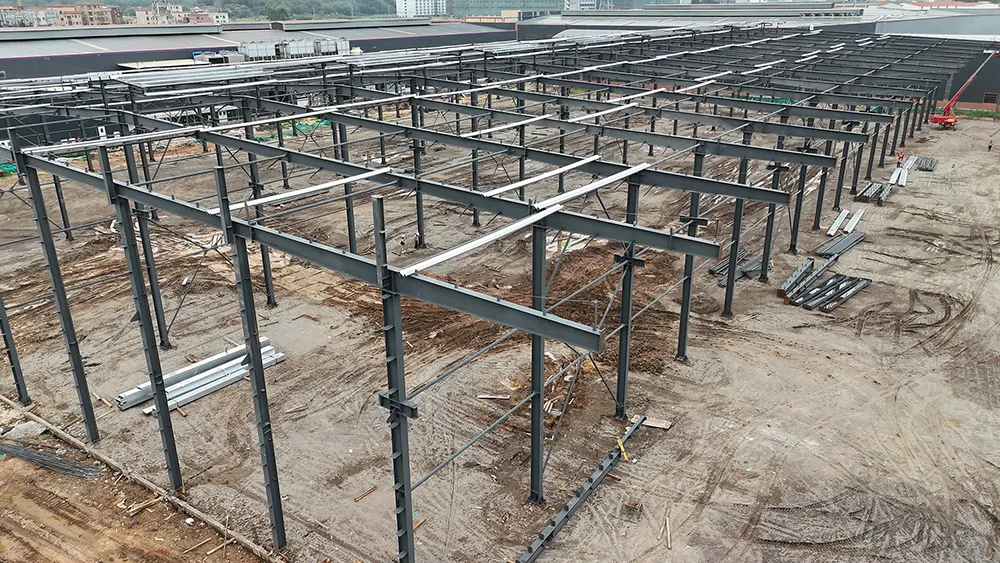
Roof Pitch and Structural Reinforcement Strategies
Ground snow loads vary enormously across the United States: from zero in southern Florida to over 300 pounds per square foot in mountainous areas of Colorado and Utah. Steel buildings in heavy snow regions are designed with steeper roof pitches (typically 3:12 or greater) to encourage snow shedding and reduce accumulation.
For flat or low-slope roofs, engineers increase the size and spacing of purlins and rafters to handle the additional weight. Drift loads near parapets and adjacent structures can be two to three times the basic ground snow load, so smart designers account for these concentrated forces with reinforced framing in vulnerable areas. Heated roof systems and snow retention devices add another layer of protection for buildings where uncontrolled snow shedding could endanger people below.
Fire Resistance and Lightning Protection Measures
Steel doesn’t burn. That single fact gives it a massive advantage over wood-framed construction, but the full picture is more nuanced than most people realize.
Non-Combustible Properties of Structural Steel
Structural steel is classified as non-combustible under all major building codes. It won’t ignite, contribute fuel to a fire, or produce toxic smoke. However, unprotected steel loses about half its strength at around 1,100 degrees Fahrenheit, which is well within the temperature range of a building fire.
This is why critical steel members in occupied buildings receive fireproofing treatments: either spray-applied fire-resistive materials (SFRM), intumescent coatings, or encasement in concrete. These treatments give the steel a fire resistance rating of one to four hours, depending on the application. For industrial steel buildings like warehouses, fire resistance requirements are often less stringent, but the non-combustible frame still provides a significant safety advantage over wood construction.
Effective Grounding for Electrical Storm Safety
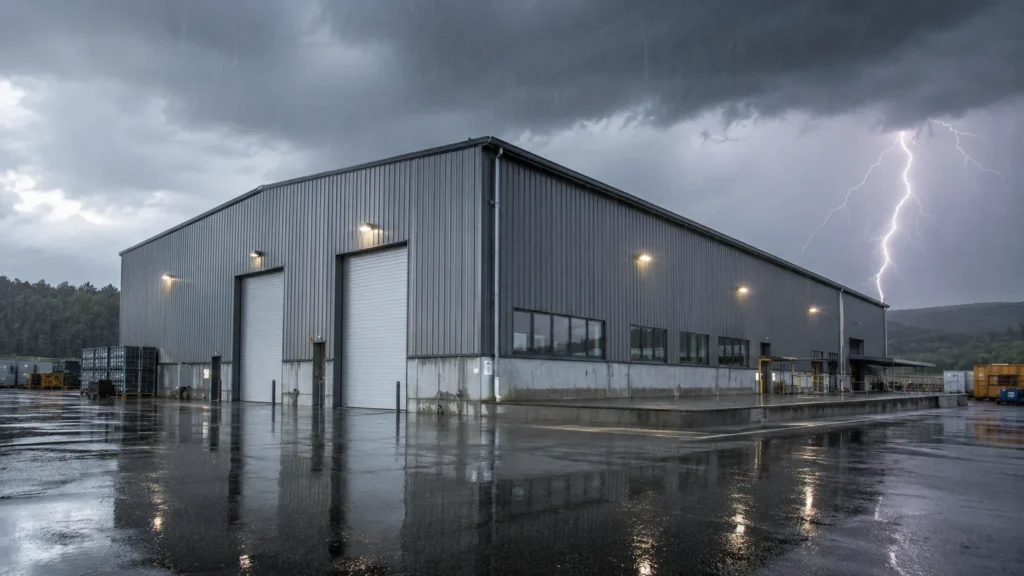
Steel buildings are inherently excellent conductors of electricity, which is actually a safety benefit during lightning storms. A properly grounded steel frame acts as a Faraday cage, directing lightning current safely to the ground without damaging the structure or endangering occupants.
Standard lightning protection for steel buildings involves bonding the frame to a grounding electrode system buried in the earth. The National Fire Protection Association’s NFPA 780 standard provides specific guidance for these installations. Because the steel frame itself serves as the primary conductor, the cost of lightning protection for metal buildings is typically lower than for wood or concrete structures.
Long-Term Durability Against Corrosion and Moisture
The one genuine vulnerability of steel is corrosion. Left unprotected in a humid or coastal environment, steel will rust and lose cross-sectional area over time, reducing its load-bearing capacity. But this is a solved problem.
Modern protective coatings include hot-dip galvanizing, zinc-aluminum alloy coatings, and high-performance paint systems that can protect steel for 50 years or more with minimal maintenance. Buildings in coastal areas often use a combination of galvanized primary framing and factory-applied Galvalume panels that resist salt spray corrosion far better than bare steel. Regular inspection of connections, fasteners, and areas where moisture can collect keeps small problems from becoming structural concerns. A well-maintained steel building can last 100 years or more: several are still standing and performing from the early 1900s.
Comparing Steel to Traditional Building Materials in Disasters
The real test of any building material is how it performs when conditions exceed design expectations. Post-disaster assessments from FEMA, the American Institute of Steel Construction, and insurance industry data consistently show that steel buildings in extreme weather outperform wood and unreinforced masonry by wide margins.
After Hurricane Michael struck the Florida Panhandle in 2018 as a Category 5 storm, steel-framed commercial buildings in the hardest-hit areas survived with repairable damage while wood-framed structures were destroyed. Similar patterns emerged after the 2023 tornado outbreaks across the Southeast. Wood-framed buildings disintegrate under tornado-force winds because the connections between members fail progressively. Steel’s bolted and welded connections maintain the structural frame even when cladding is stripped away.
Concrete performs well in many scenarios but is heavier, more expensive to repair after seismic damage, and prone to catastrophic brittle failure when reinforcement is inadequate. Steel offers a balance of strength, flexibility, repairability, and cost that no other single material matches across the full range of extreme weather threats.
The question of whether steel buildings are safe during extreme weather has a clear answer: yes, when properly designed, fabricated, and maintained. No building material is invincible, and no structure can survive every conceivable event. But steel gives you the best odds. If you’re planning a new building in a region prone to hurricanes, heavy snow, earthquakes, or wildfires, talk to a licensed structural engineer about steel framing options specific to your site conditions. The upfront investment in proper engineering pays for itself the first time a serious storm rolls through.
For additional guidance on structural steel design and weather-related load requirements, visit the American Institute of Steel Construction and the American Society of Civil Engineers.