Author:David Ran
This article discusses steel building components, fabrication, and project planning. Project-specific technical requirements should be confirmed during engineering review.
Share This :
Light steel vs heavy steel structures is an important comparison for buyers who are planning warehouses, workshops, factories, agricultural buildings, or industrial steel buildings. Although both systems use structural steel, they are different in load capacity, span design, steel consumption, construction cost, and application scenarios.
Steel framing has become the backbone of modern construction, from suburban homes to sprawling industrial complexes. But not all steel buildings are created equal, and choosing the wrong type can mean overspending by tens of thousands of dollars or, worse, ending up with a structure that can’t handle the loads you need. The difference between light steel and heavy steel structures comes down to far more than just weight: it affects cost, construction timeline, durability, and what the building can actually do.
If you’ve been comparing quotes from steel fabricators or trying to spec out a new project, understanding where these two categories diverge will save you real headaches. Most people get tripped up because the terminology sounds straightforward, but the engineering implications run deep. Here’s a practical breakdown of how these two structural systems differ and where each one actually makes sense.
Defining Light and Heavy Steel Structures
The simplest way to think about this: light steel structures use thinner, lighter members designed for lower loads, while heavy steel structures use thick, massive sections built to carry enormous weight. But that simplicity hides a lot of nuance that matters once you start designing and budgeting.
Material Composition and Section Thickness
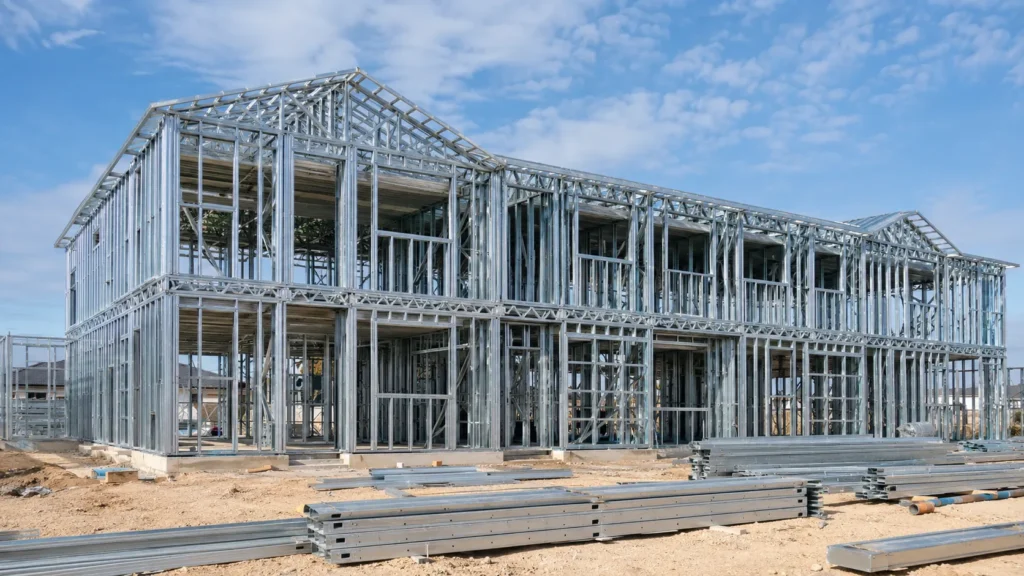
Light steel framing typically uses galvanized steel with section thicknesses ranging from 0.8 mm to about 3 mm. These thin-walled sections are formed from flat steel coils through cold-forming processes, meaning the steel is shaped at room temperature rather than heated. The result is a lightweight member that’s strong relative to its weight but limited in how much load it can carry individually.
Heavy steel structures rely on hot-rolled sections, often with flange thicknesses starting at 10 mm and going well beyond 50 mm for major structural elements. The steel grades used tend to be higher strength: Q345B and Q460 are common in 2026 fabrication, compared to the Q235 or equivalent grades typical in light steel. This isn’t just about thickness; the metallurgical properties differ because hot-rolling at temperatures above 900°C produces a different grain structure than cold-forming.
Standard Weight Thresholds per Square Meter
Industry classification typically draws the line at around 25 kg per square meter of steel usage. If a building’s structural steel weight falls below that threshold, it’s generally classified as a light steel structure. Above 25 kg/m² and you’re in heavy steel territory, with industrial buildings routinely hitting 60 to 100 kg/m² or more.
These numbers aren’t arbitrary. A light steel residential frame might use 15 to 22 kg/m², while a heavy steel warehouse with crane beams could require 80 kg/m². The weight classification directly impacts foundation design, transportation logistics, and the type of equipment needed on-site.
Core Structural Components and Fabrication
How these structures get made is just as different as what they’re made of. The fabrication processes create fundamentally different products suited for different jobs.
Cold-Formed Thin-Walled Sections
Light steel structures are built from C-sections, Z-sections, and sigma profiles formed by running flat steel strip through a series of rollers. This cold-forming process is fast and economical: a single production line can output hundreds of meters of framing per hour. The sections are pre-punched for bolted connections, and many manufacturers now use CNC-driven systems that cut and label each piece for a specific location in the building.
The trade-off is that thin-walled sections are susceptible to local buckling. Engineers have to account for effective width reductions and distortional buckling modes that don’t apply to thicker hot-rolled members. This limits span lengths and the loads these members can handle without additional bracing.
Hot-Rolled H-Beams and Plate Girders
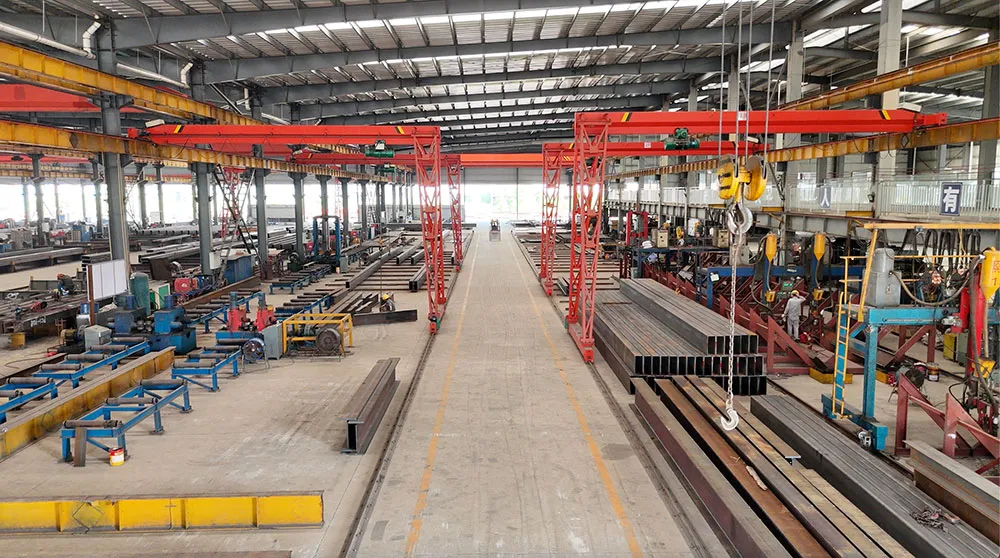
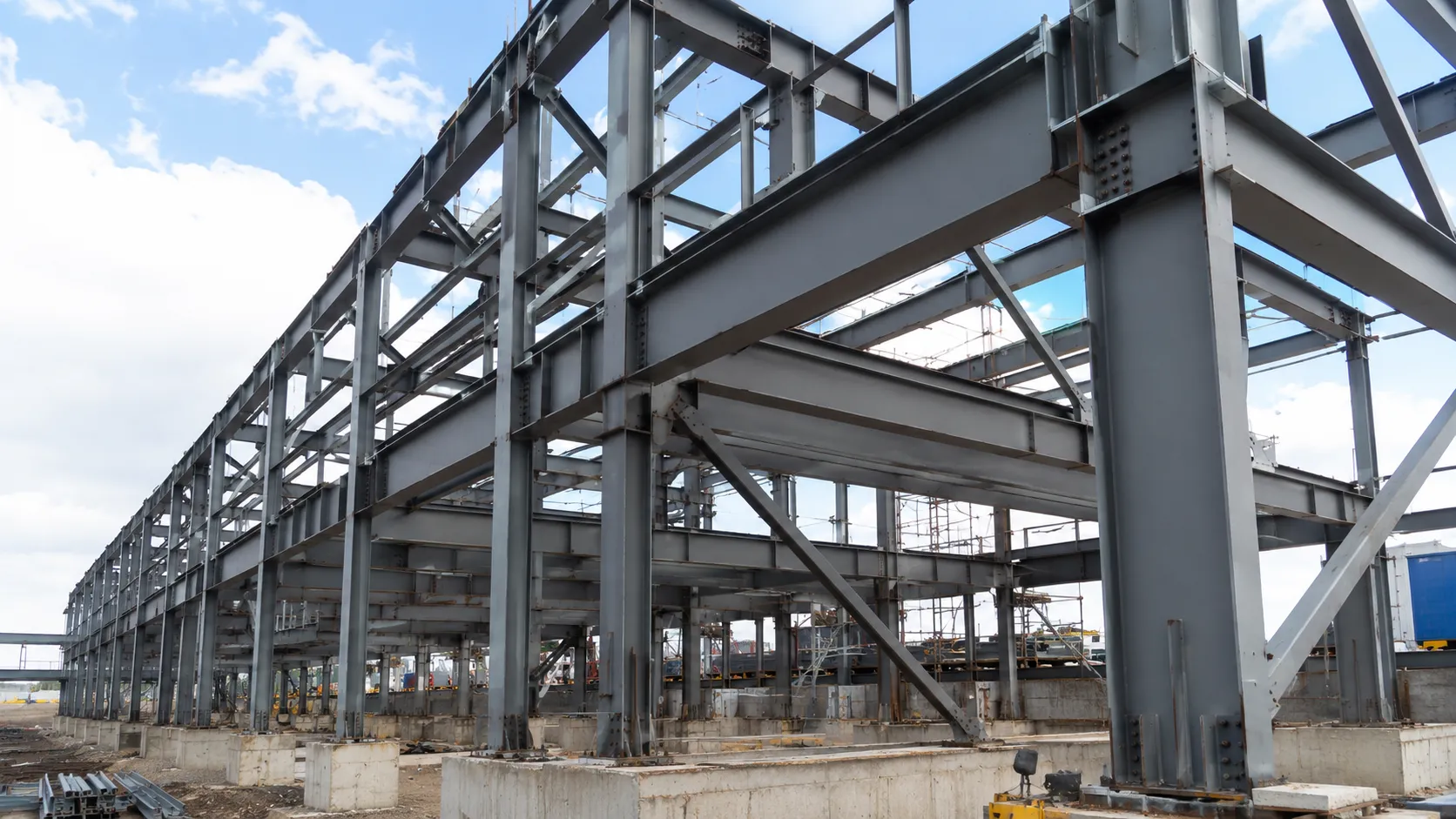
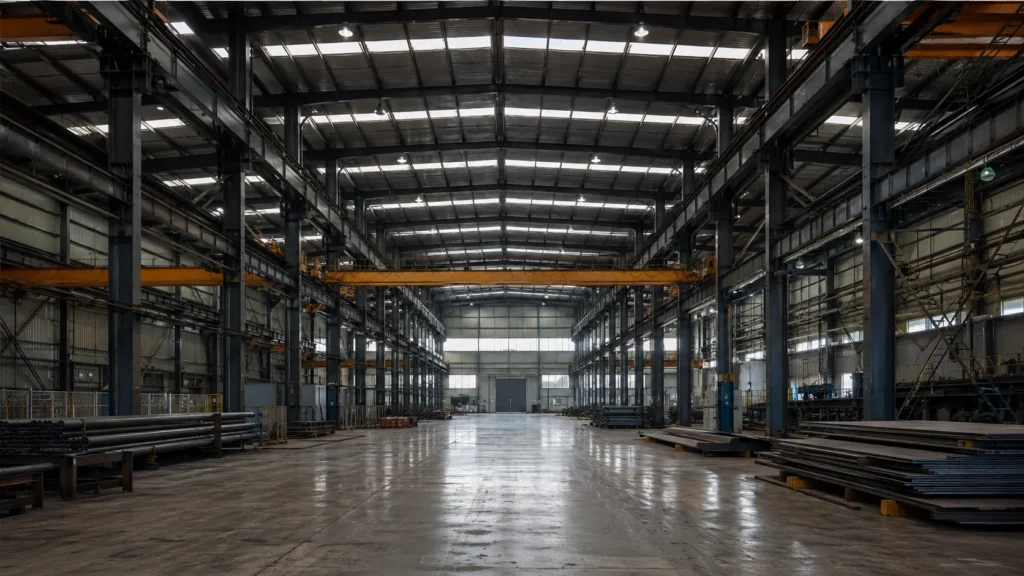
Heavy steel fabrication is a different world entirely. Primary members are either hot-rolled H-beams (like HW and HM series profiles) or built-up plate girders welded from thick steel plates. A single plate girder for a crane beam might weigh several tons and require multi-pass welding by certified welders.
Fabrication shops working on heavy steel need overhead cranes, large welding positioners, and shot-blasting equipment capable of handling members that can be 20 meters long or more. The quality control requirements are stricter too: ultrasonic testing of welds is standard, and critical connections often require full-penetration groove welds inspected to AWS D1.1 or equivalent standards.
Load-Bearing Capacity and Stability
This is where the practical implications really show up. What a building needs to resist: whether that’s earthquakes, wind, or the dynamic loads from heavy equipment: determines which structural system is appropriate.
Seismic Resistance and Flexibility
Light steel structures actually perform surprisingly well in earthquakes. Their lower mass means lower seismic forces, and the ductile connections between cold-formed members can absorb energy through controlled deformation. In seismic zones across Japan and New Zealand, light steel residential framing has become a preferred choice precisely because the buildings flex rather than crack.
Heavy steel structures handle seismic loads differently. They rely on moment-resisting frames or braced frames with energy-dissipating connections. The 2026 updates to several international building codes have pushed for more sophisticated connection detailing in heavy steel structures, particularly for buildings over 50 meters tall. These connections cost more to fabricate but provide the stiffness needed for tall or heavily loaded buildings.
Support for Heavy Machinery and Cranes
Here’s where heavy steel earns its keep. If your building needs to support overhead cranes with capacities of 10 tons or more, light steel simply won’t work. Crane beams need to resist not just the static weight of the crane and its load but also the dynamic effects of acceleration, braking, and lateral sway. These forces demand thick flanges and stiff web plates.
A typical 20-ton overhead crane in a manufacturing facility generates vertical wheel loads exceeding 200 kN per wheel, plus horizontal forces from trolley movement. Only heavy steel crane beams and their supporting columns can handle these loads without excessive deflection. Light steel structures top out at supporting small monorail hoists of perhaps 1 to 2 tons.
Primary Application Scenarios
Knowing where each system fits best saves time during the planning phase and prevents costly mid-project changes.
Residential and Light Commercial Use Cases
Light steel framing dominates the residential and small commercial market. Single-family homes, townhouses, low-rise apartment buildings (up to about 6 stories), and retail spaces all work well with light steel. The speed advantage is significant: a light steel home frame can be erected in days rather than weeks.
Specific examples include modular hotel construction, where entire room modules are framed in light steel off-site and stacked on location. Several hotel chains have adopted this approach in 2026, cutting construction timelines by 30 to 40 percent compared to traditional methods. Schools, clinics, and office fit-outs also benefit from the precision of factory-made light steel components.
Industrial Plants and High-Rise Construction
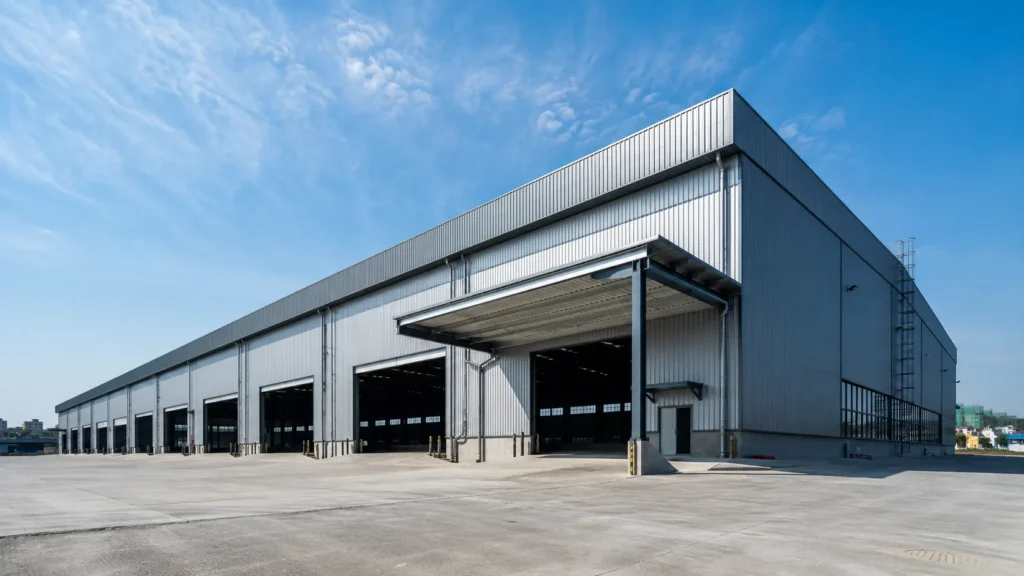
Heavy steel is the default choice for industrial facilities: steel mills, power plants, automotive factories, and logistics centers with high-bay racking. Any building that needs clear spans over 30 meters or supports significant suspended loads will almost certainly require heavy steel.
High-rise construction above 10 to 15 stories also shifts toward heavy steel, often in combination with concrete cores. The columns at the base of a 40-story building might use box sections fabricated from 60 mm thick plate, carrying thousands of tons of cumulative load. Light steel has no role at these scales.
Installation Speed and Construction Costs
Cost comparisons between light and heavy steel are rarely apples-to-apples, but understanding the key cost drivers helps with realistic budgeting.
Foundation Requirements and Ground Pressure
Light steel structures impose significantly lower loads on foundations. A light steel residential building might require simple strip footings or a slab-on-grade, with ground pressures under 50 kPa. This translates to substantial savings on foundation work, especially on sites with weaker soils where heavy structures would need piled foundations.
Heavy steel buildings concentrate large loads through their columns. A single column base plate in an industrial building might transfer 500 kN or more to the foundation, requiring reinforced concrete pad footings or piles. Foundation costs for heavy steel structures can represent 15 to 25 percent of the total project budget, compared to 5 to 10 percent for light steel buildings.
Assembly Efficiency and Labor Intensity
Light steel assembly is fast and requires smaller crews. Most connections are bolted using self-drilling screws or standard bolts, and the light weight of individual members means no heavy lifting equipment is needed. Two workers can carry and position most light steel sections by hand.
Heavy steel erection requires mobile cranes, often with capacities of 50 tons or more. Each connection might involve high-strength bolts torqued to specific values or field welding performed by qualified welders. A heavy steel industrial building typically takes 2 to 4 times longer to erect than a comparable-footprint light steel structure, and the labor rates for skilled ironworkers and welders run higher than for light steel installers.
Durability and Maintenance Considerations
Light steel’s galvanized coating provides excellent corrosion resistance in normal environments: residential and commercial buildings in temperate climates can expect 50-plus years of service with minimal maintenance. The zinc coating sacrificially protects the thin steel underneath, and as long as the building envelope keeps moisture out, degradation is slow.
Heavy steel structures face a different maintenance reality. The thicker sections mean that surface corrosion eats through a smaller percentage of the total cross-section, giving heavy steel an inherent safety margin. But industrial environments with chemical exposure, high humidity, or temperature cycling demand regular inspection and recoating. A heavy steel structure in a coastal chemical plant might need full repainting every 8 to 12 years, a significant ongoing cost.
Fire resistance is another differentiator. Thin light steel members lose strength quickly when exposed to fire, requiring fire-rated cladding or intumescent coatings. Heavy steel members, with their greater thermal mass, take longer to heat up but still need fire protection in most building codes. The cost of fireproofing per square meter tends to be higher for heavy steel because of the larger surface areas involved.
Choosing the Right System for Your Project
The distinction between light and heavy steel structures isn’t about one being better than the other. It’s about matching the structural system to what the building actually needs to do. Light steel wins on speed, cost efficiency, and suitability for residential and low-rise commercial projects. Heavy steel is essential when you need long spans, heavy load support, or multi-story industrial capacity.
Before committing to either approach, get a structural engineer involved early. The cost of preliminary engineering advice is trivial compared to the expense of redesigning mid-construction because the wrong system was specified. And if your project falls in a gray area, say a mid-rise mixed-use building or a light industrial facility, a hybrid approach using heavy steel for primary frames and light steel for secondary framing and infill walls often delivers the best value. The right choice starts with honest assessment of your loads, spans, and long-term building use.
For steel structure projects, design quality and fabrication standards are just as important as material selection. Many international buyers also refer to resources from the American Institute of Steel Construction (AISC) to better understand structural steel design, construction practices, and industry standards.